In pictures: Worm Moon captured over Northern Ireland

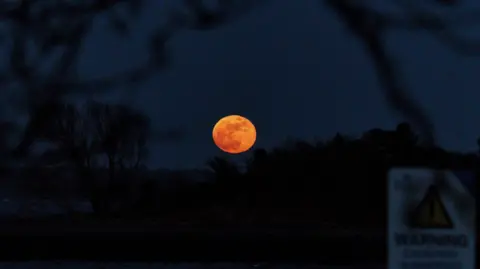 Weather watcher/Leah K
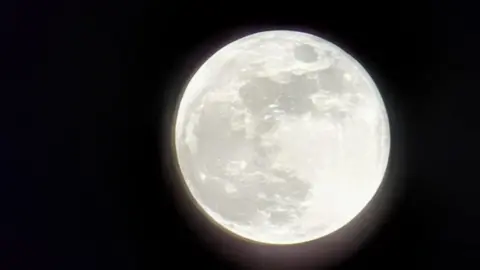 Weather watcher/GranniAnne
The first full Moon of the spring - known as the Worm Moon - rose in the skies across Northern Ireland on Monday and Tuesday night.
The full lunar eclipse, and Blood Moon as it is known, was not visible in the UK but some people may have seen its orange hue.
Full Moons have names that date back to ancient traditions before modern calendars were used.
They were helpful ways to mark the changing seasons and the names tended to relate to significant timely events.
When can you see the next full Moon?
The March full Moon is known as the Worm Moon as it refers to when earthworms start to emerge from the soil as the weather warms in springtime.
The next one will rise on 1 April with the Pink Moon, followed by the Flower Moon on 1 May.
What is a Blood Moon?
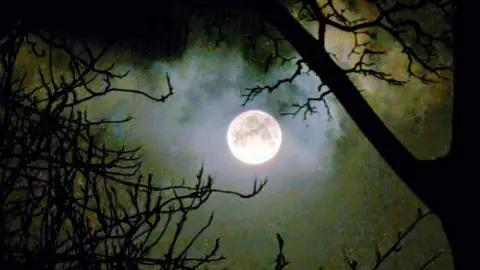 Weather watcher/AnnLiz
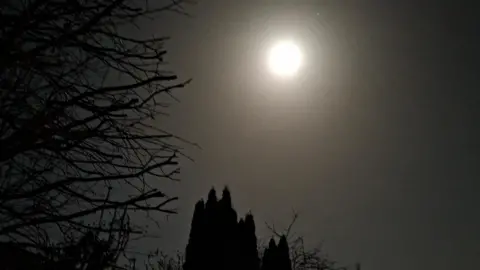 Weather watcher/Freeasabird
Blood Moon describes the way the Moon looks during a total lunar eclipse.
This happens when the Moon is completely covered by Earth's shadow because the Earth has moved between the Moon and the Sun - blocking the Sun's light from reaching the Moon.
When this happens, the Moon looks a reddish colour - hence the name Blood Moon.
Those most likely to see the phenomenon this week include sky gazers in parts of North America, South America, East Asia and Australia.
What are the names of all the full Moons, and what do they mean?
January: Wolf Moon
Native Americans and medieval Europeans called January's full Moon a Wolf Moon. It's thought to be because wolves howled more at this time of year, as there was less food.
February: Snow Moon
The snowy weather of February in North America led to the name Snow Moon. Other common names include Storm Moon and Hunger Moon.
March: Worm Moon
The Worm Moon appears in March at the end of winter when little creatures like worms begin squirming out of the ground. It's also called Crust Moon.
April: Pink Moon
Disappointingly, the Pink Moon isn't actually pink. It's named by Native Americans after pink flowers called wild ground phlox that bloom in early spring and appear throughout the United States and Canada.
It is also called Egg Moon and Fish Moon in other cultures.
May: Flower Moon
May's flowers are the reason for this month's name.
Other names include Hare Moon, Corn Planting Moon, and Milk Moon.
June: Strawberry Moon
Native American Algonquin tribes named this the Strawberry Moon. This is because they would harvest strawberries at this time.
It's also called the Honey Moon, Rose Moon and Mead Moon.
July: Buck Moon
This is the time when a buck, a male deer, grows its full antlers. This Moon is also called Thunder Moon after the summer thunderstorms.
August: Sturgeon Moon
People in North America caught sturgeons, a type of fish, around this time.
It is sometimes known as a Grain Moon, or Green Corn Moon or Black Cherries Moon in some cultures.
September: Corn Moon
If it is the nearest full Moon to the autumnal equinox, it is called the Harvest Moon instead.
September's full Moon is thought to be called Corn Moon because that's when crops are gathered at the end of the summer season.
At this time, the Moon appears particularly bright, allowing farmers to continue harvesting into the night.
October: Hunter's Moon
This is the time when people would plan for the winter months and hunt animals for food.
Like September's full Moon, it is sometimes called the Harvest Moon.
November: Beaver Moon
Beavers often start building their dams about this time, which is where it got its name.
It is also sometimes called Frost Moon.
December: Cold Moon
The winter chill gave December's full Moon the name Cold Moon.
Other names include the Long Night Moon and the Oak Moon.
