Hope blooms at gardens after Storm Goretti

 BBC
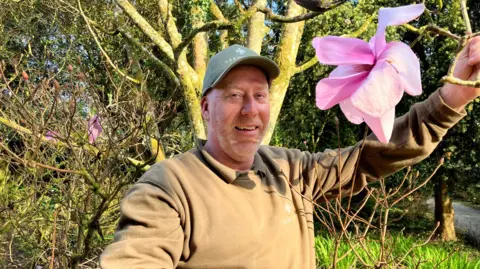
BBCAfter losing more than 150 historic trees in Storm Goretti, a garden estate near Truro is finding sunlight, fresh vistas and an unexpected chance to rethink the future landscape.
When the storm swept across Cornwall with wind speeds of 99mph (159km/h) on 8 January, Trewithen's historic gardens were among the places hit hardest.
In a single night, 163 trees came crashing down, some more than two centuries old, reshaping the landscape of one of the region's best‑known estates.
Head gardener Gary Long said one of the losses was the tallest and widest Acer cissifolium in the British Isles.
He now wants to replant in the same spirit as the plant hunters who stocked the gardens with exotic Asiatic species they had discovered in China and Japan during trips between 1904 and the 1930s.
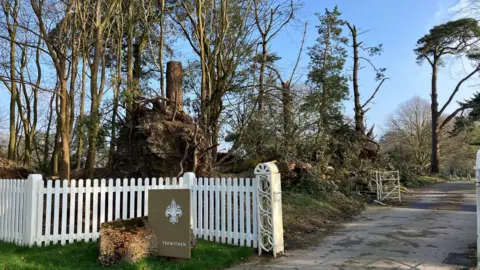
Long said: "The worst bit about the falling is not always the tree, it's what it's hit."
One of the most painful examples was a show‑winning Rhododendron falconerae, collected in the 1930s, which was crushed beneath a falling Leylandii at the estate near Grampound Road, between Truro and St Austell.
"Those things were as gutting as actually losing the trees," Long said.
As the team worked to clear debris, they found something unexpected - sunlight reaching areas that had been in deep shade for decades.
"We've got areas in the garden now which are just fully open to sunlight which was dense canopy before, so now that opens up a whole range of plants that we can grow," Long said.
"Before we were restricted - not that it was a bad restriction - to camellias, rhododendrons and magnolias, we were stuck within those groups of plants which like the shade.
"Now we can get into herbaceous plants, we can get into bulbs and it's opened up some vistas as well."
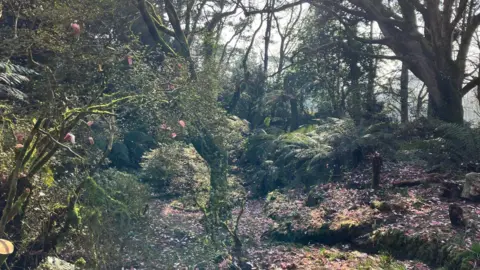
One of the most striking changes is in "the cockpit", a former stone quarry resembling a small amphitheatre and filled with tree ferns.
Once "almost black with shade", the space is now bright and open after a large ash and beech were brought down in the storm.
Trewithen, meaning "house of the spinny or trees", has long been associated with early 20th Century plant hunters who brought back exotic species from China and Japan.
Long said the replanting phase offers a rare chance to mirror that spirit.
"If I spoke to the estate's owners, Sam and Kitty Galsworthy, and said 'please can we cut down these wild collected plants from 1932 and a massive mature ash tree just because I want to have a nice view' it would never have happened," he joked.
What survived and why that matters
The storm did most of the clearing for them, but it also brought wide‑ranging damage.
Many of the estate's Monterey pines, about 100 years old, were snapped by the 99mph gusts.
A few Pieris formosa collected by plant hunter George Forrest in 1932 were also destroyed.
One discovery about a plant found natively in the Himalayas has intrigued gardeners across Cornwall.
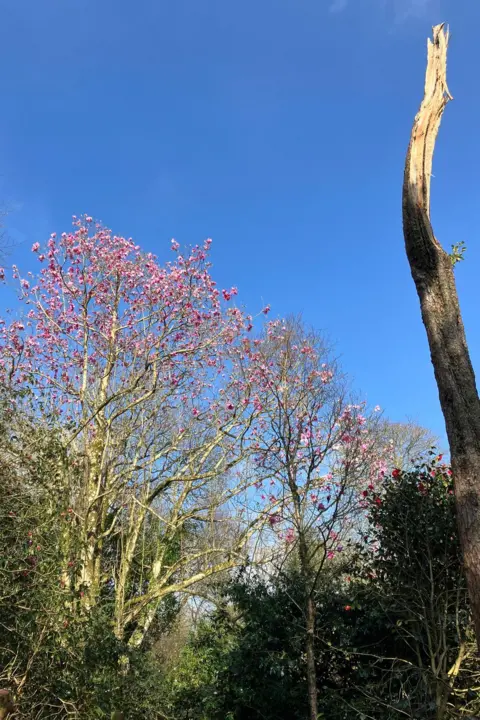
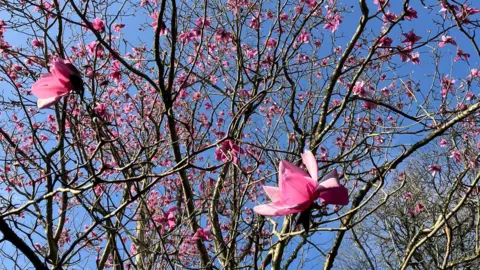
Long said after speaking to colleagues on other estates, "not a single Magnolia campbellii had been damaged or brought down by the storm".
Because of that resilience, he believes magnolias could play a bigger role in Trewithen's future.
"Magnolias could work as a windbreak because you don't want to stop the wind, you want to filter it and camellia, although they're an ornamental plant, they're very wind‑firm so you could under plant the camellias."
He said future windbreaks "could look like mini-gardens as you're driving around, it's not a bad thing, is it?".
The changing landscape will also alter the experience for visitors walking through the 30-acre garden.
Planning for the next century
Replanting is expected to begin in the autumn, but the team is thinking far beyond the coming year.
"It's not just a case of we want the plant, but why do we want that plant and what's it going to do? What will it look like in 50 years? What will it look like in 100 years?" Long said.
"It is a way of leaving almost a legacy so we can sort of re‑enact what the plant hunters did."
He believes Chile could offer species well‑suited to Cornwall's climate.
"There are some really good plants that fit our climate so we could be looking there for tree species and use them in the plantings."
For Long, the focus is now firmly on renewal: "This is 100% an opportunity to move forward and I'm bored of thinking about the falling trees, we need to go forward now."
From flooded roads to damaged homes, recent storms have left many people in the region wanting clearer answers. If you have any weather-related questions for BBC South West's senior metereologist David Braine, you can ask them here and he will do his best to explain what's going on.
Follow BBC Cornwall on X, Facebook and Instagram. Send your story ideas to spotlight@bbc.co.uk.
