Students turning real-life rescuers to cope with marine wildlife calls

 Sarah Neill
A marine biologist lecturer has said how "immensely proud" she is to see her students helping with rising wildlife call-outs.
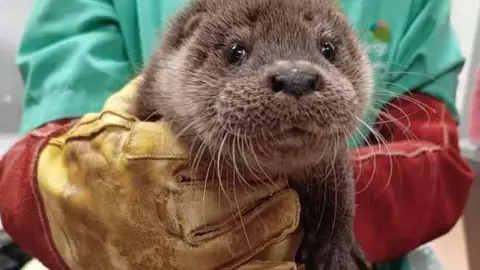
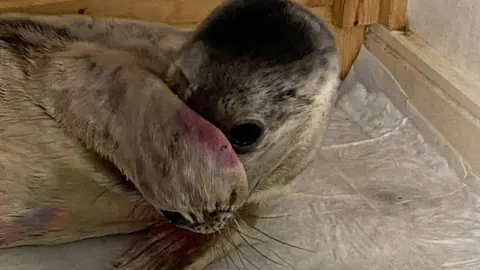
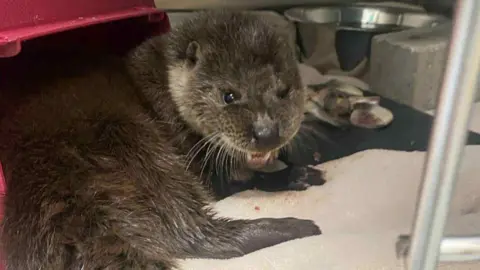
A new course at Kendal College, Cumbria, has trained budding marine wildlife enthusiasts, with its facility one of a handful in England that can specifically rehabilitate seal pups and otters.
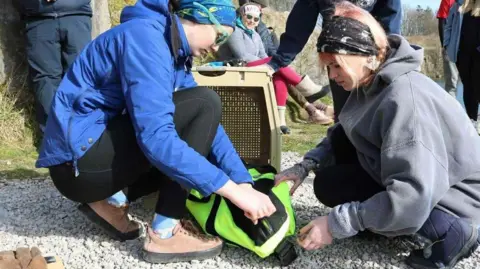
Programme leader Sarah Neill said it had been "fantastic" to see her students "bossing it out in the field" while helping with "real-life marine animal rescues".
British Divers Marine Life Rescue (BDMLR) said it had more than 4,100 call-outs across the country in 2024, up from 800 in 2016.
Miss Neill, who launched the marine biology and rehabilitation degree course a year ago, to offer "one of a kind opportunities". It is partnered with diving organisations and animal charities.
"I was very aware that Kendal was a little college and we were having to compete with other places, so we needed to offer something that was special and unique," she said.
 Sarah Neill
Miss Neill said seal and otter rehabilitation centres were limited in England despite a growing need for facilities due to climate change causing extreme weather events.
BDMLR said the "significant" rise was due to animals to become displaced and stranded in worse weather.
She explained that the rising grey seal colony at South Walney Nature Reserve near Barrow had also created an "even bigger demand to have a facility like this".
 Sarah Neill
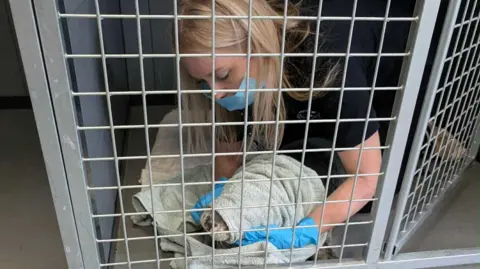
Miss Neill says the course offers "hands-on working with animals", scuba diving certifications and trains students so they are qualified to aid in wildlife rescues.
She said she "did not want to focus the course on exams and essays", adding she wanted pupils to be "work-ready" for "real-life jobs".
 Sarah Neill
The partnership between BDMLR and the college means that trained students can attend rescues.
"When I first came here in 2010 and I used to get call-outs, it often was me having to go out," she said.
"It's fantastic to see my students getting trained... it means we now have a much wider marine medic network.
"I'm immensely proud of them."
 Sarah Neill
Brooke Chaplow, 22, has qualified as a marine mammal medic.
She said she was interested in conservation and behavioural studies, particularly with otters.
"There are otters in Cumbria but they have not been surveyed extensively so I would like to do that," she added.
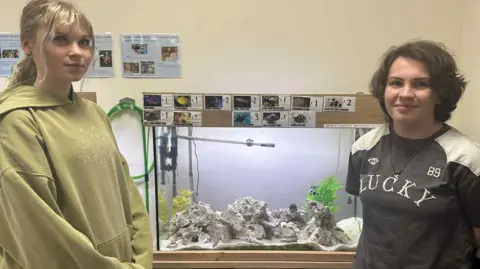
Kall Stott, 20, said he was inspired to work on post-mortem examinations on otters after being involved in a conference held by UK charity International Otter Survival Fund.
"There's nothing for miles for dedicated rehabilitation like in Kendal... this course has given me a lot of opportunities I wouldn't have got at other universities," he added.
 Lisa Holdsworth
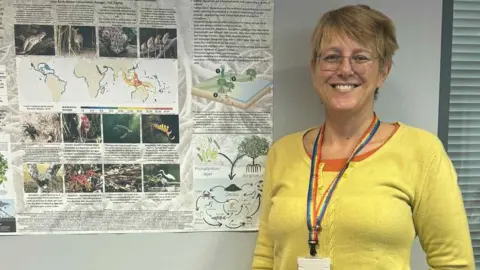
Lisa Holdsworth, 47, said she chose the course because of its practical elements.
"I'm not particularly academic and this is my first degree" she said.
"I thought I wasn't intelligent enough to be a marine biologist... but Sarah saw potential in me."
Meanwhile, Emily Booth, 20, said the rescue facility appealed to her because of the "hands on approach" to teaching.
"I would really like to be an underwater photographer and use that to spread awareness of conservation," she added.
