How a flood-hit town has been protecting itself
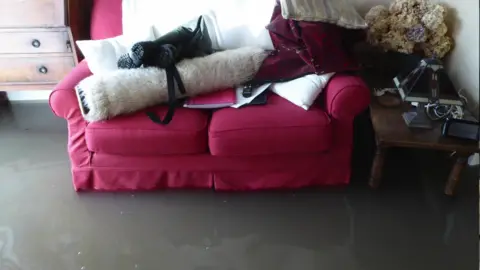
When Val Compton looked at her living room floor on 5 January 2024, it took her a second to realise why it looked so different.
"Standing at the front door and looking into my house, [I was] wondering why my carpet was moving," she said.
"I suddenly realised the movement was water coming through the carpet."
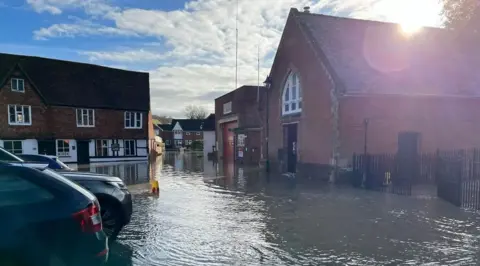
The flood was caused by Storm Henk, which hit the Wiltshire town of Marlborough with little warning two years ago.
Heavy rain made the River Kennet overflow, devastating businesses and homes.
"It was an extraordinary event," Compton said.
Two years on, she and other residents have taken many steps to make their homes – and Marlborough as a whole – more flood resilient.

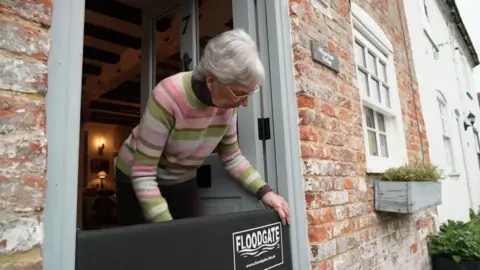
As part of her protection measures, Compton had her electrical sockets moved further up her walls.
She also had air bricks installed and bought flood gates, which slot into her doorframes.
Events have been held across town to advise locals on making similar preparations in their homes.
Meanwhile, planters have been installed in a trial carried out by the town council and Action for the River Kennet (ARK) charity.
"[The planters] are designed to catch the rain water after it lands on the roof," explained Charlotte Hitchmough, CEO of ARK.
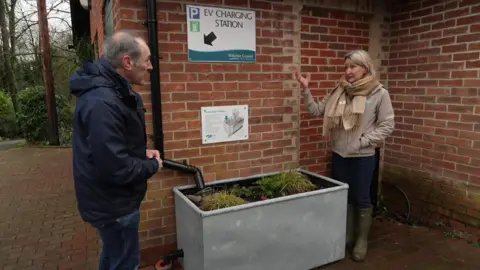
Hitchmough said: "The purpose of [the planters] is to catch those big deluges so the drains can cope with the volume of water.
"It's all about slowing the flow of water through the landscape.
"On its own it won't do much, but with lots and lots of them, they have a massive impact."
If the trial is successful, the planters could be installed all around the town.
Flood warden volunteers are also helping to keep the town safe.
They work with the town council to patrol the River Kennet and routinely check on and report issues such as blocked gullies.
Hitchmough said ARK was also hoping to start projects further upstream to soak up rain water.
"Historically, the rural areas upstream of towns like this acted as giant sponges," she said.
"They held and slowed down a huge amount of water – and that has changed.
"We've built on a lot of it [the land], modified rivers, we've drained land and as a result all the water gets funnelled to towns like this.
"So we are looking for opportunities upstream of Marlborough, upstream of Avebury, to create a big, safe space to slow and store water. But developing these projects takes time."
Follow BBC Wiltshire on Facebook, X and Instagram. Send your story ideas to us on email or via WhatsApp on 0800 313 4630.
