'An early bowel cancer diagnosis saved my life'

 Supplied
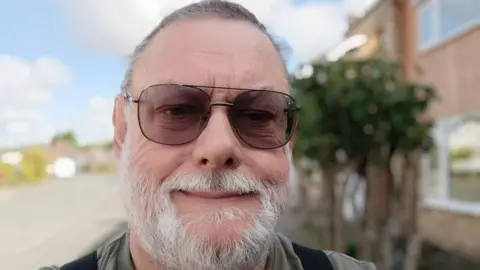
A man says a home testing kit that detected his bowel cancer early is the reason he is alive today.
John Crouchley, from Wollaton in Nottingham, was advised to take a faecal immunochemical test (FIT) after experiencing digestive problems and losing about 5st (32kg) between April and September 2020.
The 71‑year‑old said taking the simple FIT test was the "turning point" that enabled doctors to identify his bowel cancer at an early stage, just before Christmas that year.
John's early diagnosis is one the government hopes to replicate as it announced its National Cancer Strategy, which aims to cut waiting times, improve outcomes, and speed up diagnosis of the disease.
 Getty Images
As part of the new NHS Cancer Plan, the NHS said work was "continuing to improve" earlier cancer diagnosis across England.
The plan aims to deliver an additional 9.5 million tests and scans by 2029, increase the amount of precision robotic surgery being carried out and treat more rare cancers, such as brain cancer, in specialist centres in a bid to improve outcomes.
Improvements also include expanding genetic testing and to provide every patient with a tailored support plan covering treatment, mental health and employment support.
Figures show 84% of people across the East Midlands who have been invited to participate in bowel screening have returned their FIT test, supporting early bowel cancer diagnoses.
The NHS said this was above the national target of 80%.
 Supplied
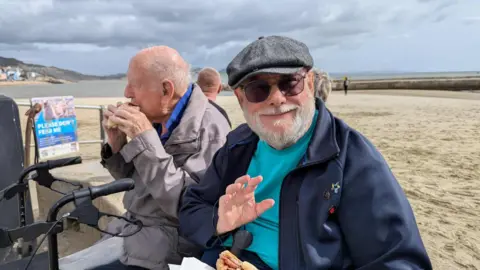
John said he went to the GP in September 2020 after his symptoms started to become "significant".
"I started to get diarrhoea, I stopped eating and it got gradually worse and worse, and wasn't going away," he said.
"I was feeling weak and tired. I got very cold at times despite the room being warm. My wife and my children were worried that I might not make Christmas."
After seeing his GP, John then took an FIT test and blood tests.
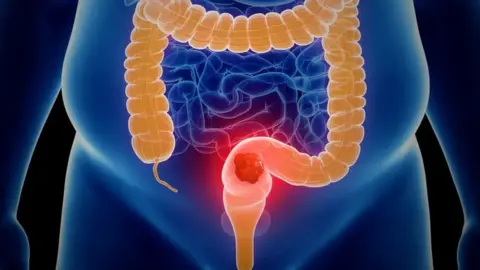
The FIT test is a non-invasive test that detects hidden blood in poo, which can be an early sign of bowel cancer.
After the FIT test "flagged concerns", he then had a chest X-ray and colonoscopy.
Following his bowel cancer diagnosis, John underwent a series of treatments, including surgery, radiotherapy, and chemotherapy.
"I want to urge anyone who is eligible to complete their FIT test - it could save your life," he said.
Dr Dave Briggs, executive director of outcomes at NHS Nottingham and Nottinghamshire, said: "By detecting and treating cancer at an earlier stage, we can boost people's chances of survival.
"We are also making cancer diagnosis more accessible than ever before through home screening kits like the FIT test, mobile screening units for lung cancer which are conveniently located in communities and the roll-out of community diagnostic centres."
Follow BBC Nottingham on Facebook, on X, or on Instagram. Send your story ideas to eastmidsnews@bbc.co.uk or via WhatsApp on 0808 100 2210.
