First Razorbill chicks fledge on island

 R Goodwill
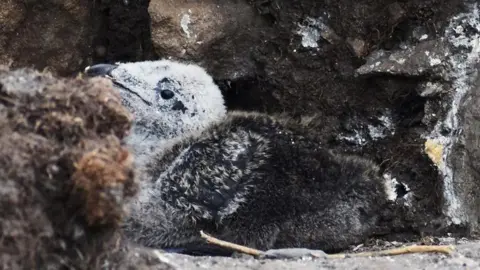
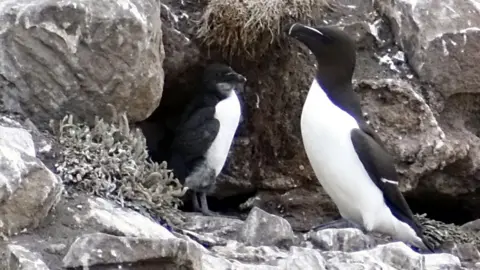
Two Razorbill chicks have fledged for the first time on an island off the Northumberland Coast, conservationists have said.
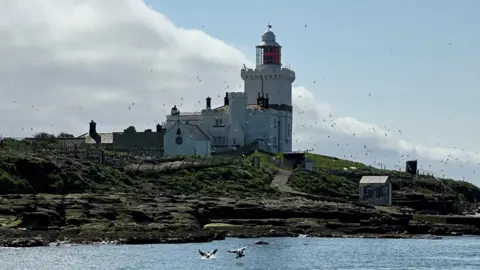
Although a small number of Razorbills have been seen attempting to breed on Coquet Island since 2021, July marked the first successful fledging of chicks, the RSPB said.
The charity said the island was not an obvious choice for the birds as they usually nested on cliffs, but up to 12 had been spotted this year.
Rebekah Goodwill, RSPB warden, said it was "incredibly rewarding" to see the population thrive.
 R Goodwill
The RSPB said four eggs were laid to one breeding couple, with two chicks surviving and successfully fledging in mid-July.
The birds are amber-listed in the UK in Birds of Conservation Concern 5 and their future depends on the health of the oceans and climate change.
Industrial fishing and falling fish numbers all threaten the Razorbill, the conservation charity said.
 Duncan Leatherdale
Ms Goodwill said the breeding suggested Coquet Island could provide a variety of habitats for different species.
"After seeing them make several unsuccessful breeding attempts over the past few years, it's incredibly rewarding to finally see these Razorbill chicks fledge," she said.
"Watching this small group grow and thrive feels like a sign that we're getting something right for nature here."
