Investigation brings closure for long-lost family after WW2 Nazi kidnap

 Meerkat PR
A Polish family which lost contact "so abruptly" with a loved one who was kidnapped by the Nazis said they have finally gained closure after an investigation spanning a decade reconnected them with his story after his death.
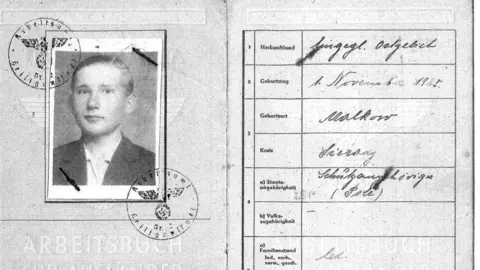
Jozef Domanski was 14 in 1941 when he was snatched from his home and forced to work on a farm during World War Two.
Though he survived the conflict, he never saw his family again and, to his mother and sister, his existence would remain merely ink on paper until the 1980s, when he seemingly disappeared again, for good.
"The letters stopped so abruptly and then there was no chance to ever see him again," Domanski's nephew recalled.
Krzysztof Sadowski added: "I remember my grandmother being heartbroken about her son."
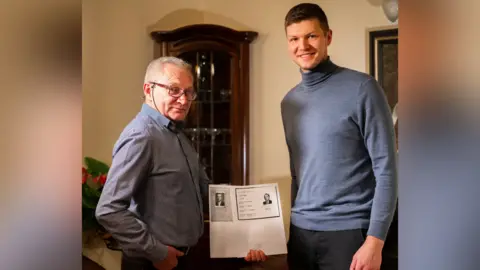
He said he planned to place Domanski's photograph on the graves of his grandparents, the parents who never saw their son again.
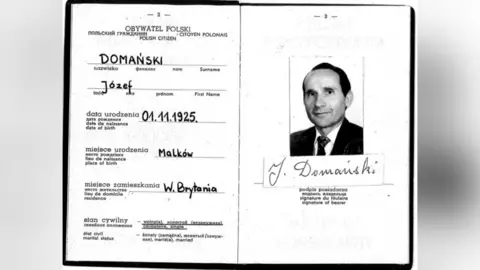
Before he went silent, Domanski had relocated to Kidderminster, Worcestershire, after the war and would exchange letters with his family, spaced out over the years.
In their correspondence, he told them about his new life living between Worcestershire, Wolverhampton and Essex, and how he had worked at a textiles factory for decades.
But once all contact stopped the family "believed for years that he was missing forever".
 Meerkat PR
It was not until his eventual death in 2012, while living in Wolverhampton, that new light was shed when the City of Wolverhampton Council instructed a group of "heir hunters" to piece together his family tree, after a will could not be found.
What followed was more than 10 years of legal and genealogical work, requiring cooperation between specialists in the UK, Germany and Poland.
Simonne Llewellyn, chief executive of Finders International, which has regularly featured on the BBC's Heir Hunters, said the case stood out even among the firm's most complex investigations.
"This was an incredibly moving case that required extensive collaboration across borders," she said.
"The combined efforts of researchers in the UK, Germany and Poland were essential in finally reconnecting Jozef Domanski with his family."
The intricate research was led by Benjamin Ratz of Poland-based GEN SPZOO, who acted as chief probate researcher and worked closely with Domanski's sister before her death.
A solitary life
It transpired the factory worker stopped communicating with his family after he suffered an accident at work that prevented him from being able to write.
With declining health, he died in 2012 and the news of his death came years later to his sister, Helen Sadowska - Krzysztof's mother.
"She was extremely saddened," he said. "My mother Helena was the sibling he wrote to most frequently from the mid-1970s.
"In his letters, he often spoke about feeling melancholic about Poland and about being so far away from his family."
Researchers also found that he had remained single, without a family for the rest of his life, something he had made clear even before his disappearance.
"He made it clear that remaining unmarried and not having children was a conscious decision," Krzysztof said. "He lived alone."
He never returned home to Poland as researchers said Domanski feared he would jeopardise his family's safety if he tried to visit, even to the extent of being accused of being a spy, due to what happened to him during the war.
 Meerkat PR
As part of the investigation, researchers were able to hand over Domanski's estate to his remaining relatives, who shared more than £100,000.
Krzysztof said the money carried a profound emotional meaning, rather than just material wealth.
He said he hoped his family's story would inspire other families separated by war and catastrophe.
"Today we have technologies and possibilities that didn't exist before," he said. "Don't give up looking for your family."
Follow BBC Hereford & Worcester on BBC Sounds, Facebook, X and Instagram.
