Blind campaigner criticises loss of guide dog

 PA Media
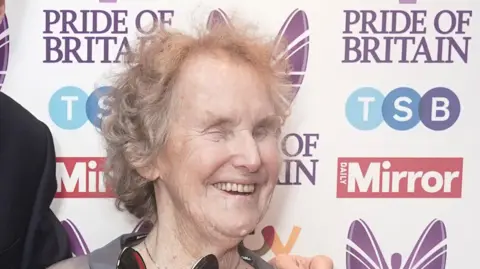
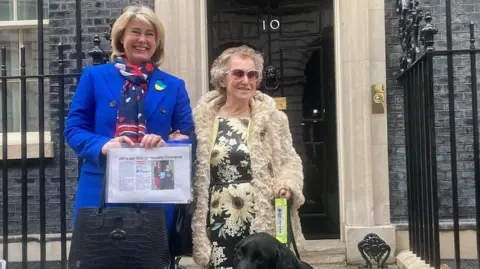
A blind disability rights campaigner fears she will lose her independence after being told she is no longer entitled to a guide dog.
Jill Allen-King, from Westcliff-on-Sea in Essex, came up with the idea for textured pavements at road crossings and was given an OBE for services to disabled people.
But the 85-year-old said she was struck off the Guide Dogs charity waiting list for a support animal in November, after almost three years in limbo, because she no longer met the walking ability criteria.
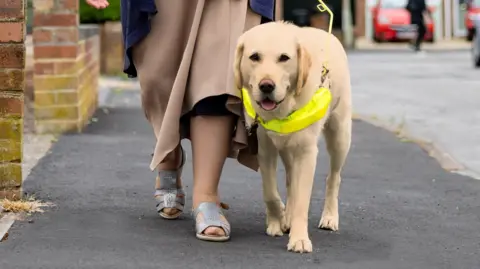
The charity said it had a "certain criteria" that must be met for animal welfare and it was working hard to cut the 1,000-strong waiting list for a dog.
The average wait for people wanting a guide dog from the charity is 16 months, which it said had worsened due to the Covid-19 pandemic.
Allen-King has campaigned for better access rights for blind and partially-sighted people since she lost her sight aged 24.
She has been without a guide dog since her previous pooch, Jagger, was retired from service in June 2023.
 Justin Dealey/BBC
"Most of us that are waiting [for a dog] are totally blind," she told Ben Fryer on BBC Essex.
"I've been left totally housebound. A friend takes me to church every Sunday, but I've got no confidence to go out on my own."
Despite her pleas for a new dog, Allen-King claimed she was taken off the waiting list because she could not meet the charity's requirement of being able to walk one-mile (1.6km) a day.
Its criteria states: "You must be able to walk for around 40 minutes (around a mile) each day. You may use a single walking aid, e.g. a stick or crutch. If you use a wheelchair, it must be electric."
She said being asked to meet that requirement without any time to bond with the dog or build up her fitness was "not acceptable".
"I'm very, very annoyed - not just for me, but for those of us that are waiting," she said.
 Getty Images
Alex Pepper, head of accessibility at Guide Dogs, said decisions on who did and did not receive dogs were not taken lightly.
"We're doing more and more to try and increase how many partnerships we're doing, and that we're having more successful partnerships with our dogs," he said.
He stressed that, as a guide dog user himself, he felt "immeasurable" empathy for Allen-King.
"Our intention is always to support people in any way we can," he said.
Follow Essex news on BBC Sounds, Facebook, Instagram and X.
