Residents 'cut off by lack of transport links'

 Sam Read/BBC
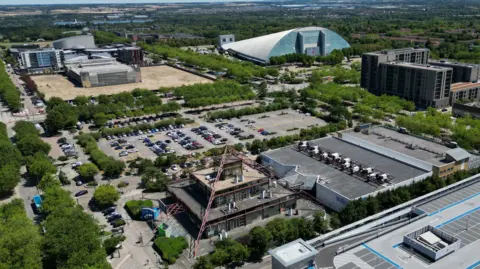
People living on the outskirts of a city said they felt cut off from facilities due to a lack of transport links.
As part of The Milton Keynes Community Foundation's Vital Signs report, residents on estates and new developments were consulted.
The report said a "lack of affordable shops and activities nearby, and the costs of alternative private transport, represents a major concern", which created "enormous financial pressure for those already on the tightest budgets".
Senior Labour councillor Shanika Mahendran pointed out that the city council had limited authority over commercial bus services.
"[But] we are always thinking of ways to keep communities connected, whether it be with MK Connect or with the loop service."
 Amy Holmes/BBC
This is the 13th year the foundation has published its report, which examines local authority data, speaks to community organisations and, for the first time this year, more than 250 residents.
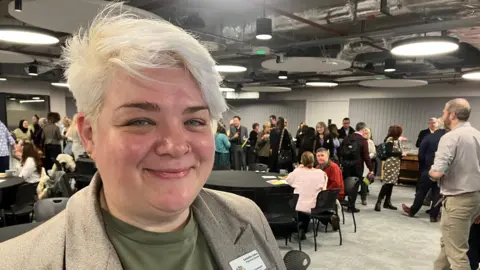
The foundation's Sam Snelus said some people were forced to use taxis as "limited transport access is putting additional financial pressures on low-income families".
The report said: "One resident of Glebe Farm spends up to £800 a month on taxis in winter to get her children, who have special needs, to their school. The school is three miles away and too dangerous to cover on foot."
Snelus told the BBC: "There is a lot of exciting work going on in Milton Keynes with East West Rail and the (proposed) Mass Rapid Transport system, but there is also a lot of disparity, and 42% of residents feel it is the area that needs most improvement."
She said in the most deprived areas people were "paying for taxis to get to and from work and to supermarkets, because the alternative is to go to the local corner shop, which is more expensive".
 Amy Holmes/BBC
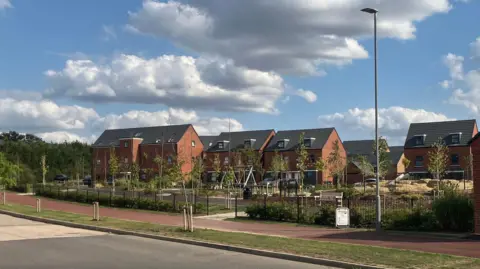
As part of the report, the Milton Keynes-based Open University (OU) compiled its 'Hidden Toil' research, which focused on people on lower incomes who had moved to newer estates like Eagle Farm, Whitehouse and Fairfields.
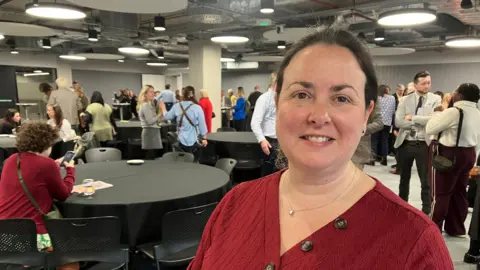
Dr Sarah Alcock, from the OU, said people she spoke to thought the properties "looked nice and kept the heat in", but also found that "a shiny new house did not solve their problems".
"Particularly for those on lower income, money worries do not go away and if where they move is away from the city centre, a lack of transport links can actually increase problems," she said.
She added that new estates often had "no shops, bars or restaurants" and people living there "do not have a place to meet up, and even those that do have a community centre, it is quite small".
 Sam Read/BBC
The report, which focuses on 10 different topics, found that although the city council was ahead of government targets to build 1,720 houses a year (2,110 were constructed 2024-25), just 7% of those in central Milton Keynes were affordable housing.
Mahendran, cabinet member for planning and placemaking at the Labour-run council, said: "On the same week this report is published, a new Centre for Cities report has shown more than half of neighbourhoods classified as income-deprived in 2010 were no longer in that category by 2025.
"We still have a long way to go, but as that report shows, our city is one of a handful where we have focused on growth and that has meant disposable household income has grown too.
"By building more housing, we have managed to keep housing prices comparatively low."
A Ministry of Housing, Communities and Local Government spokesperson said: "We are building 1.5 million homes across the country, and home building rates in Milton Keynes were higher than the national average last year.
"We are also investing £39bn to build more affordable and social housing, alongside tackling the cost of living crisis by increasing the national living wage and cutting energy bills."
Arriva, which runs bus services in the district, has been contacted for comment.
Follow Beds, Herts and Bucks news on BBC Sounds, Facebook, Instagram and X.
