Why tartan is 'having a moment' in fashion again

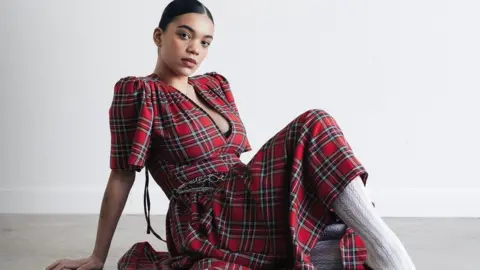 Declan Corcoran
Maybe it's the global obsession with The Traitorsor perhaps Scottish heritage is the latest aspirational lifestyle choice - but whatever the reason there is no doubt that Highland chic is back in fashion.
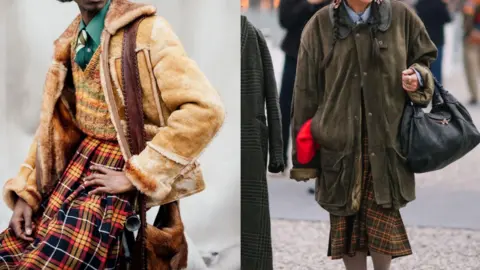
British Vogue has named tartan skirts the first street-style trend of 2026 and the recent Pitti Uomo event in Florence showcased menswear looks which would not be out of place on the Royal family's Balmoral estate.
"Tartan and plaid are having a moment," says fashion stylist and writer Alexandra Fullerton.
"Major designers, echoed by the high street, are creating collections that work for a more outdoorsy lifestyle," she says.
"Or at least one that looks like it."
 Getty Images
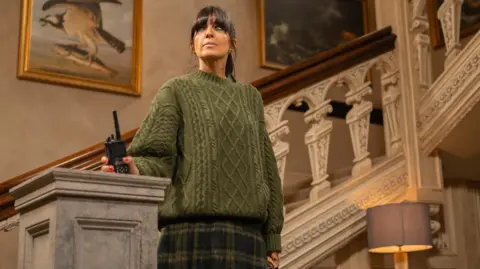
It's an approach showcased by Claudia Winkleman in the UK version of the hit show The Traitors, which is set against the backdrop of Ardross Castle near Inverness.
Her Highland gothic outfits match traditional Scottish heritage style with haute couture and a twist of the unexpected.
In theory she is dressed for pheasant shooting on the hills of the castle estate but in practice it is all in the name of fashion.
Fullerton says that is part of broader trend of heritage style in high fashion influencing the high street.
"Tartan is in focus for fashion in 2026," she says
"Thanks in part to the ongoing trend for all things British Heritage."
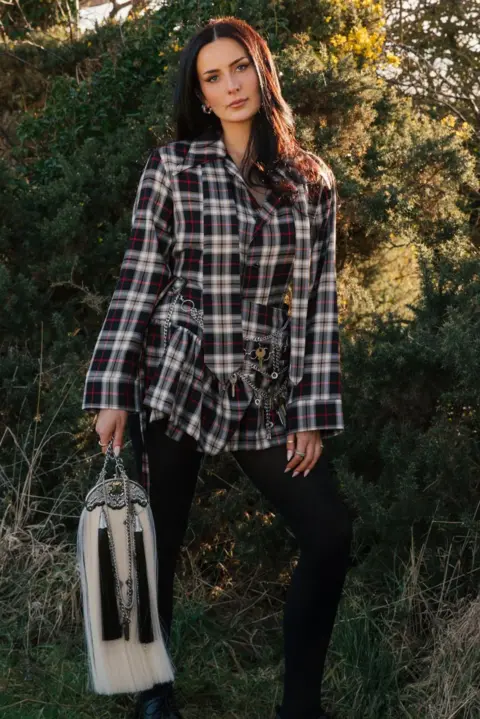
Scottish designer Annabel Stewart describes her heritage-inspired fashion line as a "love letter" to her family and lineage.
Born and raised in Lochinver, Stewart describes a feeling of pride at being from the Highlands.
She says she drew inspiration from what was around her when she was growing up - the landscapes, the people and what they were wearing.
"My first collection was inspired by my parents' wedding," Stewart says.
"There was Stewart tartan everywhere, the waistcoats, kilts and the dresses."
 Charlotte Cullen
The 30-year-old designer says she wants to maintain this pride in traditional tartan but with a fashionable, ready-to-wear approach.
Her designs are made using traditional techniques such as pleating and draping and she sources tartan from local fabric mills honouring the "craftsmanship of traditional kiltmaking".
But she gives tartan a fresh look by using it in modern outfits like maxi dresses and matching sets, and by layering tartan skirts over jeans.
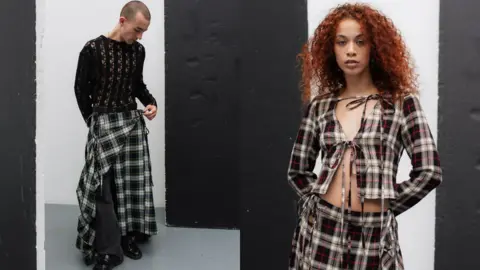 Declan Corcoran
"It's honouring Scotland, taking traditional dress and making it fashion-forward," Stewart says.
"A lot of younger people look for self-expression and they find that through celebrating heritage.
"Fashion is just a way of showing that off," she says.
In one of her latest creations, 'Sìle', she has made a tartan print from old family photos, which she says represents their resilience in the face of the Highland Clearances - the forced displacement of tenants in the 18th and 19th centuries.
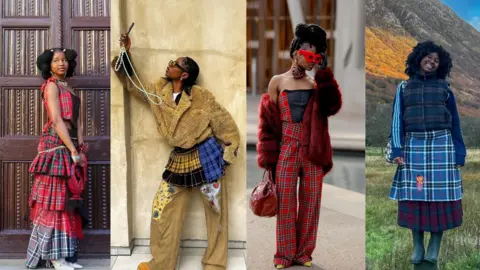 Blessing Afolayan
Blessing Afolayan is a fashion content creator and stylist who incorporates tartan into her everyday style.
African by heritage and raised in Scotland, she reflects her identity by mixing tartan print into high-fashion, streetwear and African looks.
"For a long time I didn't feel fully entitled to claim tartan as part of my own story," she says.
"Embracing it now feels like reclaiming a piece of my Scottish identity in a way that's personal."
Afolayan reworks tartan materials, often buying second-hand.
She says: "It encourages longevity and reuse rather than disposability, which aligns with how I approach fashion.
"Wearing tartan feels like honouring the past while re-imagining it for the present."
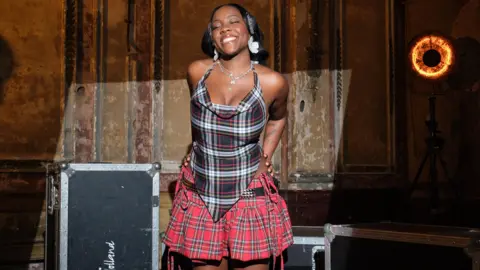
Trend forecasting data predicts a continued rise of tartan within fashion throughout 2026.
But this is not the first time tartan has emerged as a popular print within fashion.
The late London-born designer Alexander McQueen often used tartan in his garments - a nod to his own Scottish heritage.
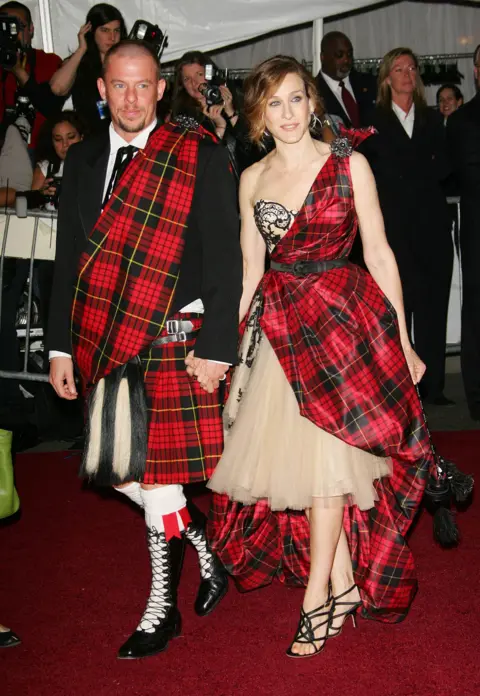 Getty Images
Widows of Culloden - one of McQueen's most controversial autumn/winter collections in 2006-7 - included a wool tartan dress.
Actress Sarah Jessica Parker famously wore a variation of the dress to a function in New York in 2006.
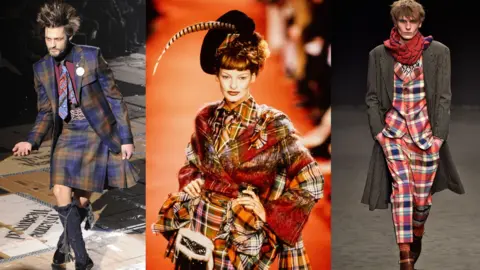
Meanwhile Vivienne Westwood featured tartan such as Bruce of Kinnaird in a number of her collections such as Anglomania.
 Getty Images
Fashion historian Dr Helen Walter says Westwood's "punk" approach to tartan transformed it from being something associated with staid British cultural norms and gave it a rebellious streak.
She says Westwood returned it to something closer to what its reputation was hundreds of years ago before Sir Walter Scott and King George IV made it into the preserve of the Scottish nobility in the 1820s.
In recent decades it has come in and out of fashion but be prepared for another tartan revival.
