New forensic technique could be 'game changer' for solving sex crime cases

 BBC
BBCNew technology which can identify DNA from a single cell could transform crime scene forensics, according to experts.
Scottish scientists behind the SCAnDi project say the technique can establish both who the sample came from, and which part of their body.
Prosecutors believe that if experts can give evidence about DNA with a higher level of certainly, it will help juries reach their verdict.
Experts say this could lead to more convictions in sex crime cases and fewer miscarriages of justice.
Those behind the technology are now looking to make the process robust enough to be used in court.
 Getty Images
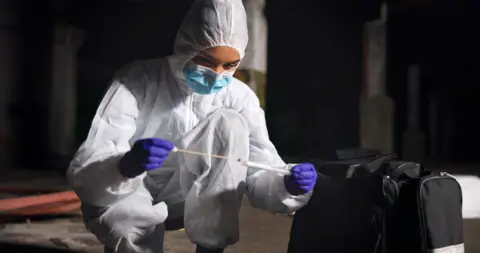
Samples collected from crime scenes often contain a mixture of DNA from different people.
The scientists believe their new tool can help "unmix" the DNA and establish who and where it came from.
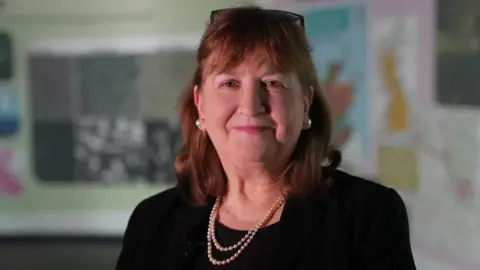
Ashley Edwards KC, Scotland's principal Crown counsel, believes this could play an important role in the prosecution of sex crimes.
"Before we run a trial we will consult with the forensic scientists," she said.
"The question we often ask is: 'Can you tell us who has donated the sample, where it has come from?"
"The DNA of the mix involved usually the potential accused and the complainer, but they can't often tell us the sources of the sample."
She said that being able to do that would be a real benefit.
"That's almost a real game changer. The more certain the scientists can be, the better it is for a jury," she added.
"They can say 'this is what I've found and this is what it means' rather than 'it perhaps means this, or it perhaps means that'."
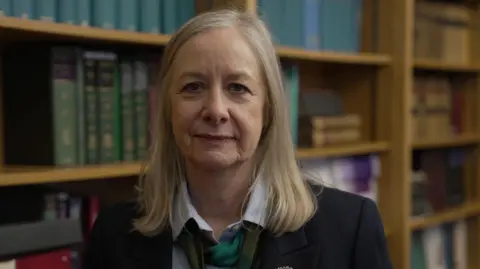
Prof Dame Lorna Dawson from the James Hutton Institute in Aberdeen is one of the lead scientists.
She has helped to put some of Scotland's most dangerous murderers behind bars.
She was involved in investigations into the notorious World's End murders, the cold case inquiry into the 1957 disappearance of 11-year-old Moira Anderson, and more recent investigations into missing toddler Ben Needham in Kos more than 30 years ago.
Prof Dawson believes the tool she has developed will provide more secure and more accurate information which can help secure a conviction.
"The data the research will generate will give much more confidence in working out how DNA got to be at a crime scene, and which part of the body that DNA came from... so where, what and who contributed to that crime," she said.
'Very powerful'
She said more 45% of the DNA samples collected by police were mixtures.
"To work out who left behind the DNA, we need to work out what type of cell that DNA came from," she said.
"We'll be able to give the 'who' with the 'what cell it came from' information. And that's very powerful."
Prof Dawson said one scenario where it could be used would be a case where a man was accused of strangling a woman.
"Are we able to differentiate the DNA of the skin cells as coming from his hand and the victim as coming from her neck?
"With this methodology we'll be able to work out who did what."
She says state-of-the-art methods, including AI, will be used to provide both "intelligence and evidence".
The current project also includes experts from the Earlham Institute in Norwich and several universities including Edinburgh.
While the tool is not "court ready", further tests will be carried out on forensic samples in live cases.
The aim is to develop methods that are peer reviewed to ensure the new approach is robust enough to be used in a court of law.
Sandy Brindley, chief executive of Rape Crisis Scotland, said the technique could have "a profound impact" on prosecutions for sexual offences in Scotland.
She said most rape cases in Scotland do not make it to court because it is often difficult to corroborate the crime.
Speaking on the BBC's Radio Scotland Breakfast, she said: "What we see in some cases is the person accused of rape dismissing DNA evidence, claiming for example it was accidental contact, it was in a social situation, it was brushing past someone in a hallway.
"If we are able to pin down that the DNA is coming from somebody's vagina or somewhere else intimate it really stops accused people being able to make that kind of claim."
If you, or someone you know is affected by the issues in this article, help and advice is available at BBC Action Line.
