Beaches stripped by 'unusual' south-easterly storm

 Steve Wyatt
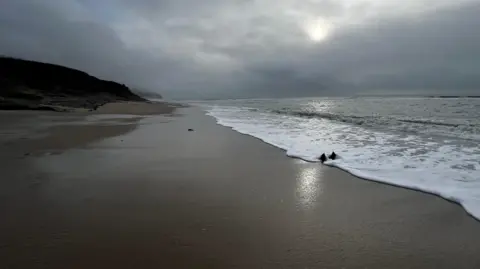
Recent storms have been reshaping Dorset's coast, with shingle beaches turning to sand and sandy beaches stripped back to the bedrock.
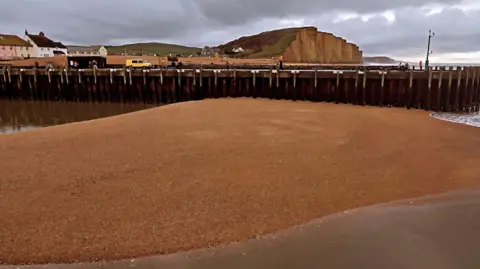
In West Bay, an entire beach turned up in the harbour, partially blocking the entrance.
So what has caused these changes and will the beaches return to normal with time?
Sam Scriven of Dorset Coastal Forum said it was down to the unusual nature of Storm Ingrid on 24 January, and that some beaches could require human intervention to be replenished.
Scriven, an expert on the conservation and heritage of the Jurassic Coast World Heritage Site, said the cause of the stripped beaches was "very specifically Storm Ingrid".
"The reason it was unusual is, it was coming from the south east," he said.
"Normally all of our storms come from the south west.
"At Seatown, the beach has been completely cleared off down to the bedrock underneath but I've seen it happen before and it always comes back again."
 Ross Moore / Platform Restaurant
Scriven said Dorset Council's coastal engineers believed Storm Ingrid had been "a bit unusual in terms of how severe the impacts have been" but added it was "part of the pattern" of climate change.
He said: "At Ringstead, I wonder whether it [the beach material] has been washed westward... so it may well come back.
"In some cases, some of that material from other beaches may have been swept offshore.
"In places like Swanage and Lyme Regis, they are created beaches - that sand has been put there to help manage the coastal defences so it might be that they have to put it back, but it's very early days."
 Bridport Harbour / Dorset Council
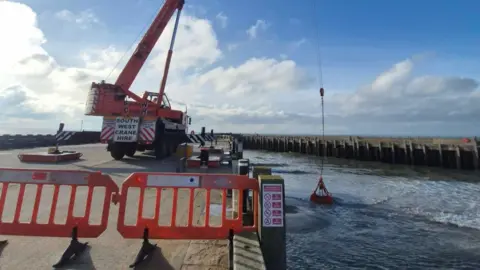
Scriven said the council and Environment Agency had been carrying out monitoring and were awaiting reports before deciding what to do next.
At West Bay, the Bridport Harbour team said "consistent south‑easterly winds" had caused an "unusual amount of beach material from East Beach to accumulate in the outer harbour" on 29 January.
In a message to mariners, it said: "There is a high risk of grounding for vessels attempting entry or exit except during favourable tidal conditions."
Work began on Monday to remove it and is expected to take several days.
