Hundreds spent clearing up laughing gas canisters

 PA Media
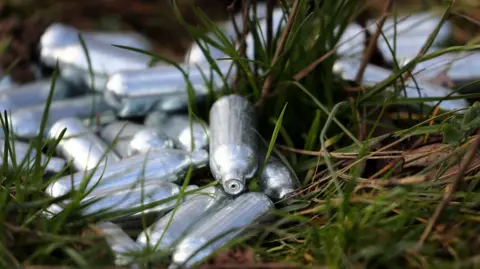
Laughing gas canisters dumped in a Lake District beauty spot cost the National Trust hundreds of pounds to dispose of, a charity has said.
Rangers found 26 large, commercial-size nitrous oxide canisters on the shores of Ullswater, near Wordsworth Point in Cumbria, over the summer.
The National Trust said the £532 spent on the clean up could have funded the planting of 212 saplings or provided the materials and labour to repair 39ft (12m) of drystone wall or upland path.
Ranger John Hutchinson said empty canisters were being found "quite regularly".
"We've had to purchase two special 60-litre storage drums to hold them safely until they can be collected, and hire a commercial waste company to dispose of them properly," Hutchinson said.
"Nitrous oxide misuse is harmful, but doing it right next to the cold waters of the lake adds a serious extra risk to the individuals involved.
"On top of that, the discarded canisters create a real hazard for nature and wildlife, making the misuse of this gas dangerous both for people and the environment."
Nitrous oxide is a colourless gas that is inhaled and is commonly used as a painkiller in a healthcare setting and in dentistry.
Since it was categorised as a Class C drug in late 2023, it is now a crime to possess or sell it for recreational purposes.
'Take rubbish home'
Cumbria Police has warned nitrous oxide "can have serious health consequences and can even kill".
The force found more than 50 canisters on the Raffles estate in Carlisle at the end of December.
It prompted former National Trust worker Becci Senior to highlight the effects on those who then have to deal with such waste.
Senior, who worked in visitor management at the Aira Force site when the canisters were found back in the summer, said disposal was more time consuming and removed rangers from conservation work.
"[It's] not just charities either, if it was a farmer, a landowner, then on paper at the very least, they have to dispose of that correctly.
"I really don't think that that goes through anybody' mind, the knock-on effect to the landowners."
Hutchinson said the canisters were not the only litter the team had to deal with as plastic bottles, dirty nappies and "even the odd sock or shoe" were also being left behind.
"Every year, National Trust rangers, staff, volunteers and people in the local community spend hundreds of hours picking up litter," he said.
"That's time and energy that should be going into restoring habitats and protecting wildlife - work that's crucial in tackling climate change at both local and landscape levels."
He urged people to "take a moment, think, and take your rubbish home with you".
