Education minister says he will spend extra money on teachers' pay

 PA Media
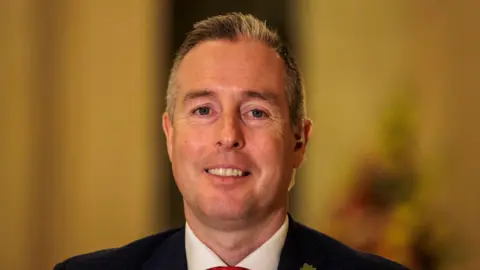
The Education Minister, Paul Givan, has said he can spend extra money to give teachers a pay deal in 2025/26.
Givan was seeking approval to spend extra money by issuing a ministerial direction – a formal instruction to overrule advice from accounting officers.
He said that the first and deputy first ministers have now approved the move.
That means he will be able to make a pay offer to teachers in early 2026, although it is not clear what that offer will be.
The Northern Ireland Teachers' Council (NITC) has welcomed the move.
A spokesperson for the NITC said the council looks "forward to engaging constructively" with management side at the Teachers' Negotiating Committee in early January.
"Our focus remains on securing a fair and sustainable pay offer for teachers, who have waited patiently for progress amidst the ongoing pressures within the education system," they added.
Dr Graham Gault, from National Association of Head Teachers Northern Ireland, said they were "pleased that the minister now has a package of money that will open the avenue for negotiation".
"We hope that there is enough money now in the minister's pocket for us to have meaningful conversation on the other side of Christmas towards a pay settlement for this 25/26 year."
Dr Gault added that "everybody in the negotiating room will be wanting strikes to be avoided so we hope that the minister will come with a package that will be acceptable to our members".
'Reasonable'
The education minister hopes to enter negotiations with unions "early in the new year so that we can reach an agreement".
Givan told Good Morning Ulster: "I've made provision for a pay reward to be made up to 4% and that would be the basis upon which we will enter into that negotiating process through the proper framework.
"I do believe that it is reasonable that we would be aligning ourselves largely with parity when it comes to teachers pay."
"I think it is a fair pay reward to be making to the teaching profession," he added.
'An important step'
In a statement, Givan said that the Northern Ireland Executive had taken "an important step towards ensuring teachers are treated fairly.
"While this is a positive step forward, the wider financial challenge for my department remains acute.
"I continue to work with officials and the Education Authority to reduce the projected deficit of £267m for this financial year, but critical pressures persist."
There had been disagreement among executive ministers over the education budget, with Givan warning that his department would "unquestionably overspend" its budget.
He claimed the allocation of money for a pay award was blocked by Sinn Féin from being placed on the executive agenda, but in response Sinn Féin said that Givan "needs to do his homework" and that the party believed teachers should be paid properly.
'Categorically untrue'
In his written statement to the assembly on Thursday though, Givan took aim at Sinn Féin again, and said that a claim that he had not completed the paperwork for an urgent procedure for the money was "categorically and demonstrably untrue".
"The famous quote often attributed to former US Senator Daniel Patrick Moynihan seems appropriate: 'People are entitled to their own opinions, but not their own facts'," he wrote.
In a separate statement Givan called the approval of the ministerial direction on teachers' pay "a positive step forward," but he also said that education was facing a projected budget deficit of £267m this financial year.
The Education Authority (EA) has already made a number of cuts to save money, including asking taxi drivers to reduce their rates for transporting children to school.
Fees for music lessons and the cost of school dinners are also set to rise from January 2026.
