Police to get pay uplift as ministers allocate unspent money

 BBC
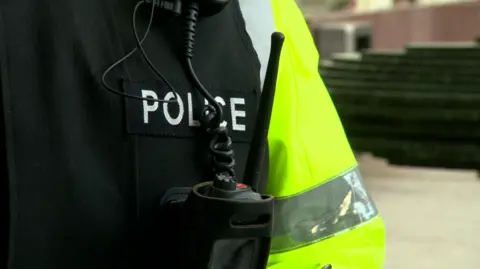
BBCPolice Service of Northern Ireland officers are in line to be offered their pay award this year, after Stormont ministers agreed the distribution of about £100m in extra funds.
The money was reallocated from a pot of unspent funds handed back by various Stormont departments, in what is known as a monitoring round.
The majority of the money will go towards health, education and justice where pressures over public sector pay rises have been most acute.
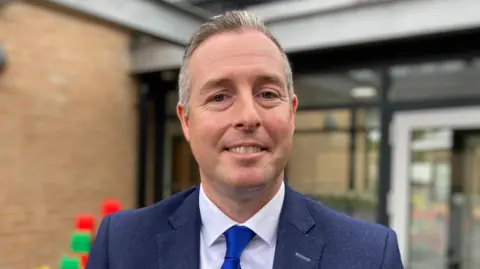
Finance Minister John O'Dowd told the assembly that the executive recognised "the importance of investing in our police workforce".
Justice Minister Naomi Long said her department had received £11.6m - with £4.7m of that to implement a recommended uplift of 4.2% for police pay this year.
"I am pleased that following my representations, police officers have been recognised on the same basis as our health and education colleagues in the December monitoring round, with funding now delivered for this year's police pay uplift in full," she said.
"This is a welcome step forward and I will now work with the chief constable to get this much-deserved uplift into officers' pockets as quickly as possible."
O'Dowd said the Department of Justice (DoJ) had received £7m to meet the cost of year one of the Police Service of Northern Ireland (PSNI) recruitment plan.
The Police Federation, which represents rank and file officers said both moves were "a welcome end to uncertainty and doubt".
"Policing is set to get £11.6m, but I have to say that given the state of Northern Ireland finances, doubt remains over the much larger allocation that is required next year to significantly boost recruitment," said the federation's Liam Kelly.
 Liam McBurney/PA Wire
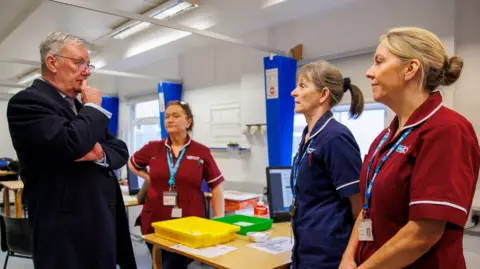
Health Minister Mike Nesbitt has already been given approval to take £100m from next year's budget to fund a pay rise for healthcare workers in Northern Ireland.
The executive had previously committed to provide the department with up to a further £100m to make the award, but O'Dowd said health would receive just short of £70m.
O'Dowd said the agreement to allow the minister to overspend would ensure "there is no delay in the implementation of this award to health workers".
Nesbitt said he would "prioritise" the issue for this year to ensure staff do not have to wait any longer but it will mean Nesbitt overspending to the tune of some £130m to meet the commitment.
The minister said the pay would be backdated to 1 April and "paid in full".
However it will put extra pressure on the Department of Health's budget for 2026/27 as any overspend will reduce its starting position next year.
Teachers to get pay award
Teachers are also due to be offered a pay award for 2025/26.
The executive had previously said it would set aside up to £37m to help with this cost but no offer has been made yet to unions.
O'Dowd said the Department of Education would receive £25.6m as part of Tuesday's monitoring round to address teachers' pay.
The Department for Infrastructure (DfI) will also get £4.6m to make pay awards to public transport staff.
The finance minister said the reallocation of money "demonstrates the priority the Executive and I attach to our vital public sector workers and our desire to support public sector pay despite the financial constraints we face".
He has also asked ministers, where possible, to make further savings to help fund pressures facing departments.
Ministers also now know how much money their departments will have for the rest of this financial year.
What is a monitoring round?
Monitoring rounds provide a system to review spending plans and priorities.
They allow for changes in executive priorities to be reflected in additional allocations and provide flexibility to meet emerging needs.
Monitoring rounds are usually held three times a year, in January, June and October.
But O'Dowd decided to combine October and January into a single exercise this month.
What happens now?
The focus shifts to the process of agreeing a budget for the next financial year (2026/27).
O'Dowd has already said he hopes to bring a draft multi-year budget to the executive for approval before Christmas.
It would allow departments to plan day-to-day spending better over the next three years, however for various reasons Stormont has not implemented such a budget for more than a decade.
In the current political climate and with an assembly election scheduled for May 2027, it is possible that parties may opt to support a single-year budget.
