Farmers fighting pest that destroys sugar beet

 BBRO
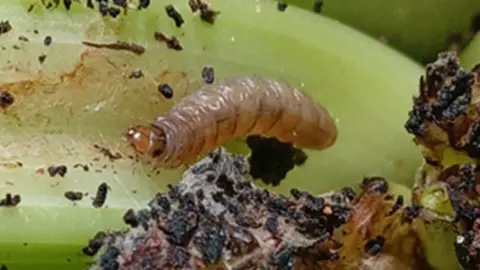
BBROFarmers are hoping for a cool, wet spring to halt a three-year population explosion of a pest which has the potential to destroy crops.
The effects of the beet moth on sugar beet crops in East Anglia during the dry summer of 2025 were so bad the government had to give emergency authorisation for chemical treatment.
Experts described it as a "new and emerging threat" first found in 2020. Among the worst affected areas are the dry and sandy Brecks in west Suffolk and west Norfolk.
Researchers are trying to establish why the so-called "micro-moth" has made a dramatic move to farm crops after previously mainly feeding on coastal sea beet — also known as wild spinach.
 BBRO
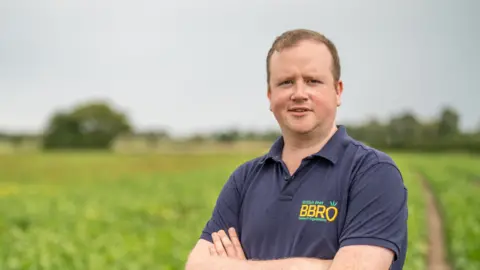
BBRODr Alistair Wright is head of crop protection at the farmer and industry-funded BBRO (British Beet Research Organisation).
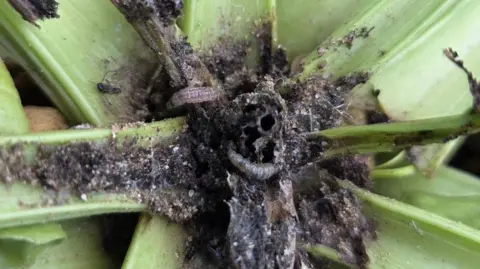
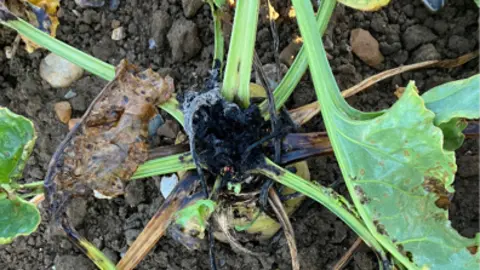
"The moth bores into the leaf stalks and eventually defoliates the canopy so that the plant can't make any more sugar and makes it susceptible to rot — so the beets can't be stored either," he explained.
"You can probably find this moth in at least half of the sugar beet fields.
"It's a small proportion of those that are seeing this serious damage, but for those that have it it's a very serious problem."
 BBRO
BBRODr Wright added that work was taking place to control the moth and the damage its larvae do.
This included working with chemical manufacturers to look at new insecticides and a range of alternatives like ploughing "so the pupae are buried and when they emerge they can't get up to the soil surface", he said.
"New traps have been deployed this year using AI to determine the number of moths caught, which will help us get the correct insecticide at the right time as well as other interventions," Dr Wright added.
"Correct timing will control the longer term build up, and avoiding drought will stop it taking hold."
 BBRO
BBROBeet moth was first identified by amateur moth monitors in the region — known as lepidopterists — in coastal areas and the reasons for its move inland remain unclear.
One theory is the species could have arrived from mainland Europe.
"It's likely that if it was blown in from the continent then it did enter the country through Suffolk because that's where most new beet pathogens tend to make landfall," explained Dr Wright.
Follow Suffolk news on BBC Sounds, Facebook, Instagram and X.
