Eating crayfish 'won’t turn tide on invasive species'

 BBC
BBCA man licensed by the Environment Agency to trap an invasive species of crayfish for human consumption has said they breed so quickly they are “out of control”.
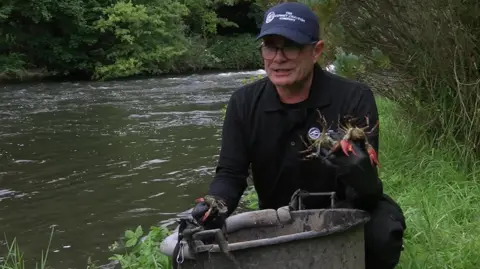
Andrew Leech catches North American signal crayfish from the River Kennet in Thatcham.
Strict rules imposed by the Department for Environment, Food and Rural Affairs (DEFRA) means he can no longer sell live crayfish.
While he hopes to introduce the idea to British consumers of eating the invaders, he said trapping them won’t turn the tide.
Mr Leech runs Kennet Crayfish Company and empties up to 150 traps of crayfish from the River Kennet every day.
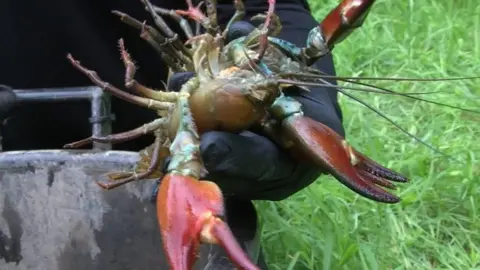
He said: "There is a market, they taste absolutely fantastic. They look pretty pre-historic, but they do taste good, that's why they were introduced in the first place."
The species - which are like small, freshwater lobsters - was originally brought to the UK 50 years ago to be farmed for European markets.
But after escaping into the wild, the population soared. They carry a disease that has had a devastating impact on the endangered native white clawed crayfish.
It is a criminal offence to catch or move crayfish without a licence from the Environment Agency, because of the risk live specimens could spread to other lakes and rivers
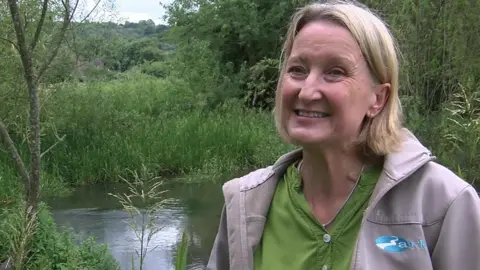
Charlotte Hitchmough from Action for the River Kennet explained: "They have a massive damaging impact, because they burrow into the banks and that causes erosion.
"The coarse fish lay their eggs in the summer and the crayfish just march into those nests and eat every egg and if they run out of food, they just start eating each other.
"They're in too many places already and we definitely don't want them any further."
Mr Leech, who has been in the business of catching and selling crayfish for more than 20 years, said it is a form of "pest control", but the licensing changes by DEFRA mean selling in bulk is harder.
His warehouse in Thatcham was built for the Swedish and exporting market and previously saw up to four tonnes of crayfish sold each week.
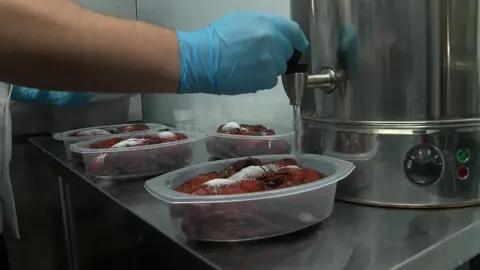
With the law stopping the sale of live crayfish, Mr Leech has invested £250,000 in processing and packaging systems to sell part-cooked and fully cooked crayfish instead.
He said: "A lot of our sales at the moment are to foreign people living in the UK. If it's not in batter, people over here, tend not to try it.
"We'll probably have to get back to exporting, unless we can get people in this country to try them. Everybody who does try them raves about them, but this is where we've got to educate."
Follow BBC South on Facebook, X (Twitter), or Instagram. Send your story ideas to south.newsonline@bbc.co.uk or via WhatsApp on 0808 100 2240.
