Rewilding leads to bumper year for rare Kent moth

 Mark Joy
- Surveys counted a peak of 255 black-veined moths this summer
- The moth was close to extinction in 1995
- Farmers were encouraged to restore their fields so the moths could thrive
A critically-endangered moth indigenous to the east Kent countryside has had a bumper year after its habitat was restored by farmers.
In 1995, the black-veined moth was close to extinction due to the loss of their chalk grassland habitat in the Wye National Nature Reserve.
Natural England launched a project encouraging farmers to restore fields back to their natural form.
This year, surveys counted a peak of 255 moths, the highest number recorded since the project began.
Dan Turson, Natural England's farm adviser, said: "Farmers are leading nature recovery through long-term one-to-one advice and close working to create new wildflower grasslands at scale."
He said they were now seeing the results of the farmers' hard work.
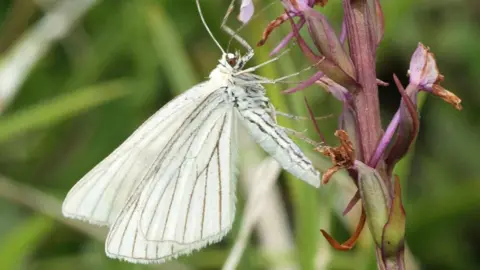
Black-veined moths look like white butterflies patterned with distinctive black lines across their wings.
To survive, they need a mosaic of both tall tufts of grass and short wildflowers within the same field, making them much rarer than other insects that live in chalk grassland.
