CCTV sought at former colliery after trespassing

 Getty Images
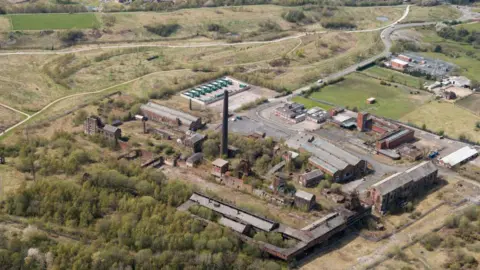
Plans have been submitted for increased security measures at a former coal mine in Staffordshire, after urban explorers and children have been seen trespassing at the site.
Stoke-on-Trent City Council wants to keep nine existing CCTV cameras at Chatterley Whitfield Colliery permanently, as well as add 13 new cameras, with two electrical cabinets to power them.
It also wants to erect 2.4m-high palisade fencing to secure the site, with stainless steel mesh added to the existing fencing, as well as upgrading the current gate.
The local authority said there were several hazards at the site, including concealed mine shafts, machinery and unstable buildings.
Chatterley Whitfield was the biggest coal mine in north Staffordshire and the first in the UK to produce a million tonnes of coal in a single year.
The site has 15 listed buildings and was included on Historic England's heritage at risk register due to its deterioration since the colliery's closure.
The council said there were both Grade II and Grade II* listed buildings at the site, with approximately a third of the site designated as Scheduled Ancient Monuments.
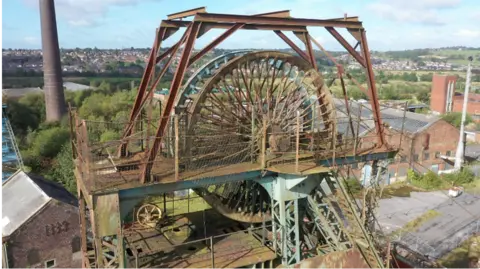
Although some buildings are in a state of decay, others remain in use.
The former Chatterley Whitfield Colliery headquarters is used as an enterprise space, while the Ken Salt building is used by the Friends of Chatterley Whitfield.
"The condition of some of the buildings twinned with a site which has underground spaces is not suitable for free roaming public access, however evidence posted online has illustrated that 'urban explorers' regularly visit the site," the authority said in its design and access statement.
"More recently those accessing the site have included children who are at significant risk due to the large number of hazards across the site.
"There is also machinery and items connected with the mining industry that should not be accessed."
'Substantial benefits'
The new CCTV posts, as well as retaining the older ones, would enable the site to be better protected, the council said.
The new posts would be about 6m (19.6ft) high, with a concrete plinth of about 1m (3.2ft), which would ensure they cannot be pushed over.
They would each have two different cameras to ensure 360 degree vision of the site.
The existing palisade fencing would be reinforced by the ex-mesh on either the inner or outer sides.
The new fencing would be about 7.8ft (2.3m) tall.
Historic England had no objection to the application.
"There would be substantial benefits from the enhanced site security, better protection of the heritage assets and reduction in vandalism, and restriction of unauthorised access to the site and the unstable historic buildings, and the resulting risk to life," it said.
Follow BBC Stoke & Staffordshire on BBC Sounds, Facebook, X and Instagram.
