Why are 5,000 oysters being scrubbed by volunteers?

 George Carden/BBC
Volunteers have been scrubbing 5,000 oysters ready for them to be put into Chichester Harbour to help filter water and restore the eco-system.
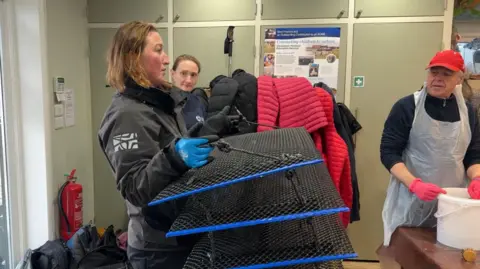
The oysters will be secured in baskets beneath pontoons in the West Sussex harbour - and it is hoped they will restore native oyster numbers, as well as improve biodiversity.
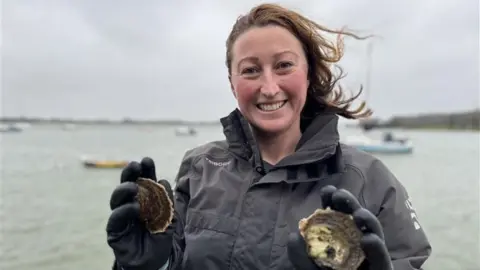
Lottie Johns, co-founder of Harbour Oysters, said increasing oyster numbers would lead to purified water which encourages sea grasses and salt marsh to grow, attracting fish nurseries and eventually birds and mammals.
"The oysters are amazing little ecosystem engineers, a single oyster can filter about 150 litres of water per day," she said.
 George Carden/BBC
"Our first project in Emsworth Harbour was 4,000 oysters and they can turn over the entire yacht basin in 20 days," she added.
"They can take out dissolved organic carbons like sewage, plant matter and land run-off like nitrates and phosphates. They can also deal with forever chemicals."
Oysters are filter feeders which use their gills as a sieve. Microscopic hairs on the gills trap plankton, sediment, and nutrients, while the oyster consumes the food and expels non-food particles
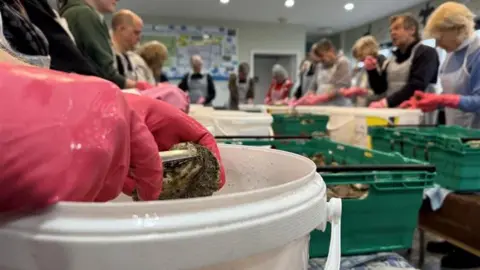
Seventy-five volunteers joined for the oyster scrubbing at Chichester Harbour Conservancy Education Centre on Wednesday.
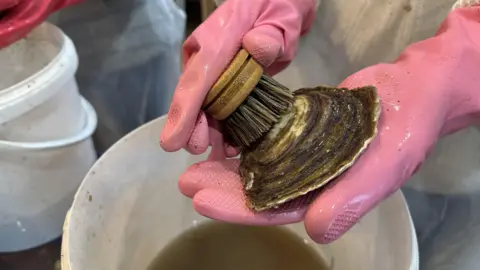
Scrubbing ensures that no invasive species or pollutants are released into the harbour waters, protecting existing marine life.
 George Carden/BBC
After being scrubbed, the 5,000 oysters are briefly dunked into a chlorinated bath to kill bacteria.
Lottie added: "The native oyster was basically wiped out in the 17th and 18th Century because of overfishing, pollution and disease."
Next month 5,000 more oysters will be installed in Emsworth, in Hampshire. There are also plans for installing them in baskets at Portsmouth and Littlehampton too.
 George Carden/BBC
There will be 14,000 installed underneath Chichester Harbour's jetties this year alone.
Kate L'Amie, communications and engagement officer at Chichester Harbour Conservancy, said they were "really keen" to have this project in the harbour.
She said the harbour had a nature recovery initiative focusing on four key areas – salt marshes, sea grass meadows, coastal birds and water quality.
Kate said: "I think most people wouldn't know we had sea grass meadows in Chichester Harbour, they're a great home for seahorses. We have two species of seahorse here."
In the spring, Chichester Harbour will be working with Solent Seascape Project to create a natural habitat for oysters on the seabed.
It is hoped these native oysters in cages will help increase the oyster population by releasing larvae into the harbour waters, which could settle and grow into an adult oyster.
Follow BBC Sussex on Facebook, on X, and on Instagram. Send your story ideas to southeasttoday@bbc.co.uk or WhatsApp us on 08081 002250.
