About 250,000 native oysters released into Humber

 Wilder Humber / Finn Varney
About 250,000 oysters have been placed around the Spurn Point peninsula in the Humber Estuary.
The shellfish have been reintroduced as part of a project to restore the marine ecosystem along the Yorkshire coast.
It follows on from the release of 28,000 native European flat oysters in July.
Organisers of the Wilder Humber project said it was the first time native oysters had returned to local waters since the 1940s.
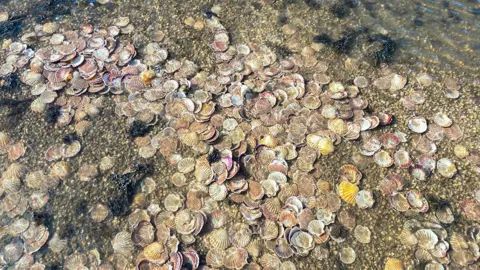
Oyster larvae, known as spats, are grown on scallop shells in water-filled tanks in Scotland.
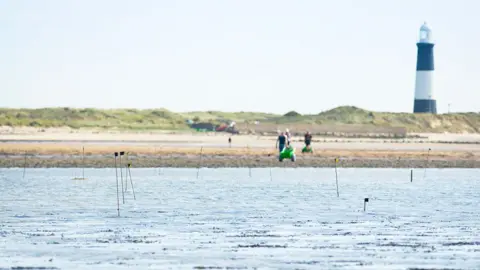
The shells are then transferred into the Humber and located in the intertidal zone, the area between high and low tide, where it is hoped they will grow into adults.
They filter pollution from seawater and the reef of oysters will also provide a home for other marine wildlife.
 Wilder Humber / Finn Varney
The estuary was once home to oyster reefs covering more than 300 acres (122 hectares), however, overfishing, pollution, and disease destroyed the shellfish over the last century, leaving them extinct, Wilder Humber said.
Andy van der Schatte Oliver, marine programme manager at Yorkshire Wildlife Trust, said the latest release was a "milestone" in the plan to reintroduce 500,000 oysters to the estuary.
"It's a moment of leadership in marine restoration," he said.
"Wilder Humber is one of the first projects in the UK, if not the first, to restore native oysters in the intertidal zone, where they can be monitored and studied far more effectively."
Listen to highlights fromHull and East Yorkshire on BBC Sounds, watch the latest episode of Look Northor tell us about a story you think we should be coveringhere.
Download the BBC News app from the App Store for iPhone and iPad or Google Play for Android devices
