'England's canals are not valued by government'

 BBC
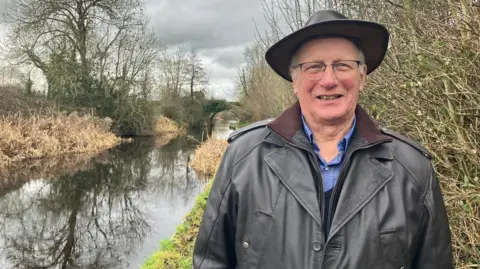
BBCEngland's canals are not valued enough by the government and need more funding support, the chair of a waterways trust says.
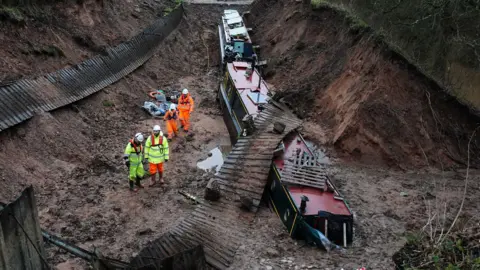
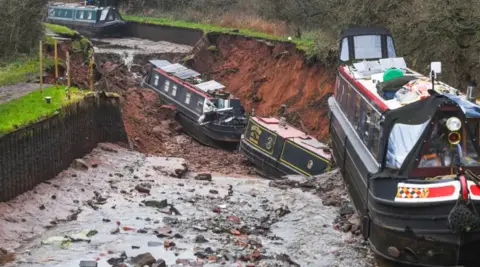
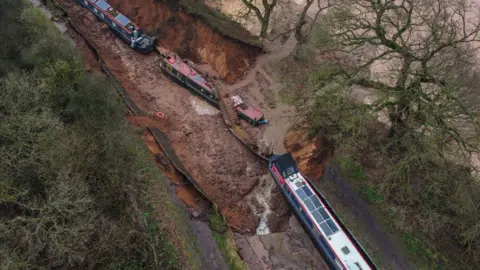
Michael Limbrey has spoken out after the collapse of the Llangollen canal in Shropshire that left narrowboat owners stranded, just before Christmas.
"[Canals are] part of the history and the landscape of our country," said Limbrey, chair of Montgomery Waterway Restoration Trust (MWRT), in north Shropshire. "A whole network of waterways spreading across our country don't seem to be valued."
But, the Department for Environment, Food, and Rural Affairs (Defra) says it is investing more than £480m into infrastructure maintenance by the Canal and River Trust (CRT).
Defra stressed the waterways are much-valued by the government, especially because of the wide range of benefits they provide.
Several boaters were left without their homes when the canal collapsed, just outside Whitchurch on 22 December, and repairs could cost millions.
On Tuesday Paul Stowe, whose family owns a boat left hanging over a huge hole when the collapse happened in the early hours, saw it refloated after a salvage operation.
MWRT is currently reviving the Montgomery Canal, which branches off the Llangollen Canal.
 Andy Kelvin/PA
"The government contribution to the maintenance to the canals is not as much as it should be," said Limbrey.
"They're part of the history and the landscape of our country, we have stately homes, we have castles, we have many historic structures, Roman remains... that are valued.
"Yet these thousands of miles of canal... a whole network of waterways spreading across our country don't seem to be valued in the same way as these individual spots are."
Limbrey said following the collapse, which he described as "shocking" and "devastating", he saw a lot of commentary about money online.
"The comments that came through were, 'Why bother with canals, why should money be spent on the canals?'"
"The canal network is such an asset right across the country. It's got access for so many people for recreation, for wellbeing, it's got the canalside businesses, it's got an amazing range of structures, locks and weirs and bridges - all built on the canal 200 years ago.
"All of these things add up to this amazing resource... people can just walk onto the towpath and get on it and enjoy for free, at any time."
How does CRT funding work?
The CRT was set up in 2012 to replace the publicly-owned British Waterways.
Back then, the government agreed to provide a grant to the charity across the first 15 years, amounting to about £740m in total.
Defra said this was primarily to support its infrastructure maintenance programme, to ensure navigability and public safety, while the CRT became established and developed alternative sources of funding.
The government also provided a permanent endowment fund, now worth about £1bn, that generates a further quarter of its income.
The CRT and Defra signed a memorandum of understanding in 2012 that said the CRT would move towards greater self-sufficiency over time, reducing its reliance on public funding.
Defra said the grant agreement was clear that there was no obligation for the government to fund the charity beyond 2027. However, following a review it has agreed a further 10-year grant funding package of £480m, from 2027.
This, it said, was because it recognised the CRT was providing good value for money and delivering a wide range of public benefits.
Follow BBC Shropshire on BBC Sounds, Facebook, X and Instagram.