Boy should have had antibiotics earlier - inquest

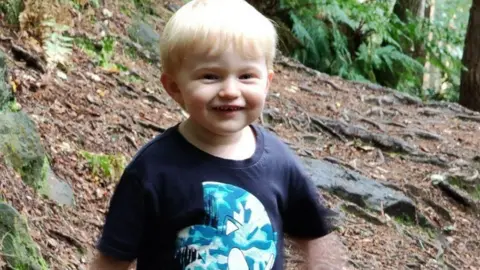 Richard Jones
A five-year-old boy who died from sepsis should have been given antibiotics sooner at a hospital in West Yorkshire, an inquest has found.
Edward Jones was admitted to Leeds General Infirmary (LGI) on the morning of 18 February 2023, with severe leg and abdominal pain, but deteriorated during the day and died just before midnight.
The jury at an inquest at Wakefield Coroner's Court heard on Wednesday that discussions were held by staff about the possibility of sepsis, but certain tests were not carried out as the youngster had a normal temperature.
Coroner Oliver Longstaff recorded a narrative conclusion and said Edward was not given antibiotics until 20:30 GMT that day.
He read out a report to the jury from Leeds Teaching Hospitals NHS Trust, which said "antibiotics should have been given at earlier discussion stages, as direct harm would have been unlikely".
The inquest also heard that Edward's death was due to him developing Invasive Group A Strep (iGAS).
This was caused by bacteria invading parts of the body like the blood, muscles, or lungs, which then leads to severe, potentially life-threatening infections, such as sepsis.
Edward, from Yeadon, had had a recurrent ear infection that had resulted in the pain in his body and left him struggling to walk, so was brought into hospital by his family.
He had also been vomiting and had diarrhoea plus a fever.
A blood test carried out during the day gave "false reassurance Edward had improved" and the test should have been repeated for a second time.
It was not known why it was not taken again on that day, the inquest heard.
The report noted that both antibiotics and a second lactate blood test would have prevented him from later going into cardiac arrest but it was "not clear if it would have prevented his death".
'Pain everywhere'
The trust's sepsis screening tool was also not used, with the condition not being diagnosed as Edward had a normal temperature due to being given paracetamol earlier in the day.
The inquest also heard from consultant Dr Samantha Williamson who said that by 21:20 on the day of Edward's death, the team in the emergency department were concerned as the boy had jaundice and was pale, as well as a mild fever and a fast heart and breathing rate.
He was also "complaining of pain everywhere and was responding but looking tired".
He went into cardiac arrest a short while later and died.
Mr Longstaff noted that there were currently no national sepsis screening rules for paediatric departments in hospitals, adding this "needs to be addressed" and he would be writing a report on the issue.
As he wrapped up the inquest, the coroner told Edward's family he was with them for "far too short a time".
"What happened to you is the worst thing that can happen to a family and anything I say can feel futile and empty, but it is meant with sincerity," he added.
Following the coroner's conclusion, Dr Magnus Harrison, chief medical officer at Leeds Teaching Hospitals NHS Trust, said in a statement: "We are extremely sorry the care Edward received was not to the standard it should have been and I can't imagine how painful this must be for his family.
"We have carried out a detailed investigation and the coroner has heard evidence about the learnings we have already put in place.
"We recognise this will bring little comfort for Edward's family and our deepest condolences are with them all at this difficult time."
Listen to highlights from West Yorkshire on BBC Sounds, catch up with the latest episode of Look North.
