Chaldron wagon goes on public display

 Supplied
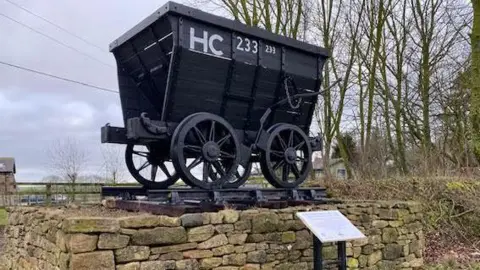
A wagon linked to a historic colliery railway has gone on display after spending years in storage.
The Hetton Chaldron Wagon has been placed in Warden Law, near Hetton-le-Hole, Sunderland.
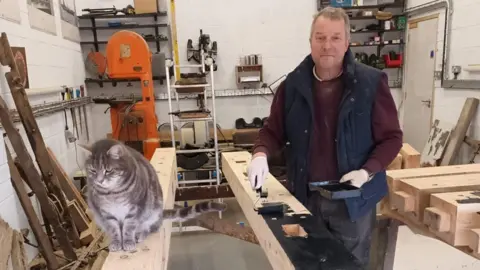
Howard Stafford, trustee of Hetton Colliery Railway 200, said it was an important symbol of the region's industrial heritage and it was great to have it on show.
The wagon was restored for the railway's 200th anniversary in 2022 and was displayed at various events that year to mark the bicentenary.
However, since then it had been mostly kept in storage and has not been accessible to the public.
The wagon was made for Elemore Golf Course, on the site of Elemore Colliery, near Easington Lane, in the 1980s, and was displayed there for about 40 years.
Its wheels are from an original chaldron wagon, believed to date back to the early 1900s.
The wagon had fallen into disrepair, but Stafford restored it for Hetton Colliery Railway's bicentenary.
"Not many of these things remain. To let that go would be a shame," he said.
 Supplied
Although the wagon has now found a home at Warden Law, where it has been since November, Stafford said there had been "discussions" to move it into Hetton one day, which would be "more significant" and allow even more people to see it.
"To me, it really is a symbol of the fantastic industrial past for the North East," he said.
"It's a symbol of, quite literally, the first fully designed steam powered railway in the world."
Hetton Colliery Railway was designed by George Stephenson and opened in 1822.
"Chaldron Wagons" or "Waggons" as they were then known, were used to carry the coal and the Hetton ones were marked with an "H".
Stafford said the Hetton line predated the Stockton and Darlington railway by three years but because it was purely for coal it "didn't really get the recognition that maybe it should have done".
"I think it's great, especially for the people of Hetton, that this is on display," he added.
"It reminds people of the fantastic engineering, setting world standards, as it were."
