Sunderland local elections 2026: All you need to know

 Getty Images
The election for Sunderland City Council is to be held on Thursday 7 May.
All 75 seats will be contested, with the 25 wards returning three councillors each.
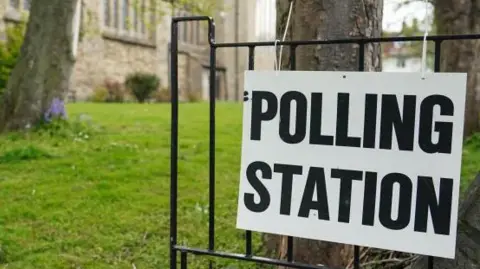
Polling stations will be open between 07:00 and 22:00 BST and people in the queue by 22:00 will still be allowed to vote.
Who is standing in Sunderland?
The list of candidates will be published after Thursday 9 April.
The Labour Party currently holds a majority of seats on Sunderland City Council with the parties split as follows:
- Labour - 50 seats
- Liberal Democrat - 12 seats
- Conservative - nine seats
- Independent - three seats
There is a vacancy in the Washington West ward.
Electoral ward boundaries have changed in Sunderland following the Local Government Boundary Commission Review and will come into effect for the May election.
How to vote for the local council
The deadline to register to vote is Monday 20 April and can be done online.
Polling cards will be sent out nearer the time with details of where to vote.
Voters will need to show photo ID at the polling station.
Up to three votes can be cast for different candidates. You do not need to use all the votes but three councillors will still be elected per ward.
These councillors will represent their constituents and help shape the direction of the local authority, which is responsible for services like bin collections and planning applications.
An application for a postal vote must be submitted by 21 April and the deadline to submit an application to vote by proxy is 28 April.
Sunderland City Council said it would start counting votes from 10:00 on Friday 8 May.
Analysis by Richard Moss, BBC North East & Cumbria political editor
This year's elections in Sunderland are the most significant the city has faced for more than two decades.
Boundary changes mean every council seat is being contested. That last happened in 2004, and since then generally only a third of seats have been up for grabs in any one year.
It heightens the chance of significant change at a council Labour has run since its formation in 1974.
In the face of poor national poll ratings, the city's Labour leadership will be focusing on its local record.
There are visible signs of ongoing significant regeneration in Sunderland, and they will hope voters give the party credit for improvements in its infrastructure and economy, and warn of the risk of sudden change.
But the city is being targeted by Reform UK who sense a chance of taking control after sweeping to power in neighbouring Durham last year.
They will hope the same strategy that worked there – a focus on immigration and attacks on the way the council is run – can lead to similar success.
As the city was the first to deliver a vote for Brexit in the 2016 European Union referendum, it would be a powerful symbol of the party's progress.
They did gain a foothold in November by winning a by-election in a previously Labour seat, though that councillor has now decided to sit as an independent.
The Liberal Democrats, the main opposition in the council chamber now, will also be looking to make gains, pointing to their longer track record of vigorously opposing Labour in the city.
The Conservatives will also be looking to at least hold on to their existing councillors, warning against placing power in the hands of what would be an inexperienced Reform UK administration.
The Green Party has so far failed to get a foothold in the council but will hope that the scale of this year's election offers a chance of a breakthrough.
Independents will also be a factor in some wards.
One challenge which could face all the parties is finding the 75 candidates needed to contest every ward across the city.
