The village mill behind a breakfast revolution

 goodnessgracious.co.uk
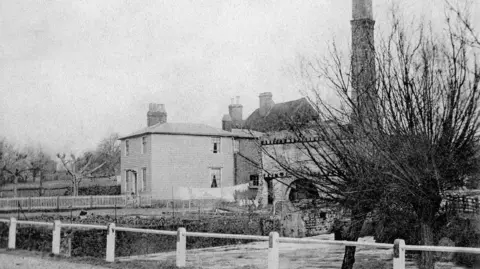
On the outskirts of a Surrey village, a stream winds under a busy road. It is the stream which helped to birth a revolution in how people start their mornings.
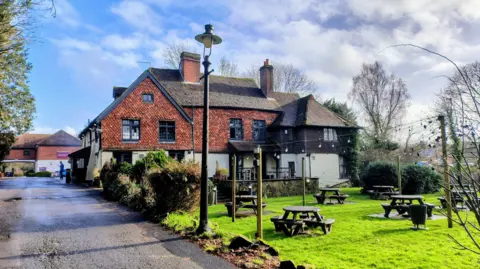
Salfords, near Horley, shares its name with that stream, and to its northern border there now stands a restaurant called the Mill House.
Here, over a century ago, it was that watermill, a church health movement, and a certain Dr Kellogg who set about turning wheat into Britain's first breakfast cereal.
Doug Cox, of the Horley Local History Society, told Secret Surrey: "There's just one or two traces of the mill now. Under all the brambles there is an obvious large flat area that was almost certainly the site of the mill."
Cox added: "This was the first mill in England to produce cereal from wheat.
 Getty Images
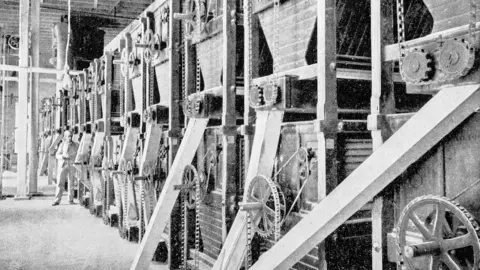
"It's quite reasonable to assume it was quite a large operation. It's hard to know precisely but we have photographs which show workers from the mill, and they include at least half a dozen men."
Salfords Mill ran as a successful operation throughout the 1800s, Cox said, but in 1887 the site was ravaged by a fire which pulled it out of use.
At the end of the 19th Century, the lease for the site was taken up by the Seventh-day Adventists, a Christian denomination which advocates for a healthy, often vegetarian lifestyle.
It was this group which rebuilt the burned-down mill to its needs - namely turning wheat into cereal.
In time, Dr John Harvey Kellogg, of the same American family synonymous with cereal, visited the UK to lecture on nutrition and health reform as a Seventh-day Adventist.
It is thought that, in 1896, he may have had a hand into shaping the mill into what it became.
Cox said: "The Dr Kellogg who came here was undoubtedly of the same family.
"I just think that they saw the opportunity to construct a new mill entirely to their requirements.
 Simon Furber/ BBC
"They selected this site for their breakfast cereal."
The story of what was made in the mill is rooted in oral history from the village - no primary sources have been identified, but residents recall the local myth of the mill and its produce.
It was a mill which would not last long. In August 1900, it too would burn down, bringing the cereal production to an end.
However, breakfast cereal would soon return from across the pond, when Kellogg's Corn Flakes hit shelves in the UK in 1922.
Now, sat by the side of the A23, a restaurant and hotel take its place. It may bear the Mill House name, and the smell of food still wafts through the air, but little now remains of one of the most revolutionary sites for the British breakfast.
Follow BBC Surrey on Facebook, on X, and on Instagram. Send your story ideas to southeasttoday@bbc.co.uk or WhatsApp us on 08081 002250.
