Medieval settlement remains found at wind farm dig

 MOLA-Wessex Archaeology
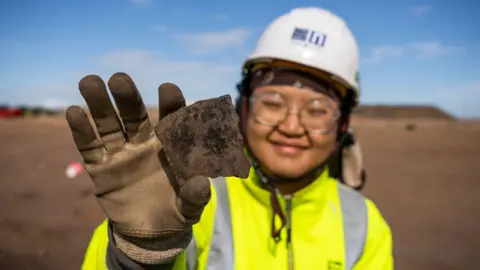
The remains of a previously unknown early medieval settlement have been unearthed during works ahead of an offshore wind farm development.
Archaelogists said the site near Friston, Suffolk, once housed wooden longhouses that could have been up to 19m tall and 6m wide (62ft by 20ft).
The substantial structures would have been home to a small community around the Anglo-Saxon period of 410 to 1066, research suggested.
Senior project manager Matthew Ginnever said: "The archaeological programme is already proving there is much to uncover about the history of East Anglia and its past populations."
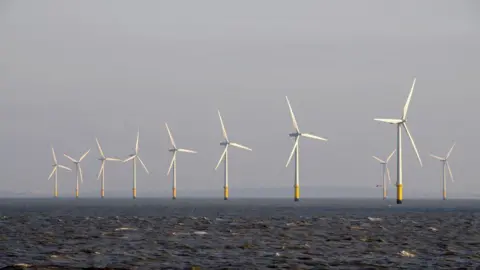
The discovery was made during excavations ahead of the East Anglia TWO and ONE North offshore wind farm developments by ScottishPower Renewables.
Archaeologists have undertaken work along the onshore cable corridor between Thorpeness and the substation site at Friston.
 MOLA-Wessex Archaeology
The wooden buildings near Friston were identified by the remains of post holes, MOLA (Museum of London Archaeology)-Wessex Archaeology said.
They would have acted as social hubs as well as homes, with a central hearth for cooking and keeping warm.
The settlement did not survive beyond the 1300s, but a modern right of way is aligned with the buildings - suggesting the footpath has been in use since at least the Anglo-Saxon period.
Archaeologists are to explore when the village was occupied and why it was abandoned.
"These sites were always rural, but they were by no means isolated," said Mr Ginnerver, from MOLA-Wessex Archaeology.
Other finds by the team of 90 archaeologists included evidence of Stone Age toolmaking, such as an axe head once used for woodworking, clearing land and possibly butchery.
A flint arrowhead made between 4,000 to 6,000 years ago was also unearthed and medieval kilns likely used for pottery, ceramics, or lime were identified near Sizewell.
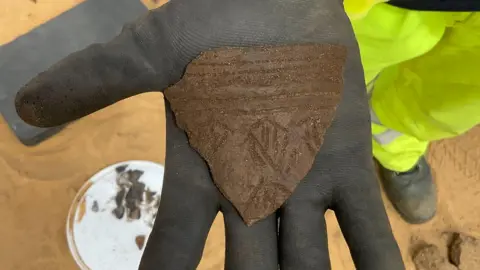
"We've discovered pottery associated with the 'Beaker folk', who lived across Europe in the early Bronze Age and brought new cultures and ideas to Britain," Mr Ginnerver added.
"This suggests locals were in contact and trading with groups on the continent more than 3,000 years ago."
"We look forward to adding more details like this to the rich tapestry of East Anglia's heritage as our work on the project continues."
Follow Suffolk news on BBC Sounds, Facebook, Instagram and X.
