'The situation is dire': War on Iran squeezes India's cooking-gas supplies

 AFP via Getty Images
The shockwaves of a war being fought nearly 3,000km away are now reaching India's kitchens.
As the US-Israeli strikes on Iran disrupt energy shipments through the Strait of Hormuz, supplies of liquefied petroleum gas (LPG) are tightening across India, forcing restaurants to cut menus, shorten hours and in some cases shut down altogether.
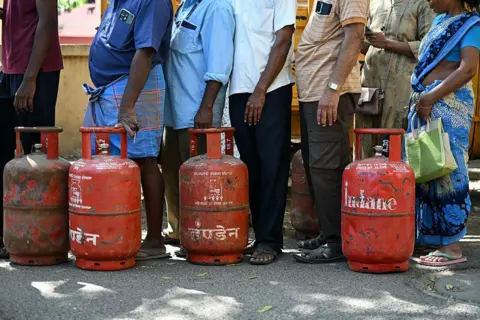
Social media is awash with video clips showing queues outside cooking-gas dealers across Indian cities and towns as worries over fuel supplies spread. Commercial LPG users appear the worst hit: the sharpest squeeze is in restaurant kitchens.
"The situation is dire. Cooking gas simply isn't available," says Manpreet Singh of the National Restaurant Association of India, which represents about 500,000 restaurants.
Most eateries run either on commercial LPG cylinders or piped gas, he says, and the shortages are now being felt across the country. "A lot of restaurants have closed - some in Delhi, many in the south [of the country]. People are switching to coal and wood and electric cookers to keep kitchens going."
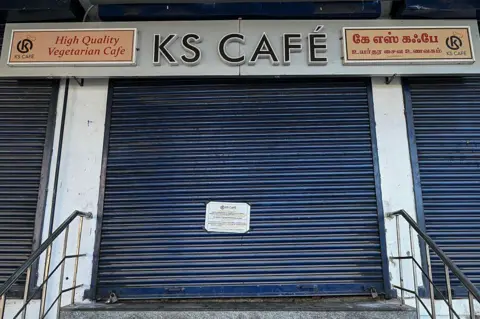
In Mumbai, media reports say up to a fifth of hotels and restaurants are already fully or partly shut as commercial LPG supplies tighten. In the southern cities of Bengaluru and Chennai, some eateries say their gas stocks have dwindled with little backup. "We can only make coffee and nothing else - it is nothing less than pathetic. Businesses are going to suffer," says Haroon Sait, who runs an artisan bakery and restaurant chain in Bengaluru.
 Getty Images
Restaurant operators are scrambling to adapt. "Menus are being curtailed, some are cutting lunch service and opening only for dinner," Singh says, adding that closures are fluctuating as supplies ebb and flow. "Three restaurants in Delhi were shut yesterday - two have already reopened. It's a fluid situation."
Retailers report a surge in sales of electric cookers, with some saying they are running out of them.
Yet, the government insists there is no shortage.
India has more than 300 million domestic LPG users and officials say supplies are being redirected to households as tensions from the war in the Gulf ripple through energy markets.
Roughly 60% of India's LPG is imported, and about 90% of those shipments pass through the Strait of Hormuz, the narrow Gulf chokepoint now effectively closed by the conflict.
The oil ministry says that it ordered refineries on 8 March to maximise LPG output for household consumption, lifting domestic production by about 25%. Non-domestic supply is being prioritised for essential sectors such as hospitals and educational institutions, while distribution will be "fair and transparent".
"Some panic booking and hoarding has been triggered by misinformation. The normal delivery cycle for domestic LPG remains about two-and-a-half days," says Sujata Sharma, a senior official in the petroleum ministry.
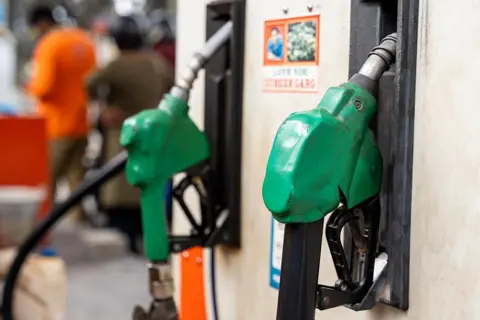
Now the anxiety is spreading beyond kitchens. On X, a widely shared video from Chennai shows a long, snaking queue of motorbikes outside a petrol pump. "The panic is real," the caption reads.
 NurPhoto via Getty Images
According to data from Kpler, maritime intelligence firm, concerns about India's broader fuel supplies may be overstated.
India imports 90% of its oil. Around half of its crude oil imports - about 2.5-2.7 million barrels a day - travel through the strait, largely from Iraq, Saudi Arabia, the United Arab Emirates and Kuwait.
Even if crude flows through the Strait of Hormuz are disrupted, the gap could be partly offset by higher imports of discounted Russian crude, according to Sumit Ritolia, a refinery and oil markets analyst at Kpler.
Based on vessel tracking and credible market sources, Kpler says incremental Russian crude imports in March could reach around 1-1.2 million barrels a day, narrowing India's effective shortfall from exposure to the Strait of Hormuz to about 1.6 million barrels a day.
"Around 25-30 million Russian oil barrels are currently floating on ships in the Indian Ocean and, with only India and China as major buyers, those barrels remain a ready fallback," Ritola told me earlier this week.
That flexibility has not gone unnoticed in Washington. US Ambassador to India Sergio Gor said in a post on X that India had been "a great partner in maintaining stable oil prices around the world", adding that the US recognises the country's continued purchases of Russian crude as part of that effort.
That's not all. India is also one of the world's largest exporters of refined fuels. In 2025, its net exports of refined products averaged about 1.1 million barrels a day, and refiners have increasingly diversified crude sourcing from alternative suppliers.
 Getty Images
"This means that refined product supply for domestic demand remains comfortable, and there are currently no indications that India will struggle to meet internal consumption requirements," says Ritola.
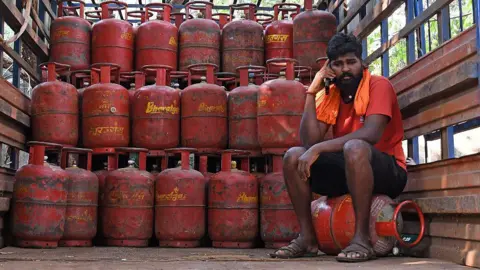
The real vulnerability is LPG, analysts say.
India consumes roughly one million barrels a day, but produces only 40-45% domestically, importing the rest - 80–90% of it through Hormuz.
Refineries can tweak operations to squeeze out a bit more LPG, but even a 10-20% boost would only lift domestic supply to about 47-50% of demand, leaving the country heavily reliant on imports, according to Ritola.
In short: "Crude supply risk can be partially mitigated through diversification and Russia flows. Refined product supply remains relatively comfortable. LPG availability is the real variable to monitor in the coming weeks."
What may be intensifying the anxiety on the ground is not just tight supply but patchy deliveries - and the familiar spectre of hoarding.
Singh of the National Restaurant Association of India alleges opportunistic profiteering.
"Retailers are misusing the situation - black-marketing cylinders and selling them at a premium. In one small town, I heard of cylinders being hoarded and auctioned off."
For now, India's oil supplies may be cushioned by global trade flows. But in kitchens across the country, the more immediate question is simple: how to get the next cylinder.
