'Fingers on the trigger': Deadly warnings for Iranians being urged to take action

 AFP
AFPWhen US President Donald Trump began strikes on Iran, killing Supreme Leader Ayatollah Ali Khamenei in the process, he told Iranians to "take over your government".
"It will be yours to take," Trump said. "This will be probably your only chance for generations."
But as the war between the US and Israel and Iran has deepened over the past two weeks, Iranians have received sharply different messages about what may happen if they do take action.
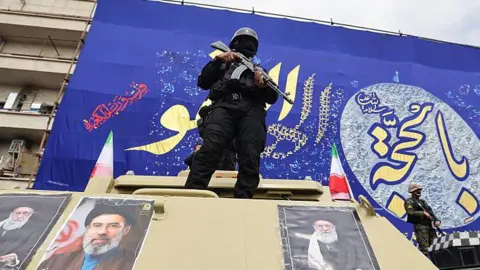
Encouragement from figures outside Iran has come as reports have emerged of an increased security and police presence in cities across the country, with officials of the Islamic Republic warning against any possible gatherings or protests.
'We will come after you'
Earlier this week, Iran's Police Chief, Brigadier General Ahmadreza Radan, warned that his forces would treat anyone who takes to the streets "at the enemy's request" as an "enemy".
"All our forces have their fingers on the trigger and are ready to defend the revolution and support their people and their country," Radan added.
Separately, a presenter on Iran's state television Channel Three addressed opponents of the Islamic Republic and those who might protest against the government.
"When the dust of this sedition settles, we will come after you," the presenter said.
"Confiscating your property will be the least of it. We will make you and your families pay, whether you are inside the country or abroad."
And on 8 March, Iran's Prosecutor General Office issued a statement warning Iranians living abroad that if they cooperate with what it described as "hostile enemies", they could face severe punishment.
Citing Iran's law on the "intensification of punishment for espionage and cooperation with Israel and hostile countries", the statement stressed that any "operational activity, intelligence cooperation or espionage" for such countries could result not only in the confiscation of property but also the death penalty.
These threats are a stark reminder of the threats faced by Iranians if they do protest against the government.
During weeks of anti-government protests in December and January, at least 7,000 protesters were killed in an unprecedented crackdown by security forces, human rights groups say.
'Take your destiny'
Meanwhile, figures outside Iran have tried to encourage Iranians to take action against their government, at a precarious moment for the clerical establishment.
On Tuesday, Reza Pahlavi, the exiled son of Iran's last shah, urged people in Iran to obtain essential supplies as soon as possible and wait for what he called his "final call".
In a video message, he said: "For your own safety, leave the streets and remain in your homes. Continue strikes and do not go to work. To show your unity, keep up the night-time chants [against the authorities] with strength."
Pahlavi also addressed members of Iran's military and security forces, saying: "This is the final opportunity to separate yourselves from the forces of repression and join the people."
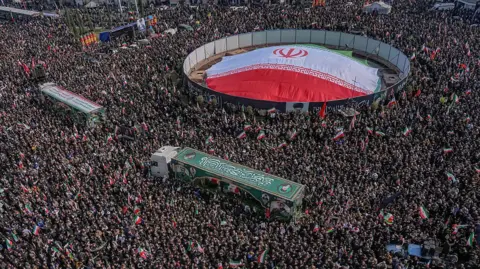
His call came as the security atmosphere inside Iran has intensified. As an internet blackout has continued, checkpoints have been set up in many neighbourhoods and streets.
 Getty Images
On Wednesday, Iran's semi-official Fars News Agency, which is close to the Islamic Revolutionary Guard Corps (IRGC), alleged that Israeli drones had targeted several checkpoints in Tehran. The agency said a number of armed personnel were killed in the attacks and, quoting what it described as unofficial sources, said "around 10" people had died.
Fars said the strikes targeted checkpoints in several districts and cited an "informed source" who claimed the operation was intended to weaken the security presence in Tehran and create conditions for unrest or anti-government protests. The report also alleged the operation involved "monarchists", referring to supporters of Pahlavi.
As the military strikes continue, concerns about civilian casualties and rising tensions in the Middle East have grown. Many observers have warned about the broader consequences of the war for civilian lives, regional security and global energy markets.
Since hostilities began, Israeli Prime Minister Benjamin Netanyahu has also addressed the people of Iran, saying Israel would "create conditions that will allow you to take your destiny into your own hands".
Netanyahu this week also added: "This is a unique opportunity for you to overthrow the regime of the ayatollahs and gain your freedom."
The competing messages highlight the intense pressure surrounding Iran as the conflict deepens.
Authorities inside the country are warning against any dissent, while voices abroad are encouraging Iranians to see the moment as an opportunity for change.
As the war continues and tensions rise, millions of people inside the country are watching events unfold while weighing the risks of what may come next.
