Summary

  • Oil prices continue to rise despite major countries agreeing to release a record amount of oil from their emergency reserves in an effort to calm markets

  • The IEA, which includes the UK and US, will release 400 million barrels - our reporter says that's about four days' worth

  • Iran warns oil could reach $200 a barrel as its attacks on ships intensify in the Strait of Hormuz - explosions were reported on at least two more foreign tankers overnight

  • The Israeli military launches a "wide-scale wave of strikes" against Hezbollah in Beirut, saying it has hit 10 structures. The military also says it intercepted missiles from Iran

  • Meanwhile Saudi Arabia says it has intercepted 18 drones, while Dubai authorities say nobody was injured after a drone fell on an apartment building

  • President Donald Trump says the US is "not finished yet" when asked about the Iran war

  1. Analysis

    Oil release is significant but doesn't answer crucial question for traderspublished at 05:53 GMT

    Nick Marsh
    Asia Business Reporter, Singapore

    Oil prices have continued to rise in morning trade in Asia, despite major countries agreeing to release a record amount of oil from their emergency reserves as they try to curb the impact of the Iran war.

    Brent crude has been hovering around $100 a barrel, even after all 32 members of the International Energy Agency (ISE) said they would release 400 million barrels - roughly what the world consumes in four days - in response to supply concerns.

    The intervention from the IEA was significant but it's not something it can do often. And for traders, it didn't answer the crucial question of how long the Strait of Hormuz will remain a danger zone for oil tankers.

    Iran's revolutionary guards has warned the country's enemies that they "will not be able to artificially lower the price of oil" and to soon expect it at "200 dollars per barrel".

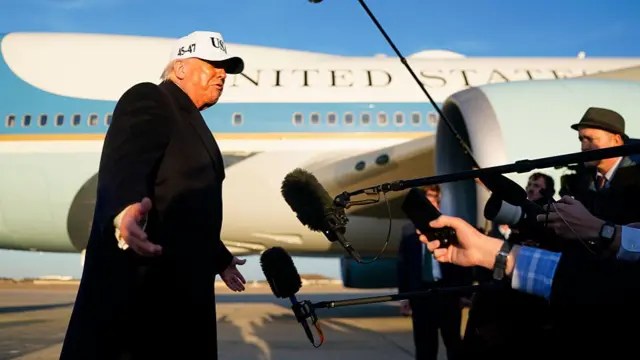
    US President Donald Trump, whose words have managed appease markets previously, is now under more pressure than ever to explain to Americans how this conflict won't have an impact on the cost of living.

  2. Israeli airstrike in Beirut kills 7 peoplepublished at 05:37 GMT

    Yolande Knell
    Middle East correspondent, in Jerusalem

    The latest Iranian attacks on shipping – including on vessels travelling through the crucial Strait of Hormuz – are deeply worrying for global trade and for Arab Gulf countries – which continue to be directly targeted with missiles and drones.

    Meanwhile, the Israeli military, which is closely coordinating with US forces, says it again launched an "extensive" wave of air strikes targeting the regime in Tehran overnight.

    It also says it struck 10 Hezbollah headquarters in Beirut within 30 minutes.

    The Israeli airstrike on Beirut killed seven people and injured 21 others, the Lebanese Health Ministry announced in a statement.

    At the same time, Hezbollah continued to fire missiles at northern Israel, and Israel intercepted incoming Iranian rocket fire.

    Cars, vans and people are seen on a busy street in Beirut at night.Image source, intogrey/Jack Seikaly/via REUTERS
    Image caption,

    Emergency services gather at the site of a strike in Beirut

  3. How many ships have been struck?published at 05:18 GMT

    The Thailand-flagged cargo ship Mayuree Naree engulfed in black smoke in the Strait of HormuzImage source, Reuters

    A total of 13 ships have been attacked in and around the Arabian Gulf, the Strait of Hormuz and the Gulf of Oman between 28 February and 11 March, UK Maritime Trade Operations (UKMTO) reported yesterday.

    Overnight, off the coast of Iraq, a further two ships were struck near the port of Umm Qasr, near the city of Basra. The attack killed one person and injured 38 others, the head of the General Company for Iraqi ports said.

    And just a moment ago, the UKMTO announced another incident north of Jebel Ali, UAE, writing that "the Master has reported the container ship was struck by unknown projectile causing a small fire onboard."

    A full damage assessment has been "impaired by darkness", it adds.

  4. Oil hits $100 a barrelpublished at 04:57 GMT

    Osmond Chia
    Business reporter

    Within the last few hours the price of Brent crude hit $100 (£74.79) a barrel, rising by 9% on Thursday in Asia.

    Oil prices have not eased as even after dozens of countries, including the US and the UK, announced they would release record amounts of emergency reserves.

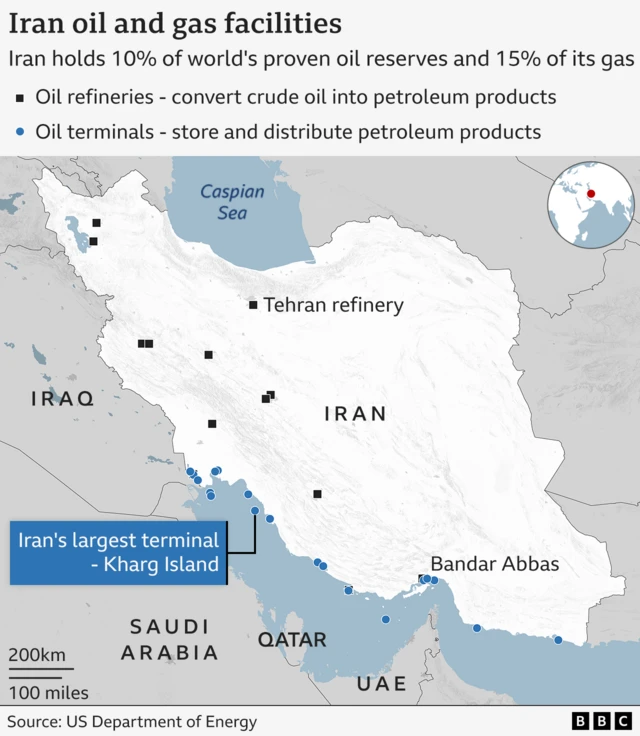
    Iran has also continued its threat against ships passing through the Strait of Hormuz, a transit point for a fifth of the world's oil.

    US-traded crude has jumped by 9% at $95.27.

    Oil prices crossed $110 a barrel on Monday and have fluctuated heavily since.

    An aerial view of an Arco station with fuel, prices over $5 a gallon on 11 March in Los AngelesImage source, Getty Images
  5. Two foreign vessels hit by explosions, authorities saypublished at 04:32 GMT

    In some breaking news overnight, authorities say two foreign tankers were hit by explosions near the port of Umm Qasr, in the Iraqi city of Basra.

    The head of the General Company for Iraqi ports says it has rescued 38 crew members from the vessels, and one person has died, in comments cited by the Iraqi news agency.

    Ship tracking websites show the two tankers suspected of being attacked surrounded by rescue boats.

    It's unclear at this stage what caused the explosions. An initial investigation from Iraqi security officials showed explosive-laden boats from Iran had hit the two tankers, Reuters and CNN reported.

    The UK's maritime monitor also said it has received similar reports, while Iraq's State Oil Marketing Organisation expressed "deep regret" over the incident.

    Operations at all terminals have been suspended, authorities added.

  6. Here's what has been happeningpublished at 04:27 GMT

    People gather at the site of a drone strike targeting a car in Ramlet al-Baida at Corniche BeirutImage source, Reuters
    Image caption,

    The site of an Israeli strike in Beirut

    Attacks on ships in the Gulf have intensified. Iraqi authorities say one person has died and another 38 have been rescued near the port of Umm Qasr, in the city of Basra, while Oman has rescued 20 sailors from a Thai-flagged vessel, some of whom had been injured, according to the Oman News Agency.

    Oil prices continue to rise despite major countries agreeing to release a record amount of oil from their emergency reserves as they try to curb the impact of the war.

    Brent crude rose by almost 9% to top $100 ($74.79) a barrel in Asia trading even after all 32 members of the International Energy Agency (IEA) said they will release 400 million barrels in response to supply concerns.

    On Wednesday, Iran warned that oil could reach $200 a barrel as its attacks on ships intensify in the Strait of Hormuz, a key waterway for energy shipments.

    Overnight the Israeli military launched "a large-scale wave of strikes" on Hezbollah infrastructure. In Beirut, BBC's Samantha Granville reported seeing orange flashes light up the night sky in what she described as the "loudest night" for the city since the war began.

    Israel also said it intercepted rockets fired by Iran and Hezbollah.

    Meanwhile, Iran's foreign minister announced that the country's national infrastructure was under attack, including the oldest bank "while full of employees" and pledged revenge.

    In the Gulf, Saudi Arabia, Qatar, Kuwait and the UAE have reported intercepting aerial attacks overnight.

  7. Oil price climbs as missile strikes continue across Middle Eastpublished at 04:26 GMT

    A large fireball is visible above a shipImage source, Reuters
    Image caption,

    An explosion on a tanker in the Persian Gulf overnight, in a photo distributed by the Media Office of Iraqi Ports

    We're resuming our live coverage of the war in the Middle East, where drone and missile strikes have continued overnight.

    The economic shock of the conflict is being felt around the globe - rattling financial markets and again sending the price of Brent crude oil above $100 a barrel amid fears about energy supplies.

    Attacks on ships in the Persian Gulf have also intensified, with large explosions reported on two foreign tankers, according to authorities. At least one person has been killed, reports say.

    The Israeli military has continued strikes in Lebanon overnight, saying it hit 10 Hezbollah structures in Beirut. Iranian missiles were also intercepted heading to Israel, the military said.

    Meanwhile attacks in the Gulf have continued, with Saudi Arabia and Qatar reporting aerial strikes.

    Stay with us as we bring you the latest updates.