Summary

  1. UAE conducts arrests for filming missile interceptionspublished at 01:36 GMT
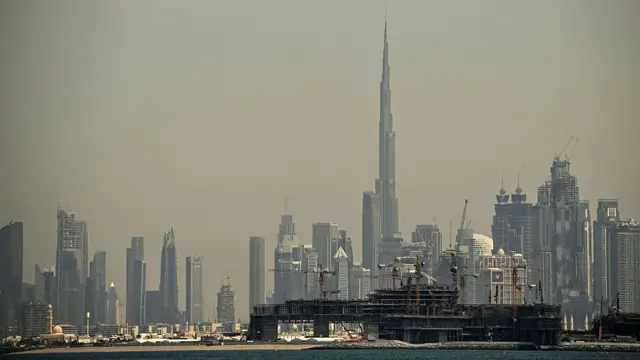
    Dubai city skyline.Image source, AFP

    The UAE has ordered the arrest of 10 people for publishing clips of the country's air defence systems intercepting aerial attacks, as well as fabricated clips of explosions and strikes, UAE state media reports.

    According to state media, the individuals published real footage of attacks, as well as other AI videos and images on sites in the UAE. They have been referred to an "expedited trial", it adds.

    Separately, Abu Dhabi Police says it has arrested 45 individuals of "various nationalities" for filming and "spreading misinformation" during attacks on the country.

    It comes after a 60-year-old British man was charged last week under Dubai's cyber-crime laws after allegedly filming Iranian missiles over the city.

    Radha Stirling, CEO of Detained in Dubai, said 21 people had been charged under the UAE's cybercrime laws in connection with "videos and social media posts relating to the recent missile strikes".

    Images of fragments striking a tall residential building, a luxury hotel and Dubai's airport have circulated widely online.

  2. Watch: Why the US targeted Iran's Kharg Islandpublished at 01:05 GMT

    President Donald Trump says US forces have "totally obliterated" all military targets on Iran's Kharg Island.

    In this video, Mikey Kay from the BBC's Security Brief explains why the island is so critical for Tehran.

    Media caption,

    Watch: Why Kharg Island is a lifeline for Iran

  3. Analysis

    How does Kharg Island fit into the wider conflict?published at 00:40 GMT

    Paul Adams
    Diplomatic correspondent

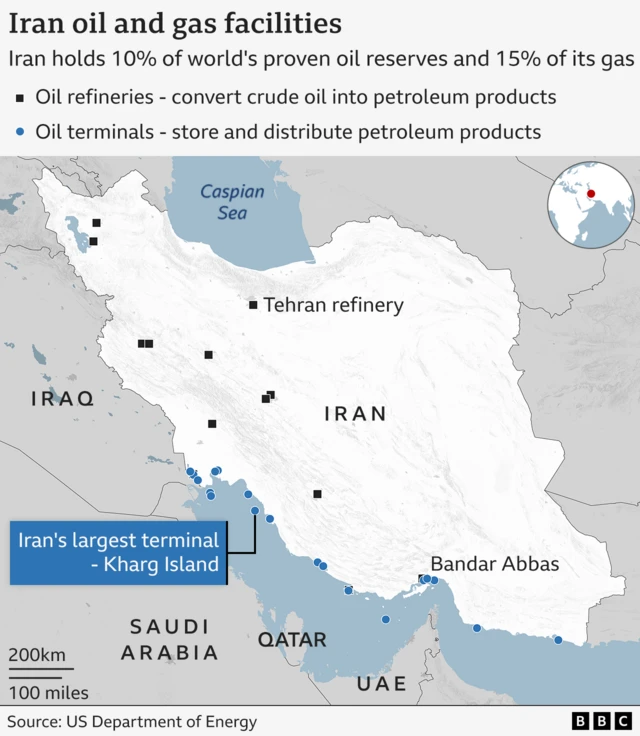
    A map of Iran showing the locations of major oil and gas facilities. Black squares mark oil refineries, including one near Tehran. Blue circles mark oil terminals along Iran’s southern coastline on the Gulf, with a label identifying Kharg Island as Iran’s largest oil terminal. Neighbouring countries such as Iraq, Saudi Arabia, Qatar, the UAE are shown west of Iran, with the Caspian Sea to the north. A small inset map highlights Iran’s position on a world map.

    Kharg Island is a tiny but strategic terminal in the northern Gulf, 22 miles off the coast of Iran. It handles much of Iran’s oil exports and tankers have been seen loading there over the past two weeks.

    Posting in typically bombastic fashion on his Truth Social platform, Donald Trump said the US military had conducted what he called one of the most powerful bombing raids in the history of the Middle East, obliterating every military target on the island.

    He said oil infrastructure had not been wiped out but that if Iran or anyone else chose to interfere with the safe passage of ships through the Strait of Hormuz, this could change.

    There has been much speculation about whether US forces would at some point attempt to take over Kharg Island, which, apart from choking off Iran’s oil exports could also provide a useful platform from which to carry out attacks against the mainland.

    US media reports that amphibious ships carrying at least two thousand marines are now being sent to the Gulf have added to that speculation.

    The Pentagon has declined to comment, but if confirmed the new deployments will certainly give military planners some new options.

  4. Trump said Kharg Island 'not high on the list' only 24 hours agopublished at 00:21 GMT

    On Thursday, President Trump rebuffed questions about the US potentially seizing Kharg Island.

    In an interview with Fox News radio, Trump was asked if he had any plans to take the island given its vital role in Iranian oil exports.

    "It's not high on the list," Trump said. "It's one of so many different things, and I can change my mind in seconds."

    The question seemed to annoy Trump, who chided Fox reporter Brian Kilmeade.

    "Who would ask a question like that and what fool would answer it?" the president said. "Let's say I was gonna do it or let's say I wasn't gonna do it, why would I tell you?"

  5. Trump says he still can't offer a timeline for ending the warpublished at 23:52 GMT 13 March

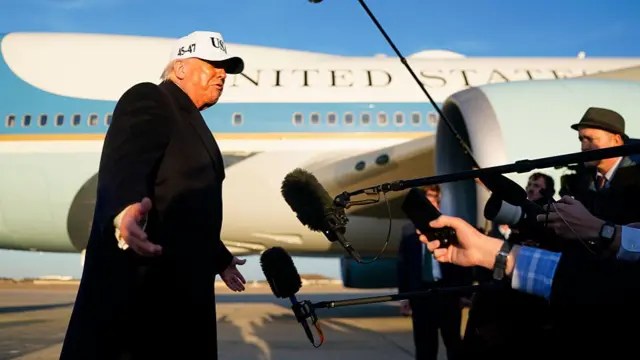
    Trump speaks to reporters outside of Air Force 1Image source, Getty Images

    Shortly before Trump posted about the US strike on Kharg Island, we also heard directly from the president when he spoke to reporters before boarding Air Force One.

    Asked again how long he thinks the war will last, he said, "I can't tell you that".

    "I mean, I have my own idea, but what good does it do?" he said. "It'll be as long as it's necessary. They've been decimated."

    The president has previously said that the war will end if Iran offers their unconditional surrender. Asked what that means, he said it means that their navy, air force, and most of their military is "gone"

    It means, very simply, that we are in a position of dominance that nobody's ever seen before," he said, adding: "Whether or not they're able to say the words."

    Trump was also questioned about his goals with the war in Iran as compared to Israeli Prime Minister Benjamin Netanyahu. A reporter asked if the two share the same objectives.

    "Well I think they might be a little different, I guess," he said. "But he will tell you there's never been a power like the power of the United States."

  6. Where is Kharg Island and why is it important to the US?published at 23:31 GMT 13 March

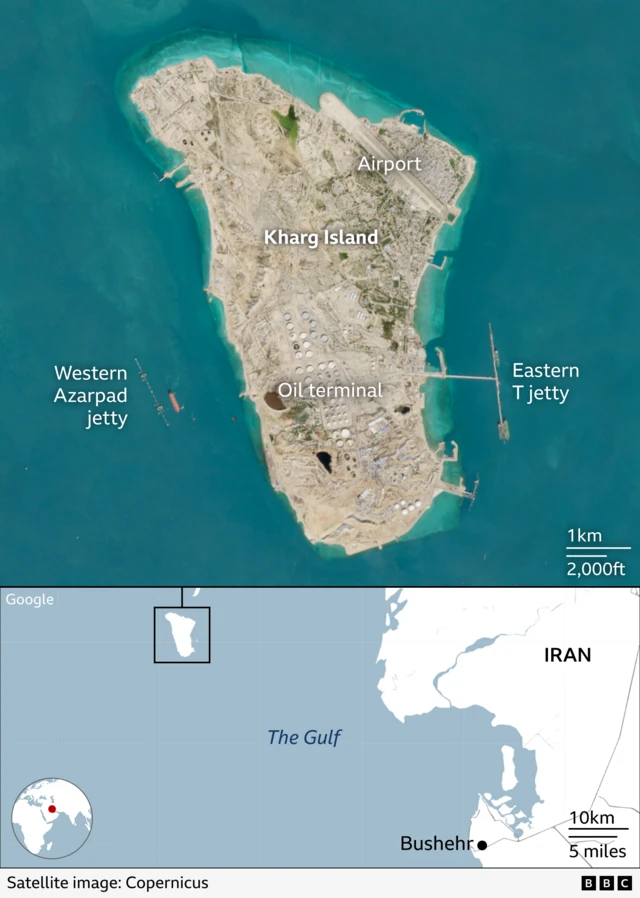
    A map of Kharg Island

    Trump just announced that the US has bombed "every military target" on Iran's Kharg Island.

    But where is the island and why is it important?

    Kharg Island is a small, five-mile long outcropping located about 15 nautical miles off the coast of Iran.

    It's considered Iran's "oil lifeline".

    While there are few residents, 90% of Iran's export crude oil passes through there. Large tankers carry oil to the island, then through the Persian Gulf and Strait of Hormuz, and then often to China, the largest consumer of Iranian oil.

    If access to the island is cut off, it would seriously cripple the economy of the Islamic Republic.

    Earlier this month, Axios reported that Trump was weighing sending special forces to seize the Island.

  7. Trump says US just bombed Iran's Kharg Islandpublished at 23:05 GMT 13 March
    Breaking

    We're now hearing from US President Donald Trump, who shortly after boarding Air Force One for Florida, posted on Truth Social that moments ago, "the United States Central Command executed one of the most powerful bombing raids in the History of the Middle East and totally obliterated every MILITARY target in Iran’s crown jewel, Kharg Island".

    "I have chosen NOT to wipe out the Oil Infrastructure on the Island. However, should Iran, or anyone else, do anything to interfere with the Free and Safe Passage of Ships through the Strait of Hormuz, I will immediately reconsider this decision," the president continued.

    He called on Iran to lay down its weapons and "save what’s left of their country, which isn’t much".

  8. Iranian NHS nurse says regime can't survive foreverpublished at 22:53 GMT 13 March

    Dan Johnson
    West of England correspondent

    The BBC has been speaking to a 30-year-old NHS worker based in the north of England who travelled to visit family in Iran one week before the war started. She requested that we don’t use her name for fear of reprisals.

    She describes how she and others welcomed the airstrikes: “People were happy. I was in the streets and I myself, I was smiling, even though that would put my flight back home in danger."

    Asked if she thinks the regime can survive long term, she says that it "can't control 90 million people, especially when more than half of them are against them, against their rules".

    People in Iran "have their undercover lives", she says, adding that "people are dancing without any headscarves, people are drinking alcohol, people are living their life".

  9. Exiled son of former Iranian shah meets Ukraine's Zelenskypublished at 22:13 GMT 13 March

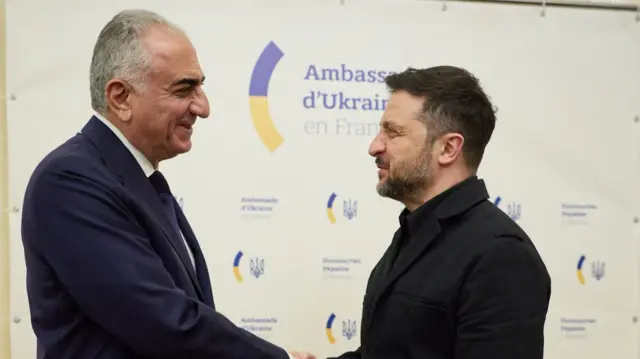
    Reza Pahlavi shakes hands with Volodymyr Zelensky in ParisImage source, Volodymyr Zelensky / X
    Image caption,

    Reza Pahlavi shakes hands with Volodymyr Zelensky in Paris

    Reza Pahlavi, the exiled son of the Iranian shah deposed in 1979, has met Ukrainian President Volodymyr Zelensky in Paris.

    The 65-year-old claimed he is "uniquely placed" to lead a transitional government in Iran, though US President Donald Trump has expressed doubts over his suitability.

    Iran and Russia have been allied for decades. The US has accused the Kremlin of aiding Tehran's war efforts in recent days, and Iranian-designed drones have been used extensively during Russia's invasion of Ukraine.

    In comments released after his meeting with Pahlavi, Zelensky said: "Ukraine truly wants to see a free Iran that does not cooperate with Russia and destabilize the Middle East region, Europe, and the entire world."

    In a separate post, Pahlavi said: "Few nations comprehend the cost of defending national sovereignty more than Ukraine."

  10. Evacuation orders issued in Qatarpublished at 21:52 GMT 13 March

    The Qatari Interior Ministry has ordered evacuations for some parts of the country as a "temporary precautionary measure", which will remain in place until "danger has passed".

    The warning does not specify the nature of the threat but Iran said it had launched a wave of strikes a short while ago and has previously targeted the Gulf state.

    Bahrain has also asked its citizens to take shelter after alarm sirens were activated, while Saudi Arabia also said it had shut down a number of projectiles.

  11. Iran launches more missiles at Israelpublished at 21:25 GMT 13 March
    Breaking

    The Israeli military says Iran has launched more missiles and has ordered people to take shelter.

    Strikes were also confirmed by Iranian state-controlled media.

    It's only a few hours since a similar warning, when Iran and Hezbollah launched a joint strike.

  12. Potential movement of troops to Middle East suggests Washington is weighing its optionspublished at 21:06 GMT 13 March

    Paul Adams
    Diplomatic correspondent

    It’s being widely reported in US media that the American military is sending additional forces to the Gulf, including what’s known as an amphibious ready group (ARG), with up to 5,000 Marines and sailors.

    The amphibious assault ship Tripoli will join the substantial armada already operating off the coast of Iran.

    It’s not clear which other vessels will accompany the Tripoli, but an ARG typically includes ships capable of carrying landing craft, as well as large numbers of helicopters.

    The latest deployments suggest the Pentagon is considering an expanded range of options. These could include protecting commercial shipping in the Strait of Hormuz and conceivably some kind of limited amphibious landing.

    One possible objective is Iran’s tiny Kharg Island, in the northern Gulf.

    Lying 22 miles off the Iranian mainland, Kharg is a vital oil hub, where tankers have been seen filling up with Iranian oil since the war began two weeks ago.

  13. Marines and warships expected to be moved from Japan to Middle Eastpublished at 21:04 GMT 13 March

    An American Marine unit based in Japan, as well as additional warships, are expected to be transferred to the Middle East, two US officials tell the BBC's US partner, CBS News.

    Elements of an amphibious ready group and the 31st Marine Expeditionary Unit are expected to be sent, they say, after the plan was first reported by the Wall Street Journal., external

    The group is typically made up of 5,000 marines and sailors across several warships, though there are differing reports in US media about the size of the contingent due to be deployed.

    The BBC has approached the US military and the Pentagon for comment, though future troop movements are usually not confirmed publicly.

  14. Vance asked about past opposition to 'forever wars'published at 20:23 GMT 13 March

    Daniel Bush
    Travelling with the vice president

    US Vice President JD Vance addressed the war with Iran on Friday during a speech on the economy in Rocky Mount, North Carolina.

    Vance was asked what advice he’s given Trump on the war, and how the conflict squares with his past opposition to so-called forever wars.

    The vice president declined to share details on his private conversations about Iran with Trump, saying "it's important for the president of the United States to talk to his advisers without" those advisers "running their mouth".

  15. Hezbollah prepared for long war, leader sayspublished at 20:04 GMT 13 March

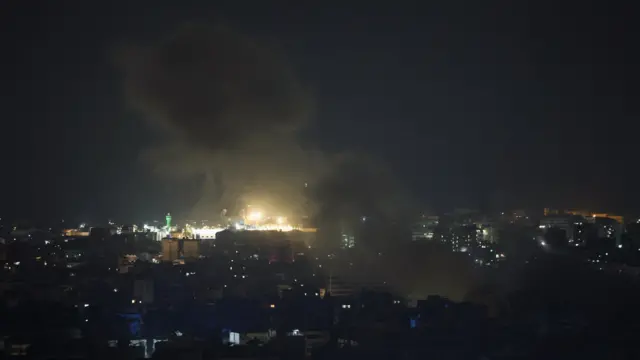
    Smoke rises in large plumes over Beirut at nightImage source, Reuters
    Image caption,

    Images shared this evening show smoke rising over Beirut's southern suburbs after Israeli strikes

    Hezbollah leader Naim Qassem says the group has prepared itself for a "long confrontation" with Israel, as the sides continue to strike one another.

    In a televised address, he adds that Israel will be "surprised" on the battlefield.

    The Iranian-backed group, based in Lebanon, has exchanging fire with Israel since 2 March, when it launched air attacks on Israel following the death of Iranian Supreme Leader Ayatollah Ali Khamenei.

    Israel has been striking Lebanon heavily, with the military saying it is targeting Hezbollah infrastructure.

  16. F1 races in Bahrain and Saudi Arabia to be cancelledpublished at 19:30 GMT 13 March

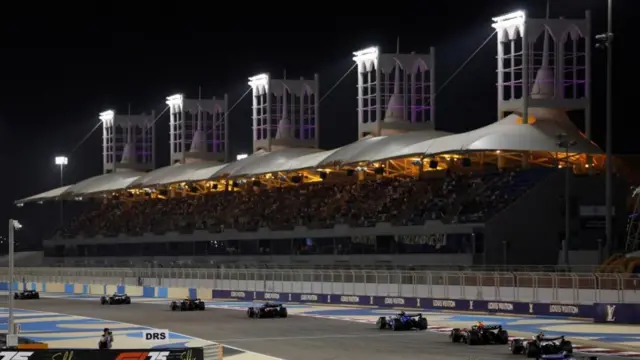
    Cars drive around a stadium at nightImage source, Reuters
    Image caption,

    The 2025 Bahrain Grand Prix

    The Bahrain and Saudi Arabia Grand Prix events, both scheduled for next month, are set to be cancelled because of the war in the Middle East.

    A formal decision to call off the races has not yet been made but is expected before the end of the weekend.

    With the deadline to start shipping the freight needed for the event looming, and no sign of imminent resolution to the US-Israeli conflict with Iran, it's been deemed as too great a risk to staff.

    Neither race will be replaced, cutting the season to 22 Grand Prix events.

    Both Bahrain and Saudi Arabia have seen Iranian retaliatory strikes on their territory.

  17. How Iran covered pro-establishment rallies todaypublished at 19:17 GMT 13 March

    Ghoncheh Habibiazad
    Senior reporter, BBC Persian

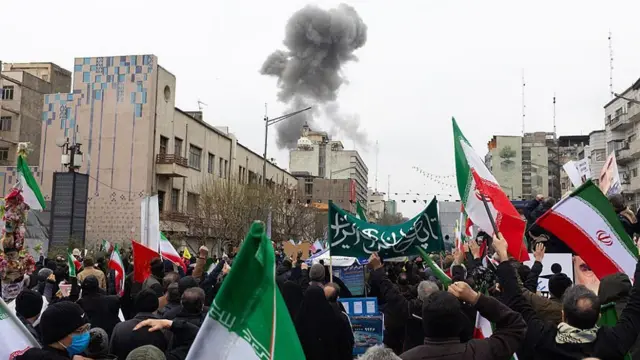
    Smoke rises after an explosion during the march in TehranImage source, Iranian leader press office/ Handout
    Image caption,

    BBC Persian and BBC Verify have verified footage showing an explosion near a crowd in Iran's capital

    Pro-establishment rallies have been held in Iran to mark Quds Day, an annual pro-Palestinian event.

    Iran’s state TV rolling news channels gave extensive coverage to marches in several cities including Tehran, Tabriz, Yazd, Qom, Ilam and Shiraz, airing vox pops and statements from senior officials at the rallies who signalled defiance towards the West.

    Foreign Minister Abbas Araghchi, who participated in the rallies in Tehran, blamed the United States and Israel for rising oil prices.

    Reacting to a strike that hit a crowd in Tehran, Supreme National Security Council Secretary Ali Larijani said it showed the "fear and desperation" of President Donald Trump.

    He said a strong power would not "attack a public gathering".

    Iranian outlets claimed turnout reached into the millions, but the BBC cannot independently verify this claim.

  18. Pentagon expected to send marines and additional warships to Middle East - CBSpublished at 18:59 GMT 13 March

    The Pentagon is expected to send a marine unit and additional warships to the Middle East, two US officials tell the BBC's US partner, CBS News.

    Elements of the America amphibious ready group and the embarked 31st Marine Expeditionary Unit are expected to be sent, they say, following a report on the plans in the Wall Street Journal.

    The group is typically made up of 5,000 marines and sailors across several warships.

  19. Israel launches another wave of strikes on Iranian capitalpublished at 18:47 GMT 13 March
    Breaking

    The Israel Defense Forces says it has begun more "extensive strikes" throughout Iran's capital Tehran.

  20. US offers $10m bounties for Iranian leaders and military figurespublished at 18:21 GMT 13 March

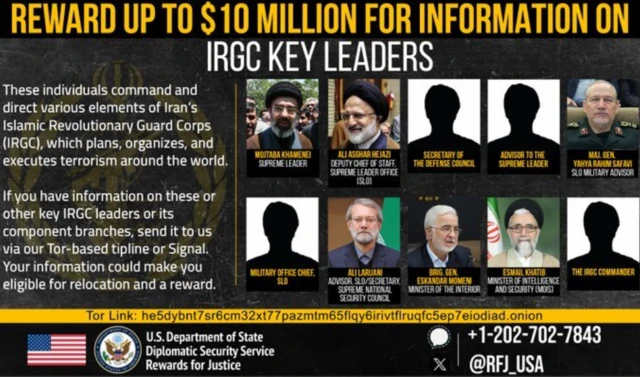
    The US is offering rewards of up to $10m (£7.6m) to anyone with information on "key leaders" of the Iranian Revolutionary Guard Corps (IRGC).

    A notice issued by the US State Department references 10 individuals in particular, though only six are named.

    Among them are new Supreme Leader Mojtaba Khamenei and Secretary of the Supreme National Security Council Ali Larijani, who was pictured attending a pro-establishment rally in central Tehran earlier.

    The US says they "command and direct various elements" Iran's IRGC military wing.

    A poster offering cash rewards for 10 Iranian leadersImage source, US State Department