Two pairs of beavers released in Cornwall

 Beaver Trust
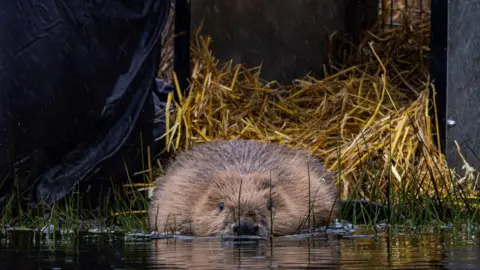
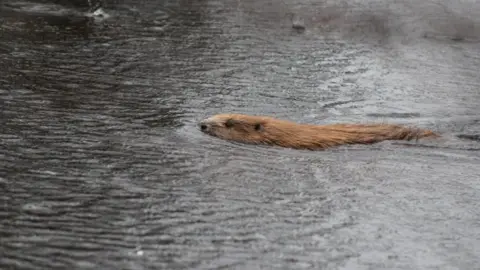
Two pairs of beavers have been released at a nature reserve in Cornwall as part of the county's first fully-licensed release.
Cornwall Wildlife Trust (CWT) said the release on Monday was a "landmark moment" for nature recovering in Cornwall and nationally.
Natural England previously issued a pair of licences to release the animals at a National Trust site in Exmoor, Somerset, and an unspecified site in Cornwall chosen by the CWT.
Lauren Jasper, beaver officer at CWT, said: "We are celebrating today, but the real work starts now as we get ready to monitor the activity of the beaver pairs and support landowners and farmers whilst we all learn to live alongside beavers once again."
The CWT said the beavers were released at a trust nature reserve in mid-Cornwall, within the Par and Fowey river catchment.
It said this followed three years of planning and consultation preceding the government's decision to allow wild releases in England.
Beavers became extinct from the wild in England more than 400 years ago due to hunting for their pelts, meat and glands.
The charity said beavers were increasingly recognised as one of nature's most important keystone species - animals whose presence shapes entire ecosystems.
It added this came at a vital time, where one in six species were at risk of being lost from Great Britain, according to the State of Nature Partnership report of 2023.
 Cornwall Wildlife Trust
Jasper said: "Bringing the beavers back for me is special because of the impact they can have on other things.
"They are amazing at creating change really rapidly, so actually helping with nature of recovery in a really quick time frame."
Cheryl Marriott, director of nature and people at CWT, said: "Cleaner water, protection from drought and flooding and more abundant wildlife - there is a lot to like about these animals.
"No doubt there will be some challenges as we get used to having them back, but they will provide a lifeline for some of our most threatened species if we give them the chance."
Follow BBC Cornwall on X, Facebook and Instagram. Send your story ideas to spotlight@bbc.co.uk.
