Wildlife threatened by plan to fill in old quarry

 Neil Aldridge
Infilling a former quarry would destroy a "precious habitat" home to rare insects, a charity warned.
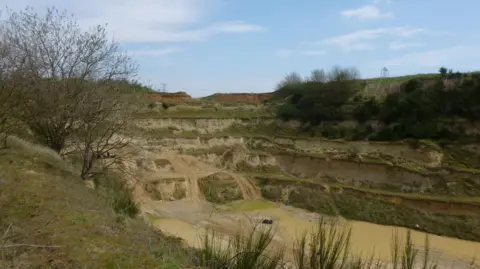
Buckingham Hill Pit, near Stanford-le-Hope in Essex, was reclaimed by nature after quarrying stopped in the 1990s.
However, sand could be imported into it if plans to resume quarrying of sand at a nearby site are approved by Thurrock Council.
To mitigate the impact, a new "eco park" has been proposed by the local authority to rehouse affected species.
 Jamie Robins
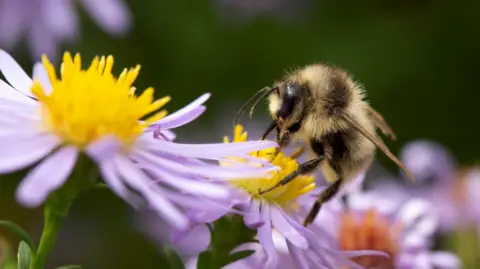
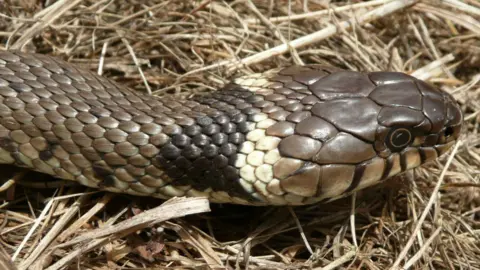
Grass snakes, great crested newts and rare bees and wasps are among the wildlife living at the pit.
Wildlife charity Buglife argued the proposed eco park was "not nearly enough" to make up for the loss of "such an important wildlife site".
"It would be devastating to see yet another precious habitat lost in the Thames Estuary," said its programmes manager James Robins.
"We have seen so many important wildlife sites lost in Thurrock and there are fears that we are reaching a tipping point where species simply cannot recover."
 Malcolm Farrow/Broads Authority
He urged Labour-led Thurrock Council to reject the planning application when it meets on 24 February.
Buckingham Hill Pit was once used to produce sand for the construction of the M25, but is now designated as a Local Wildlife Site.
Its history of sand extraction left flower-rich grassland terraces and vertical sand faces, as well as wet areas and scrubland.
Buglife said it surveyed the site in 2007 and found it to be of national importance to invertebrates.
'Enhancement'
Ingrebourne Valley Ltd is seeking to extract sand from a quarry south of the pit and import the displaced material into the pit.
A report prepared for the council by its landscape and ecology adviser acknowledged this would have "adverse ecological effects" on the wildlife.
However, the author wrote that building an eco park would create an opportunity to enhance the habitat.
They added: "While there would be a short-term adverse ecological impact; the proposed mitigation measures will result in an overall biodiversity enhancement."
Follow Essex news on BBC Sounds, Facebook, Instagram and X.
