Empty council homes to be temporary accommodation

 Getty Images
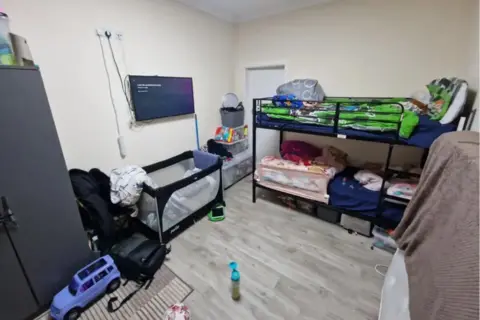
A plan to use empty council homes for temporary housing for up to a year is being proposed by Brighton and Hove City Council.
An initial scheme has seen 80 empty homes being used to house people from mid-January until 1 May, with the council now consulting on extending that scheme and adding another 100 empty council homes.
The city has seen a significant increase in the number of households needing emergency or temporary accommodation, rising to more than 2,100 households, 40% of them with children.
The council admitted it will affect social housing availability and will cause delays for some people currently on the housing register.
The council is under pressure from higher demand for temporary housing, a limited supply and rising nightly rates, contributing to a £6m overspend in 2025-26.
It said the use of 80 empty council homes is estimated to save £750,000 by avoiding the need to pay for bed and breakfast accommodation and create more stable housing for families.
Among the council homes already in use are empty flats in blocks built using "large panel systems". These are due to be demolished and replaced in the coming years.
 Getty Images
The proposal report said: "The recommendations prioritise keeping families in the city, reducing disruptive moves and limiting the time households spend in unsuitable accommodation.
"Taken together, these actions underpin a longer-term shift that aligns with the council's Homelessness and Rough Sleeping Strategy."
If the council's proposals work out as planned, the total number of council-owned temporary housing units is expected to increase from 959 to 1,280.
Nightly paid spot-purchased housing could reduce from 465 units this year to 90 by 2029-30.
Block-booked housing is expected to grow from 644 units to about 920 while leased temporary housing should reduce from 550 to 500 units.
As part of the process to reduce temporary housing costs, the council has already entered into a six-year £19m contract to house homeless people with an organisation called Base One.
The proposal will go before the council's People Overview and Scrutiny Committee on Tuesday before being presented to cabinet on 23 April.
A public consultation on the plans is open until 1 April.
Follow BBC Sussex on Facebook, on X, and on Instagram. Send your story ideas to southeasttoday@bbc.co.uk, or WhatsApp us on 08081 002250.
