Why rescuers are taking in more and more seals

 Hannah Roe/BBC
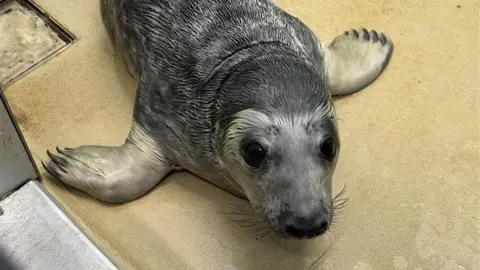
Rescue charities say they have seen an influx of seals needing help and care this winter.
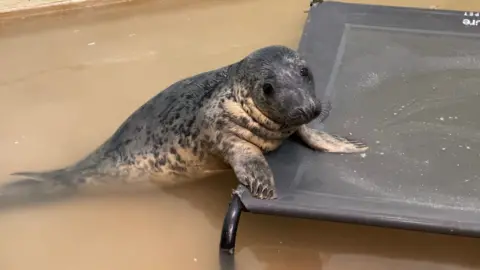
British Divers Marine Life Rescue (BDMLR) say they have taken hundreds of calls about seals in distress on beaches in south-east England and taken many for care at RSPCA Mallydams Wood in East Sussex.
BDMLR and the RSPCA say storms and human disturbance lead to pups becoming confused and separated from their mothers.
During the ongoing grey seal pupping season the centre has "seen a few more coming in earlier than we normally would," RSPCA wildlife assistant Penny Taberer said.
Mallydams Wood has taken in seals from full centres elsewhere, she told the BBC.
The centre has gone from taking in one seal per year a decade ago to 60 annually.
Ms Taberer said there was "a horrendous cost" for fish supplies, medication, water bills and cleaning supplies associated with caring for the mammals.
According to BDMLR, grey seal pupping season is a particularly busy time and the number of rescues may be a positive sign the population is increasing and more people are reporting injured animals.
 Hannah Roe/BBC
BDMLR volunteer Sarah Kennett thinks there is "a much greater awareness now around our local marine life" and more people are calling the rescue organisation.
"That's a really positive thing that we're able to uplift them to safety," she said.
Ms Taberer said the seal population was "on the up" and doing well, but that "chaotic weather" had led to more pups becoming separated from their mothers.
Pups rely on their mother's milk to grow and Ms Kennett said it was "really important that we keep the mum and the pup together".
She said it was "really key that people stay at least 50m away from a lone pup" and avoid scaring them back into the water, and that concerned members of the public should call rescuers instead.
"We have sadly come across some bizarre situations where people think it's safe to touch a seal, which is obviously endangering the animal," she said.
"It's also endangering themselves. It's very dangerous to get near a wild animal of any kind."
Follow BBC Sussex on Facebook, on X, and on Instagram. Send your story ideas to [email protected] or WhatsApp us on 08081 002250.
