'My alligator is placid - except at dinnertime'

 BBC
BBCA Lincolnshire pensioner is celebrating 50 years of caring for unwanted animals - big and small. Pam Mansfield runs Exotic Pet Refuge, a registered charity, in Lincolnshire, which is home to more than 500 creatures, ranging from fish to monkeys and even an alligator.
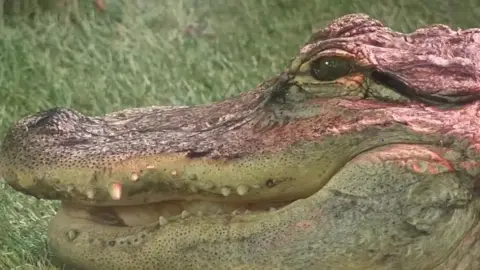
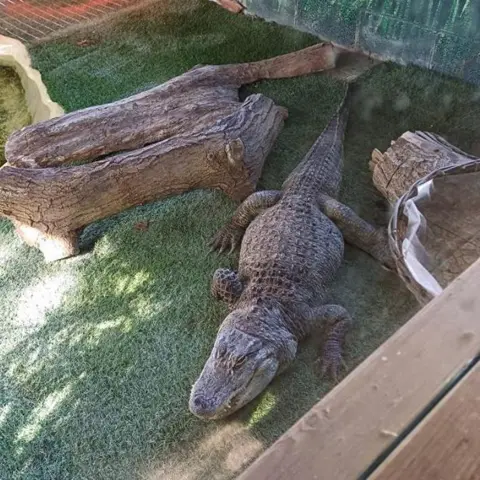
"When we got him he was 18 inches long," says Pam Mansfield, 75. "George is now 7ft. He is pretty placid - except at dinnertime when you have to be so careful because he jumps up."
Mrs Mansfield is referring to the alligator basking in a heated enclosure, next to a pond, which is flanked by what appear to be mangroves.
But she is not in the Florida Everglades. Rather, the cooler climes of rural Lincolnshire.
George's favourite meal is six whole trout, I'm told. But he also has a penchant for deer, beef and the occasional chicken.
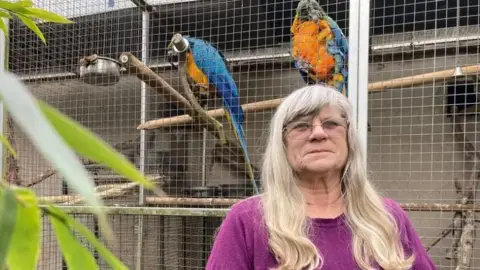
Mrs Mansfield tells me how, in 2002, she and her late husband Mel received a call from a couple whose son had been involved in a serious road accident.
"We were told he had a number of lizards in his bathroom," she recalls. "But we weren't told anything about the blimming alligator!"
Like George, Mrs Mansfield also has a remarkable backstory going back decades.
Her love for animals began in childhood, I discover.
"My grandfather was a farmer," she says. "There were always lots of animals about the place.
"Then I met my husband."
 Exotic Pet Refuge
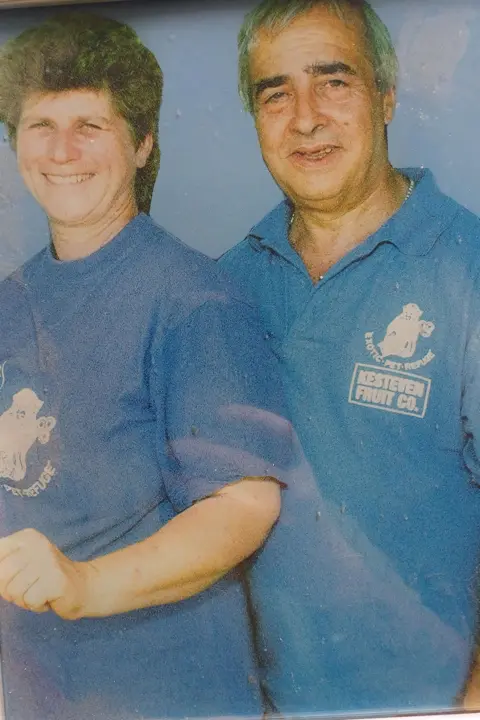
Mrs Mansfield's voice softens. Mr Mansfield died in 2004. Today, she co-owns the refuge with their son Darren, who tends to the more needy - and dangerous - residents, such as George.
"My husband was a big animal lover too," she says, with joy returning to her voice.
"Well, put us together and it wasn't the best combination really!"
The couple were living in Peterborough, Cambridgeshire, when they started taking in injured birds and other small creatures.
It quickly grew - and so did the size of the animals they began nursing back to health.
"After a while we moved to a village called Etton, and then, 29 years ago, we moved to our current home in Deeping St James in Lincolnshire. The house is literally in the middle of all the animals."
Mrs Mansfield tells how, in the early days, she had worked as a cleaner in a local pub, while her husband was an engineer.
"His wage would go on keeping us," she says. "Mine would all go on the animals. Often, at 10 o'clock at night, Mel and I would be in the garden putting up a new enclosure.
"We didn't have holidays - we couldn't leave the animals."
 Pam Mansfield
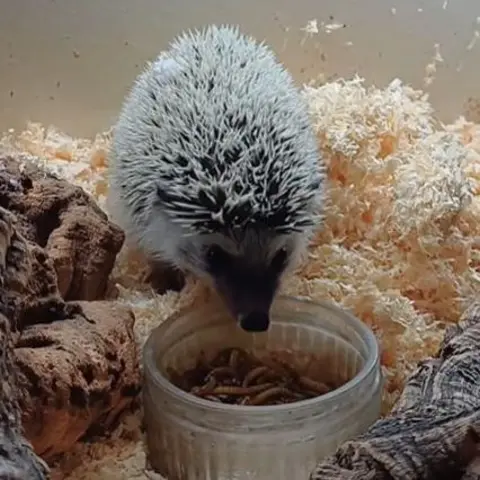
Currently, the refuge is home to more than 500 animals including about 200 fish.
Mrs Mansfield says: "We used to get animals come to us from zoos and councils all over the country, but these days the animals tend to come from the public.
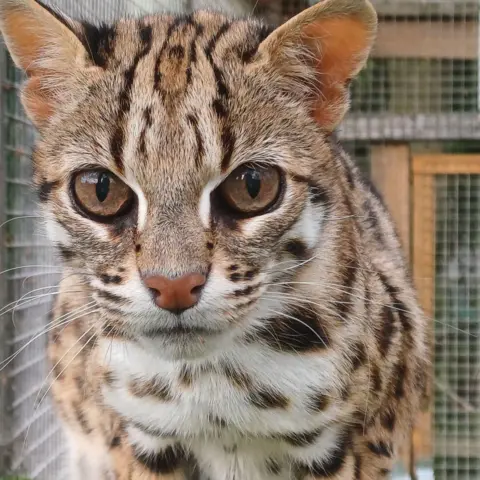
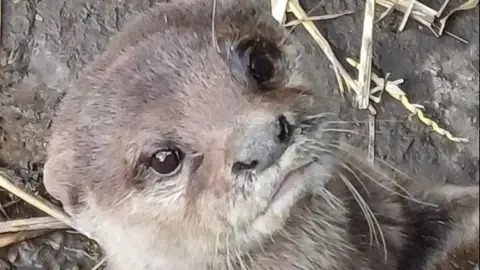
"We've got all sorts - monkeys, tegus, snakes, tortoises, caiman you name it. We're overrun with lizards at the moment."
The animals cannot be rehomed, explains Mrs Mansfield, with many requiring licences to keep them under the auspices of the Dangerous Wild Animals Act.
Usually, animals have been given up because owners failed to do their homework, says Mrs Mansfield.
"People really need to know what they are letting themselves in for before buying an exotic pet. Come and speak to people like us, or staff at zoos - find out what it entails."
 Exotic Pet Refuge
Life for Mrs Mansfield remains hectic, although she is assisted now by her son, who also lives on the site with his wife and their two children.
The pair also employ a manager and have a team of 30 volunteers.
Mrs Mansfield says: "Unfortunately, my legs have gone and I can't do as much as I used to but I still do a fair bit."
When some of the rarer creatures require a health check or treatment, it is not a case of taking them along to the local vet.
"The vets often end up having to ring London Zoo for advice," she says.
Running the refuge is not cheap, either - especially when creatures like George need energy-guzzling heat lamps.
"Our electricity bills are going up and up," says Mrs Mansfield. "Our electricity bill is about £3,000 per month. This time a year ago, we were paying about £2,300 per month."
 Exotic Pet Refuge
The monthly food bill alone is about £5,000 a month.
"A lot of the food is frozen," says Mrs Mansfield. "Some comes straight from the slaughterhouse."
The increase in food banks, fuelled by the recent cost of living crisis, has caused additional pressures.
"The food we used to get free from supermarkets is now donated to food banks," says Mrs Mansfield. "We tend to get what's left, but we also have to buy a fair amount of food."
To make ends meet, Exotic Pet Refuge holds several open days throughout the year, requesting a small fee from visitors.
"We also rely a lot on legacies," says Mrs Mansfield.
She has no intention of stopping.
"I love animals," she says. "Looking after them is all I have ever known. I can't stand the thought of them suffering."
Returning to George, who has his own spacious enclosure, Mrs Mansfield - though always cautious around him - clearly has a soft spot for the reptile.
"George's name was chosen by a group of schoolchildren," she says. "He is a big old boy. But he is a good boy. He's certainly popular!"
 Exotic Pet Refuge
Listen to highlights fromLincolnshire on BBC Sounds, watch thelatest episode of Look Northor tell us about a story you think we should be covering here.
Download the BBC News app from the App Store for iPhone and iPad or Google Play for Android devices
