Car crash PTSD left me unable to drive
Six years ago Rebecca Rumens got into her car to collect her daughter from football training, she had no idea it would be the last time she would drive.
Rebecca was involved in a road accident near Bridport which left her trapped inside her vehicle for two and a half hours before the fire brigade cut her free.
Although her physical injuries slowly healed, she developed PTSD which she says has stopped her being able to get back behind the wheel and changed her life forever.
Latest Government figures reveal 128,000 people were injured in a road accident in 2024, but the Department for Transport doesn't collect data on PTSD.

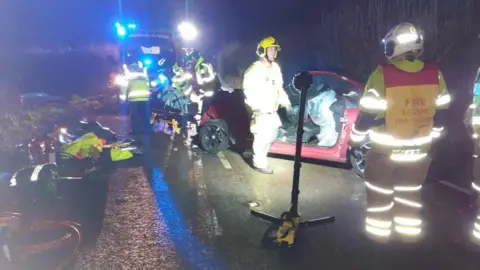 Bridport Fire Station
The nightmares are insidious
The 55-year-old recalled the moment she was hit by the drug driver: "I can remember light and extraordinary noise, and I can only remember hearing screaming.
"The pain was instant. The silence that followed was chilling and I couldn't work out what had happened."
"The thing I'm always told is that you were so lucky. How did you walk away from that? When you see the pictures, you survived that?
"I am incredibly lucky, I understand that, but it's had such a phenomenal catastrophic effect on my actual life".
The man who caused the collision lost his licence for 20 months.
Rebecca though no longer drives.
Things like loud noises, flashing lights and the sound of garden machinery can all trigger a panic attack.
"There have been days where I couldn't open the curtains because I couldn't see cars come past my window.
"I have to work out if today is a day I can leave house and if I am going to leave the house, what direction am I going in, what time of day is it, is there a route I can go where I can avoid the traffic.
"How am I going to cope if something happens?"
Rebecca believes there needs to be greater recognition of the lasting legacy PTSD can have on road crash victims.
"The flashbacks, the nightmares are insidious and the shame comes from 'well I'm told I can just go away and get over it' and I haven't done, then it's my fault."
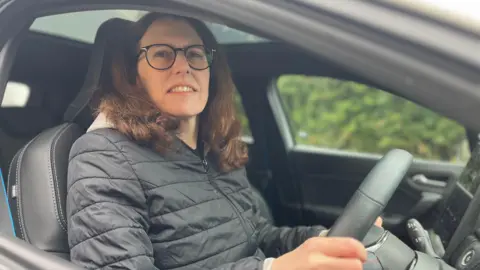
Another driver, we're calling Caroline because she is still impacted, was clipped by a lorry on the M25.
She said: "My car began to spin on the M25, I was probably doing 60 or 70 miles an hour.
"And then it spun and literally moved in front of the lorry I didn't know what was happening until I stopped, looked up and then to side of me I could see the lights of the lorry, so the lorry was literally driving me sideways down the motorway unaware I was there."
Caroline, from Kent, walked away without a physical scratch, but the psychological impact remained.
"I was diagnosed with PTSD and the alternative reality that I talk about is because the life that you use to know doesn't exist any more.
"So, I'd driven for 30 years quite carefree and suddenly I'd become somebody who wasn't able to do that anymore so it's like you are living in the life of somebody different," she added.
Flashbacks and avoidance became part of everyday life.
"If you suddenly said to me lets, go to the beach, I'd be thinking how can I get out of this, what can I do, maybe the weather is too bad, maybe it's too dark maybe, it's too bright.
"Somebody asking me to get in a car was like them asking me to go through a pit of snakes every day because you have this fear."
Caroline is back behind the wheel but only during daylight hours and she's had to flex her working times to accommodate this.
The therapy and driving lessons it took to get there has cost more than £2000.
"It's quite a lot of money and I'm aware that I'm very privileged I've got the money to do that. They'll be a lot of people who need help and they just won't be able to pay out for that."
Have not driven for 15 years
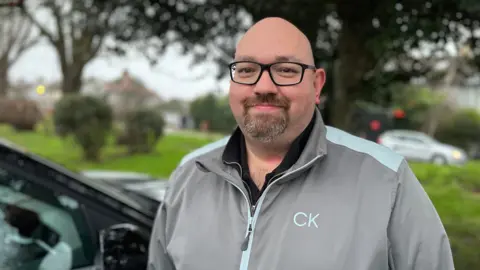
Dan Carter, advanced driving skills instructor with Drivers Domain UK, runs a post collision course: "The fact that I do quite a lot of these courses quite regularly means there are a lot of people who are having a problem after an incident.
"I'll speak to them on the phone before the course. 'When is the last time you drove?' and it will be five or six years ago. The longest was 15 years."
Dan said some of the drivers have a physiological fear of getting in the car.
"It's not just the mental side. They get sweaty palms, they get a dry throat, their heart goes a little bit.
"It then moves into the mental bits of the drive. They make a lot of barriers that seem very very real that kind of stops them taking that step of trying to drive and move forward," he said.
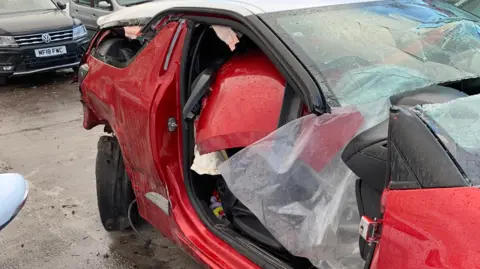 Rebecca Rumens
Rebecca and Caroline hope by sharing their stories they'll give other victims the confidence to seek help.
Rebecca said: "I really wanted for the victims to have a little bit more of a voice and for just one person to be able to realise that they're not alone and their reactions are ok and normal and completely understandable, then it's worth doing."
Dorset Police and Crime Commissioner, David Sidwick said: "Mrs Rumens' story is a stark reminder of the lasting impact road traffic collisions can have. Too often, these effects remain hidden once the immediate aftermath has passed. Cuts heal, bruises fade and broken bones mend, but the trauma endured by innocent victims can last a lifetime.
"For Mrs Rumens, and for many others affected by road traffic collisions, that trauma can feel like a life sentence. This is why tackling dangerous behaviours such as drink and drug driving is so vital. Lives can be irrevocably changed in an instant by reckless choices on our roads."
You can follow BBC Dorset on Facebook, X, or Instagram.
