Footpaths reopen after moorland wildfire

 Getty Images
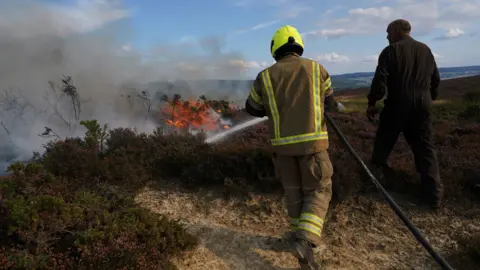
Footpaths have reopened on the North York Moors following a major wildfire earlier this year.
The blaze, which started at Langdale Moor, near RAF Fylingdales, on 11 August, burned for several weeks before continuing to smoulder for more than a month.
North Yorks Moors National Park Authority (NYMNPA) said open access restrictions and rights of way closures in place since August had now been lifted.
The fire was the biggest in the history of the North York Moors National Park, covering an area of approximately 12 miles (20km).
According to the Local Democracy Reporting Service, tackling the fire was made more difficult due to the presence of unexploded ordnance left over from World War Two on the moor.
More than 20 explosions of military devices were reported during the fire.
NYMNPA chief executive Tim Hind is due to give an update on the fire to members of the authority next week.
He said in a report prepared ahead of the meeting that the wildfire continued to have a significant impact on the organisation's workload and priorities.
"Our focus has been on the environmental restoration of the land affected as well as public access, as part of the multi-agency recovery effort led by the North Yorkshire Local Resilience Forum," he said.
"A major limiting factor in progressing restoration plans and reinstating public access has been the risks associated with unexploded ordnance on the site.
"In mid-November, however, national park authority officers were able to support an MoD visit to the site which has concluded that, with appropriate signage, the risks appear no greater than previously across the site area."
Mr Hind said that as a result, open access restrictions and rights of way closures were lifted on 4 December.
The rights of way that have been reopened include the Coast to Coast and Lyke Wake Walk routes.
Visitors are being urged to remain on designated paths to support the environmental recovery of the area.
North Yorkshire Council said there had been no further explosions since the fire response was stepped down in September, but the loss of surface peat and vegetation had exposed further historic military debris.
Officials said that while most of these items were harmless, there remained a serious risk from unexploded ordnance and the public should not touch any of the items.
Listen to highlights from North Yorkshire on BBC Sounds, catch up with the latest episode of Look North.
