Memories of 'devastating' 1980s meningitis outbreak

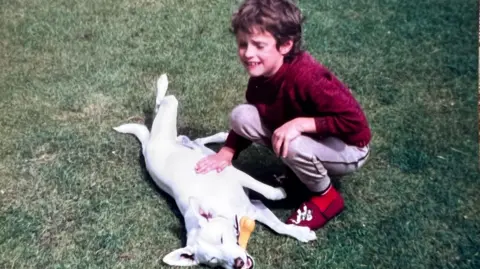 Sue Neale
A mum who knows how "devastating" meningitis can be has called for more vaccines to be made available for young people.
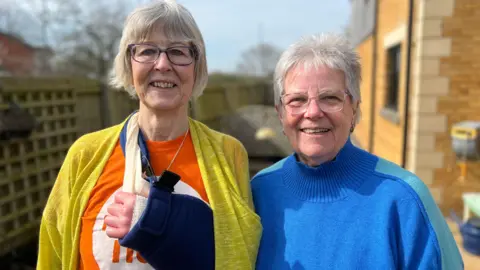
Sue Neale, along with Dr Jane Wells, helped to set up the charity Meningitis Now after their sons had the infection during an outbreak in Stroud in the 1980s.
The charity has welcomed the health secretary's call for the Joint Committee on Vaccination and Immunisation (JCVI) to "re-examine eligibility for meningitis vaccines" amid the current outbreak in Kent.
Adam Finn, Professor Emeritus of Paediatrics at the University of Bristol, said, although the vaccine generates immunity, they do not provide "instantaneous" protection and a change in behaviour will control the outbreak.
Meningitis is an infection of the protective membranes that surround the brain and spinal cord.
A total of 29 confirmed or suspected cases of meningitis B have been linked to the Kent outbreak, which has killed two people.
According to the UK Health Security Agency (UKHSA), the peak is thought to have passed.
In a statement on 17 March, Wes Streeting said the government follows the advice of the JCVI but asked the body to re-examine eligibility for the MenB vaccine.
Teenagers are currently offered a separate meningitis vaccine - which protects against some other strains, but not MenB.
For some, the situation in Kent is all too familiar.
Wells and Neale helped to found The Stroud Meningitis Support Group, now known as Meningitis Now, in the 1980s.
Wells' son, Daniel, and Neale's son, Adam, both contracted meningitis B during the outbreak in Stroud and South Gloucestershire, which saw 65 cases and two deaths.
"It brings back memories, very much the same as 1986 when this outbreak really shook the people of the [Stroud] valleys," Wells said of the current outbreak.
"All those years ago in 1986, there were no vaccines. We've come a huge way in the last 40 years."
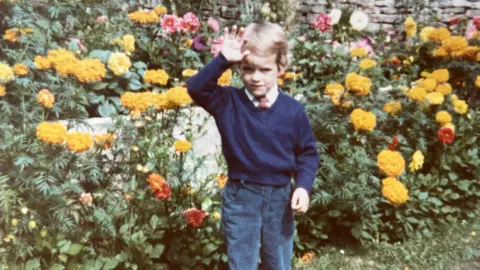 Sue Neale
'I've seen the devastation'
Neale raised concerns over the current eligibility criteria for vaccines as the present adolescents and young adults - the group most vulnerable to meningitis B - missed the MenB vaccine.
Routine vaccination against MenB for babies and young children was introduced in 2015, meaning many young people born before then have not been vaccinated.
"I would be asking really strongly that they are able to have it and not just having to pay for themselves, but have it routinely now, because my son had it and I've seen the devastation," Neale said.
"It's an appalling illness... nobody can afford to have meningitis, the cost is with you for life.
"But some of our university students, young people, just can't afford the cost of the vaccine in the High Street at the moment," she added.
There are about 1,000 cases of bacterial meningitis every year, Tom Nutt, CEO of the charity, said.
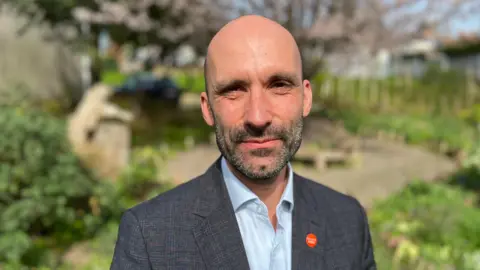
Nutt said one in 10 infected people will die and it is a "relatively uncommon disease", but it causes "huge devastation".
The charity had been arguing the case for the introduction of the MenB vaccine prior to the current outbreak and there are studies underway that may show the benefit of giving boosters to teenagers who were vaccinated as infants, he added.
"My message to ministers would be is that, although you are obliged to follow the science and the recommendations made by the JCVI, it doesn't mean that you can't act over and above them," Nutt said.
Modified behaviour
But, as young people race to get vaccines, how effective are they in the case of an ongoing outbreak?
According to Finn, it is "quite a complicated story", as the vaccine is "almost an irrelevance in the very short term", although it is effective overall.
"What will bring the outbreak under control is that people will modify their behaviour because they're concerned about transmission," he said.
"They won't be going to nightclubs, sharing vapes or being in close and intimate contact, for sure.
"And, combined with that, the antibiotics that have been given out, I think now, to several thousand young individuals will protect them from getting sick and will also greatly reduce the chances if they're carrying the bug of transmitting it onto other people."
Follow BBC Gloucestershire on Facebook, X and Instagram. Send your story ideas to us on email or via WhatsApp on 0800 313 4630.
