'I can walk into town again thanks to dance classes'

 BBC
BBCRegular dancing as part of a group could help give older people with lower-back pain more confidence to move, according to researchers.
A dance class was held in The Pavilion, Bournemouth, as part of a study into whether it could improve outcomes for the condition.
Consultant physiotherapist Neil Langridge, one of those behind the study, said dancing introduces a social element and takes people "out of the medical environment" and away from "difficult" exercises.
Since wrapping up the study, instructors from Pavilion Dance have continued running the class.

Around 480,000 people in Great Britain suffer from work-related musculoskeletal disorders like back pain, according to data from the Health and Safety Executive - leading to around 30 million working days missed every year.
The study was run by Health Sciences University in Bournemouth, and hosted and taught by Pavilion Dance.
Last year, the team looked at three groups over 6 weeks to see if dancing could help with the condition.
"Basic exercises can be boring, adherence to exercise planning is difficult," said Langridge, director of the Institute of Musculoskeletal Health at the university.
"Patients with lower back pain are scared to move, but they also find that exercises focusing on one part of their body are difficult and sometimes overly painful."
"This gives a different context - it takes you out of the medical environment and it gives you a social group to work with and share your experiences."
After the study, participants reported feeling more confident and less afraid of movement - as well as distracted from their pain, he said.
The class is now ongoing and has become "part of the community," said Langridge.
"It's quite joyful when you see them doing their exercises, you can see that they're actually having fun."
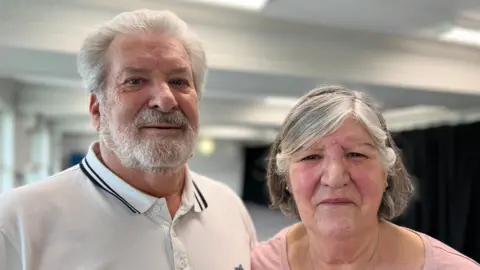
Trevor and Lorraine Mudimmer are a couple who have been going to the class since June last year when the study was running.
"The two ladies that teach us are brilliant, they are so much fun, and that's one of the reasons we keep coming," said Lorraine.
The pair say they have been dancing their whole lives and wanted to be able to keep it up, as well as improve their back pain.
"We wanted to keep active and we're very much in the mind of use it or lose it," said Trevor.
Lorraine said that before coming to the classes, she wasn't able to walk the 10 or 15 minutes into town where she lives without stopping or sitting down.
"But now, I can walk there, I can do my bits of shopping, I can walk back - I'm in pain by the time I get back, but it's a lot better."
