MPs warn of economic impact of Iran conflict

 BBC
BBCThe deepening conflict in Iran and the wider Middle East could threaten economic stability across southern England, MPs have warned.
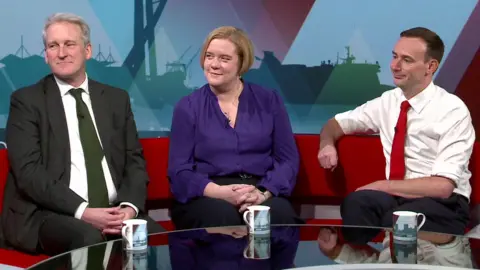
Speaking on BBC Politics South, representatives from Labour, the Conservatives and the Liberal Democrats said the situation remained unpredictable but could have significant implications for fuel prices, inflation and household budgets.
World gas and oil prices have increased since the US-Israeli attacks on Iran began on 28 February and the closure of the Strait of Hormuz.
Tom Hayes, Labour MP for Bournemouth East, said the government must "keep a very close eye" on the economic fallout.
There are concerns that inflationary pressures emanating from the conflict zone, will upset global markets for energy, fuel, food, industrial chemicals, and credit.
Crude oil prices have risen by 27% since the conflict began. The Bank of England is expected to hold back from further interest rate cuts because of the upward pressure on inflation.
Hayes said: "In the Spring Statement the chancellor set out how inflation was falling, we've seen six interest rate cuts, borrowing down and we were starting to turn a corner.
"My concern is that the conflict in the Middle East wipes out some of those successes. The government will do all it possibly can to keep making progress."
Guildford's Liberal Democrat MP Zoe Franklin agreed the crisis could quickly translate into higher costs.
"Anything that results in higher prices for fuel, energy prices for businesses and for homes will be hugely problematic," she said.
"The government needs to consider at what they can do with the things that are in their control."
Conservative MP Damian Hinds, who represents East Hampshire, said the UK was at "a very early stage" of understanding the full impact and highlighted the spike in heating oil prices.
"From a government's perspective it's about looking at the things you can affect.
"I'm worried there isn't a response to some of the grave economic problems we've had - with the instability we've got in the world, that could get worse."
'Struggling businesses'
The MPs also clashed over last week's Spring Statement, much of the forecasting for which was done before conflict broke out.
Hinds criticised what he said was an absence of new policies: "Particularly, the rate of youth employment is soaring and that hasn't come about with what's happening in Iran, that's come about because of domestic policy."
Franklin called it "disappointing", especially for "struggling high street businesses".
"They were looking for the government to address those problems and do something about it," she added.
But Hayes said major fiscal announcements were limited to the main annual budget speech.
He pointed to the chancellor's announcement of £3bn of extra "buffer for external shocks" and was focused on "energy security".
"We're building home-grown clean energy to make sure we're not going to be susceptible to massive price shocks on fossil fuel markets.
"That, ultimately, is how we'll produce jobs and skills for young people."
Franklin also urged long term investment in renewable energy.
"We live on an island. If we build energy resilience, we can help ourselves immensely," she said.
You can follow BBC Hampshire & Isle of Wight on Facebook, X, or Instagram.
