'Being gay made it harder to get gambling support'

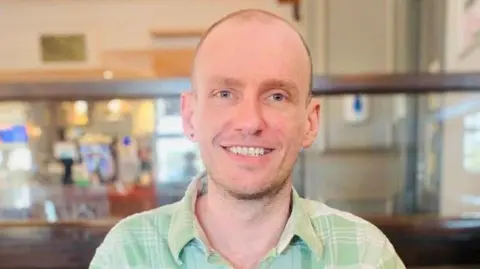 Ben Howard
When Ben Howard first walked into a casino, he was 17 and had just come from his first visit to a gay bar.
He said it capped off a night where, for the first time, he had found a sense of belonging.
When he put £20 into a slot machine, he won a £1,000 jackpot.
That win started a journey which led to addiction, financial ruin, homelessness and prison.
But did Howard's sexuality play a part in the suffering he experienced due to gambling?
A new Bournemouth University study has explored the barriers members of the LGBTQIA+ community may face when seeking support.
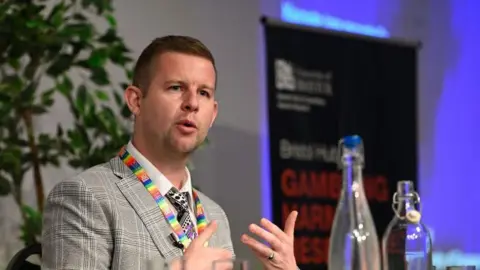 Dr Reece Bush-Evans
The study involved 31 LGBT people aged between 20 and 59 from across the UK, all with experience of online gambling.
Researchers said their findings suggested gambling could be used as a coping mechanism for those experiencing discrimination and limited representation.
They also said support was not always tailored to sexuality and gender-related needs.
Dr Reece Bush-Evans, who led the study, said: "Participants described using gambling to manage distress linked to the psychological burden of marginalisation."
The research followed recent work at the University of Brighton which found LGBTQ+ adults gamble less than heterosexual people, but faced worse outcomes.
Big wins 'dangerous'
For Howard, who now lives in Warwickshire, says that first win made gambling seem like a route to easy money.
"People always talk about chasing losses, but that big win is equally as dangerous at the start," he said.
He began going to the casino every Friday with friends, but before long was going alone.
"I didn't realise how much I couldn't set boundaries for myself," he said.
"Within 12 months I was sitting in front of a bank manager taking out loans and maxing out credit cards.
"Within 24 hours of getting that money, it was gone," he said.
"I kept telling myself the winning streak would come back."
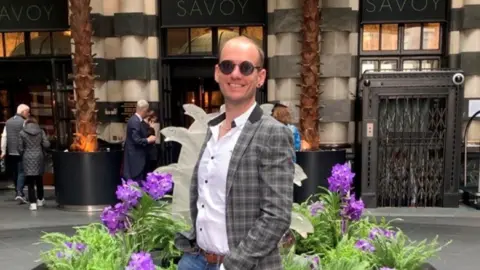 Ben Howard
Howard said the rise of online gambling made things worse.
"It changed everything. You don't have to go out anymore, it's in your pocket," he said.
"I'd get paid at midnight and by five minutes past I'd spent most of my wages."
As the addiction grew, Howard said he withdrew from friends and family.
"I could be in a room full of people, but feel so isolated and lonely," he said. "I didn't want to tell anyone. There's this huge shame and stigma attached."
He says he believes the pressures he felt as a young gay man played a role in how gambling took hold.
"When I was gambling, I felt in control," he said. "I couldn't say outwardly, 'This is me, this is who I am', but in that space I was making the decisions."
Howard said he first tried to seek help in 2016, but left feeling judged.
Turning to crime to fund habit
"Someone would say, 'Do you have a wife? Do you have a girlfriend?'," Howad said.
"It makes you fearful to say, 'Actually, I've got a boyfriend'. You don't open up as much. You just close off."
He believes that experience made it harder to reach out again when his gambling worsened.
The Bournemouth study found similar concerns about seeking support, with participants describing fears of being judged.
From 2017 to 2020, Howard said he began stealing from the care home he managed.
He initially took £300 from a safe in cash, won, and put the money back.
"I thought, 'I'm never going to do that again. I can't believe I've just done that'," he said. "I've never committed a crime in my life."
But he did not get caught, and the amounts escalated.
'I became bankrupt and lost my home'
In 2020 Howard was charged with fraud by abuse of position after admitting to stealing more than £250,000, including from residents.
He said one moment stood out as his wake-up call - a £147,000 win online.
That money, which could have been returned, was instead gambled away in two days.
"I remember sitting on the edge of the bed realising there were two options - suicide, or hand myself in to the police," he said.
"Suicide felt like the easy way out. But I went to the police station and disclosed everything.
"Work found out. Friends and family found out. I became bankrupt. I lost my home. My relationship broke down."
He was sentenced to three years and four months in prison in 2024, but was released after serving 10 months in June 2025.
"It was the worst and best thing that happened to me and it forced me into recovery," he said.
He now works at Brighton and Hove LGBT Switchboard, helping develop dedicated support for LGBT people affected by gambling harm.
"When someone knows you've been there, the barriers come down instantly," he said. "It's true empathy."
"Gambling is indiscriminate," he said. "It's not going to pick you based on class, gender, race.
"It can affect absolutely anyone."
You can follow BBC Dorset on Facebook, X (Twitter), or Instagram.
