Artist's pride at 'startling study of fractured, crazy Black Country'

 Tom Hicks
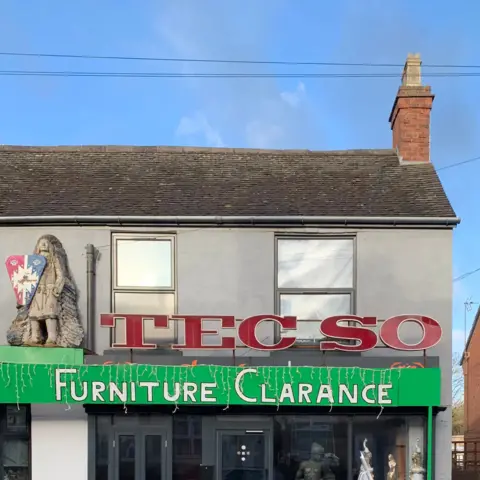
What began as a simple smartphone project - capturing the stark beauty and quiet humour of the Black Country - has grown into something far bigger for artist Tom Hicks.
His work has evolved from documenting the post-industrial sights others might ignore, to reshaping it with his own pieces of public art.
He has also moved into filmmaking and, with his graphic designer son, created visual material for local musicians.
After the sell-out success of his first book, published by The Modernist, the artist better known as Black Country Type is set to publish a second volume - again showcasing the typography, signage and "hidden beauty" of the area.
Writing the foreword for the new book, Led Zeppelin's Robert Plant described it as a "startling study of our fractured, crazy place".
 Tom Hicks
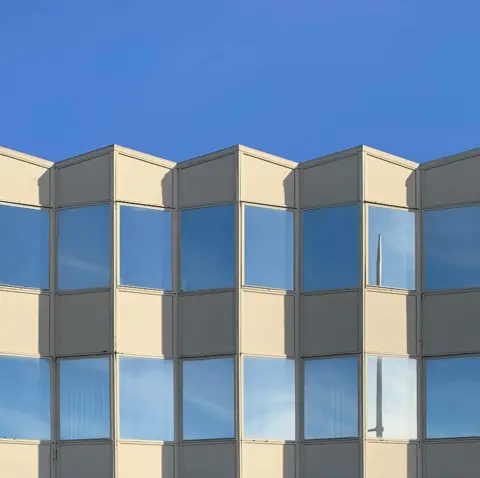
Hicks started posting his images on Instagram, taken while "drifting" around the area for a project designed to link place with identity.
"I'm quite interested in psycho-geography," said the artist. "The effect the place has on you as you move through it.
"Some places in the Black Country feel really old, others, even kind of ancient.
"So it's always interesting cycling through and seeing the change in environment and atmosphere."
 Tom Hicks
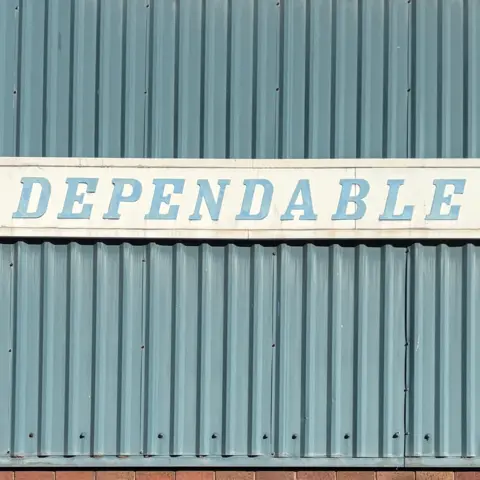
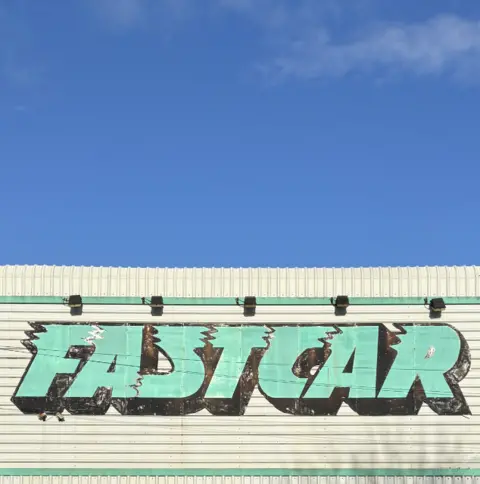
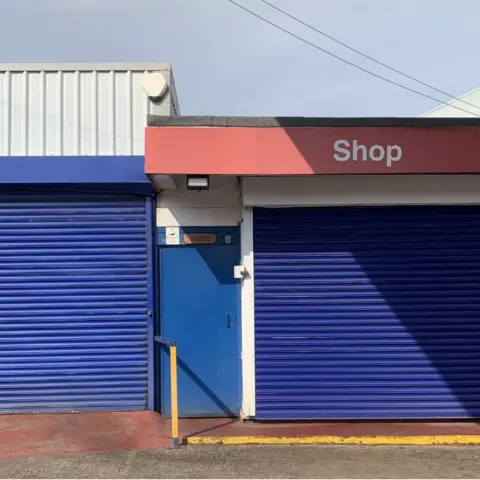
Images show historic signage on industrial units, some of which have since disappeared.
"A lot of factories would do their own in-house logos and letters, rather than pay a graphic designer," he explained. "So they had a really unique character".
Hicks stressed his work wasn't a history project as such, but a way of documenting the character of the place as it is now.
"It's like having a dialogue with the landscape," he said.
 Tom Hicks
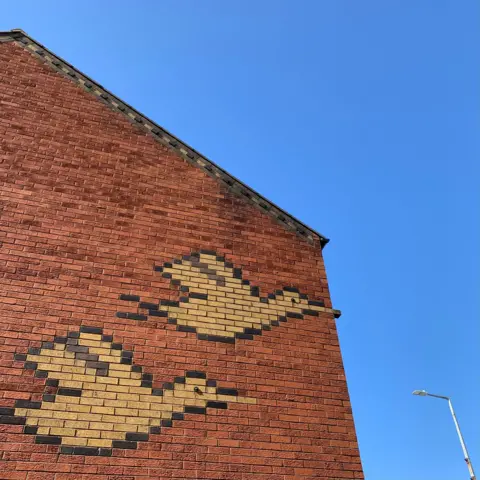
His work also reflects the identity of local people, he said.
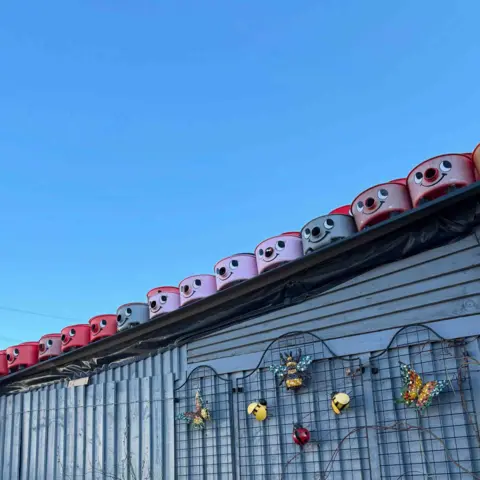
"Not self-promoting, not self-aggrandising and, unlike other parts of the country, there's a lot of everyday humour that I love," he added.
"I think that comes through with the signs, and the graffiti, and just the way people express things".
 Tom Hicks
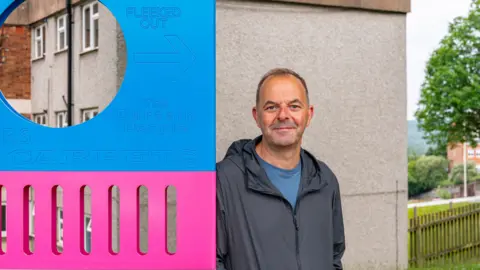
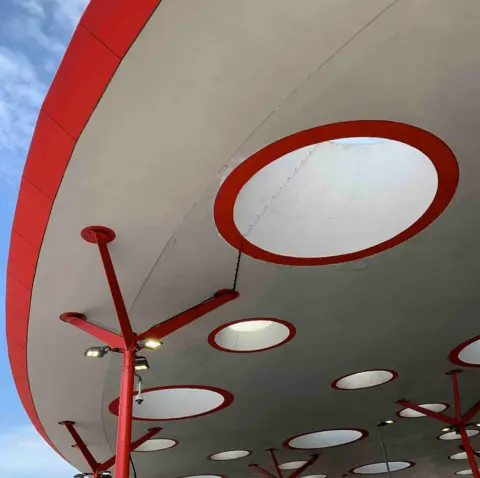
He was commissioned to produce his first piece of public art, You Are Here, at a transport hub in Halesowen, and a second work of his will form part of the new Dudley Interchange project, which is set to open later this year.
"I'd never created [a sculpture] before, but when they asked I just said yes, and then worked out how to do it afterwards."
Both projects centred around "meeting places", he said.
"They're places where people are on the move, you meet your friends there," he explained.
"Also reflecting the dialect of the region, I think that's going to be part of it."
 Tom Hicks/Ikon/Tod Jones
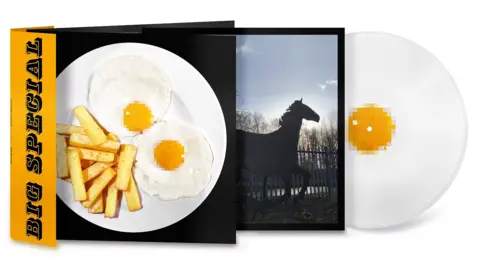
As well as producing a short film last year, Walsall duo Big Special approached the artist to produce a band logo and the cover art for their album, National Average.
His son Alfie Hicks had also worked on the graphics, explained the artist.
"I know how I want things to look, but he's great at translating my ideas," he said.
"It was a secret album, so we had to work undercover over a few months, and of course it had to be about the Black Country," said Hicks.
"They were great to work with. I went to see them play in Wolverhampton around the time that the album came out," he said.
"To see people with it under their arms, and with the t-shirts on, it was fantastic really."
"So the art has gone in lots of different directions."
 Tom Hicks/Alfie Hicks
Other recent projects have included work with local schools, colleges and universities with pupils reacting to his work about sense of place, and the local environment.
He also continues to work with long-term collaborator poet Liz Berry.
A retrospective of his work at Birmingham City University last year was followed by an exhibition at the University of Cambridge.
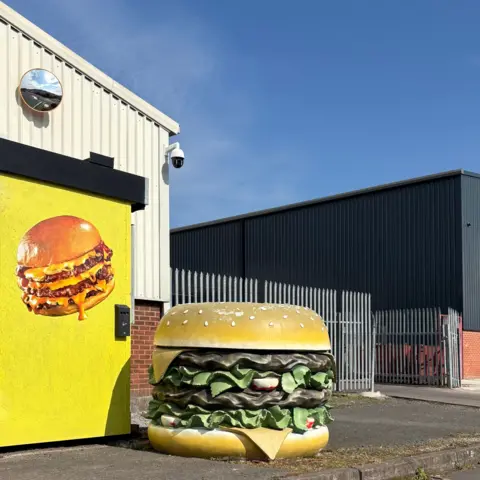
Writing in the exhibition catalogue Barry Phipps, fellow of Churchill College said: "His work echoes the Black Country's industrial heritage: the same ingenuity that once forged metal now finds expression in painted wood and brick".
The artist reveals the area "not as a landscape of absence but as one of invention, language and light".
"His photographs do more than depict, they redefine. In celebrating the handmade and the overlooked, Hicks contributes to a broader movement of artists reclaiming the local as a site of creative meaning."
 Tom Hicks
 Tom Hicks
Hicks' first book offered an insider's view of the Black Country to an international audience, he said.
"I don't work for any tourist board, but it was a kind of low‑key look at what it's really like here."
The second volume once again mirrors the "no‑nonsense design of old factory catalogues" that he admires.
Plant, who had written the foreword, "has been incredibly supportive of my work," added Hicks.
"He'd bought the first book so I arranged to send him a draft of the second and said, 'React to it however you want'. I don't need to tell him how to write words!
"He's always really supportive of the Black Country generally."
 Tom Hicks
 Tom Hicks
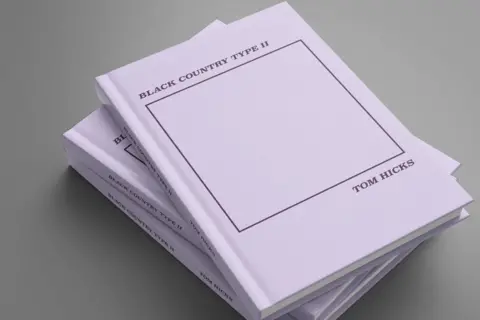
The artist, who also works as an academic art librarian at the University of Wolverhampton, said the way his book functioned was "really important".
"If you put an image on the cover, or an image on every page, it becomes almost like a flick book," he explained.
"I'm trying to guide people through the area, to slow them down a bit.
"There are a few blank pages so you can pause, take in the photograph opposite, and then move on to the next location. It's a way of pacing your journey through the region.
"Well, I'm a librarian - the mechanics of books matter to me," he joked.
 Tom Hicks
Black Country Type II is published in May by The Modernist, and available to pre-order.
Follow BBC Birmingham on BBC Sounds, Facebook, X and Instagram.
