Why are Cornish pasties still so popular?

 Getty Images
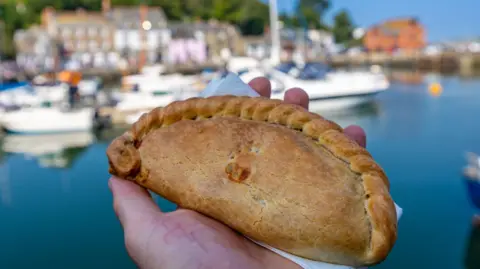
As Cornwall prepares for the Global Pasty Championships, we explore how a humble hand‑pie born in the tin mines became a symbol of identity, craftsmanship and centuries‑old tradition - and why it still holds such a powerful place in Britain's food culture.
Long before it appeared in railway stations or lunchboxes across Britain, the pasty was a lifeline for Cornwall's tin miners - a warm, sturdy pocket of sustenance crimped by hand and passed down through generations.
The flaky handheld meat pie is now a staple of British cuisine, even earning mentions in Shakespeare.
Over centuries, it has moved from the mine shafts of Cornwall to railway stations, high streets and holiday hotspots across the country, now worth an estimated £300m to the economy annually.
It is so loved by the people of Cornwall, that it was even given Protected Geographical Indication (PGI) status by the EU in 2011. This means only pasties produced in Cornwall can be called Cornish.
 Malcolm Barnecutt Bakery
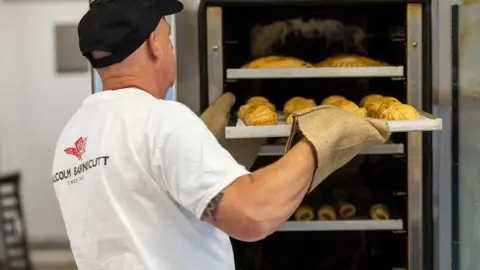
The championships - held this weekend at the Lost Gardens of Heligan - bring together bakers from across the world to celebrate Cornwall's food heritage.
They come at the end of the ninth annual Pasty Week, which is organised by the Cornish Pasty Association.
The event, timed just before Cornwall's national celebration St Piran's Day, includes categories for both traditional and experimental pasties.
It will also feature a speed-crimping competition, pasty-themed workshops and categories for junior bakers.
Heligan's chief executive David Harland explained that the first recorded written recipe of a "mutton pasty" was by John Tremayne, from the Heligan estate, in 1746, showing just how deep the tradition runs.
How the Cornish pasty is crafted
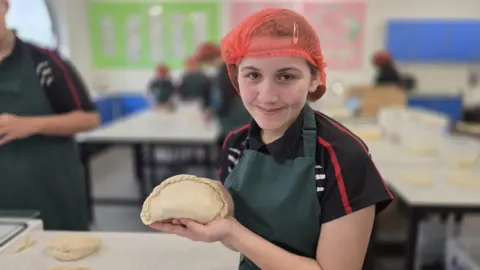
At Camborne Science and International Academy, students recently learned the art of crimping - the defining skill behind the pasty's distinctive edge.
Grace Lobb, from the Cornish Pasty Association, said: "Pasties are tied up with our culture and heritage - it is part of who we are.
"I think it is essential all kids learn to cook but especially a pasty."
Leia, 14, said her first time crimping a pasty had turned out "not that bad".
The Cornish Pasty Association says an authentic example should have a distinctive "D" shape and be crimped, or folded into a rope-like pattern, on one side - never on top.
The rules also state that the filling needs to be "chunky", made up of "mince or chunks of beef with swede, potato and onion and a light seasoning".
The pasty itself should be made up of at least 12.5% meat. No artificial flavourings or additives can be used and all ingredients must go into the pasty raw.
While many picture the classic filling of beef, potato and swede, the pasty has evolved with modern tastes.
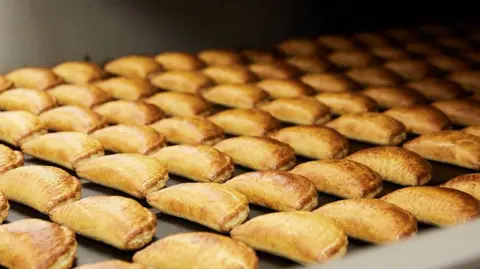
Today you'll find everything from steak and stilton to chicken and bacon - even dessert versions like rhubarb and custard.
As Cornish miners travelled across the world, so too did the pasty, with parts of Canada, the USA, Mexico and Australia all still enjoying their own variations.
 Ginsters
"The Cornish pasty has endured because it's honest, comforting food with a real story behind it," said Louise Moye, Warrens Bakery's director and head of marketing.
"At Warrens, we've been baking in Cornwall since 1860, and that sense of heritage still matters deeply to us.
"For many people, a pasty is tied to memories and a strong sense of place and we think that connection, as much as the taste itself, is why it remains so loved today."
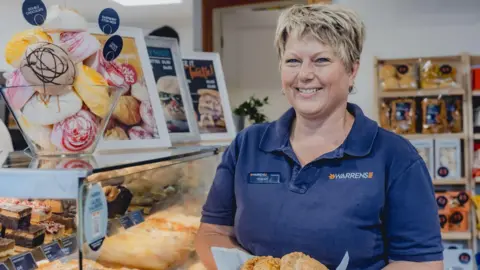 Warrens Bakery
Although an exact origin date is unknown, pasties are believed to have been crafted in the South West of England for more than 500 years.
Food wholesalers Proper Cornish said references go back as far as the 13th Century, when they appeared on the tables of the upper classes and royalty.
As mining boomed in the 18th and 19th Centuries, the pasty became a miner's essential.
The company added that good pasty was tough enough to survive being dropped down a mine shaft, with a thick crust (crimp) acting as a "handle" for dirty or arsenic‑covered hands.
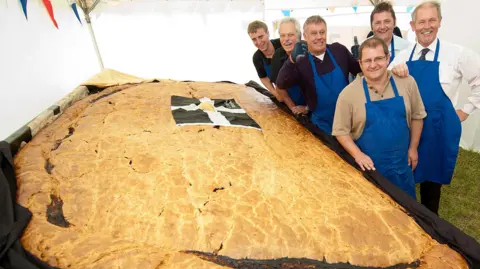 Proper Cornish
More recently, historians have debated whether the pasty began in Devon.
A record from 1509-1510 mentions a "10d" pasty in Plymouth accounts, and historian Dr Todd Gray argues the earliest written recipe comes from Devon in 1746.
However, a Cornish chronicler hit back and said cave drawings revealed evidence of pasties in the county in primitive times.
Breaking records
In 2010, Proper Cornish, based in Bodmin, set a Guinness World Record for the largest pasty ever baked — a 728kg (1,600lb) giant measuring 5m by 2m (16ft by 6.6ft).
Yvonne Hollyoak, head of marketing, said: "The Cornish pasty is our passion, and its heritage and PGI status is something we are immensely proud to uphold.
"We make around 76,000 hand-crimped pasties every day, so you could say we know a thing or two about Cornish pasties."
A chef's take on the Cornish pasty
Will Gamble, senior development chef at Ginsters, said for him, the Cornish pasty is a "proper comfort food" and "carries a strong sense of nostalgia".
"There's something about holding a warm pasty in your hands that takes you straight back - to family holidays in Cornwall, walking along the coast with one wrapped in paper," he said.
"For many, coming down to Cornwall and having a pasty isn't just about eating - it's a rite of passage - it's part of the experience of being here.
"What I love most is that it connects generations - it's something your grandparents might have eaten all the way down to younger generations.
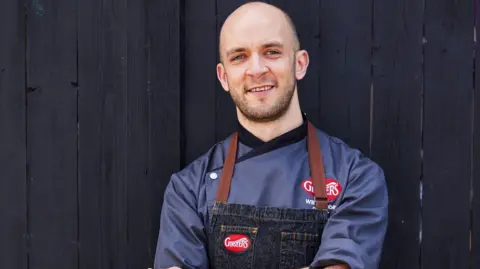 Ginsters
Gamble said in a food culture that's constantly chasing the next trend, the Cornish Pasty has not had to shout for attention.
"It's endured because it delivers depth of flavour and real substance without overcomplicating things," he said.
"You get sweetness from the onion, earthiness from the swede, richness from the beef - all held together by pastry that's sturdy enough to travel but delicate enough to give way when you bite into it."
So, why are Cornish pasties still so popular?
Gamble believes the pasty's enduring appeal is tied to heritage and care: "On paper it's simple, but that simplicity demands skill.
"The cut of the vegetables, the seasoning, the pastry — those details require experience. It's special because it's rooted in tradition and made with pride."
He said: "That blend of heritage, skill and practicality is what gives it staying power.
"It isn't special because it's complicated; it's special because it's rooted in nostalgia, protected and made with care.
"And that's why it continues to hold such a strong place in British food culture."
Follow BBC Cornwall on X, Facebook and Instagram. Send your story ideas to spotlight@bbc.co.uk.
