Vegetarian diet lowers risk of cancer, study finds

 PA Media
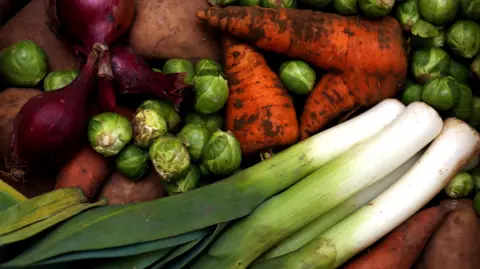
A vegetarian diet can slash the risk of five types of cancer by as much as 30%, a new study has found.
Researchers from the University of Oxford found that vegetarians had lower risks of pancreatic, breast, kidney and prostate cancer, as well as multiple myeloma - when compared to meat eaters.
However, the study also found that vegetarians have nearly double the risk of cancer of the oesophagus compared with meat eaters.
The team behind the study said more research would be needed to uncover whether it was meat consumption that was problematic, or if something specific in vegetarian diets lowers the risk.
Tim Key, who co-authored the study, said: "My feeling is the differences are more likely to be related to meat itself than to simply vegetarians eating more healthy foods".
"But that's sort of an opinion which we haven't looked at directly," the emeritus professor of epidemiology at Nuffield Department of Population Health at the university added.
The new research - published in the British Journal of Cancer - was the largest ever of its kind, and included data from various studies across the world, with most people coming from the UK and US.
Some 1.64 million meat eaters were included, alongside 57,016 poultry eaters (no red meat), 42,910 people who ate fish and no meat (pescatarians), 63,147 vegetarians and 8,849 vegans.
It found that vegetarians had a 21% lower risk of pancreatic cancer and a 9% lower risk of breast cancer compared with meat eaters.
They also have a 12% reduced risk of prostate cancer, 28% lower risk of kidney cancer and 31% lower risk of multiple myeloma.
Amy Hirst, health information manager at Cancer Research UK, said the "high-quality study" offered some interesting insights, but the findings were not strong enough to draw definitive conclusions.
She said: "More research in larger, more diverse populations is needed to better understand these patterns and what's causing them."
"When it comes to reducing cancer risk, keeping a healthy, balanced diet overall matters more than individual foods," Hirst added.
You can follow BBC Oxfordshire on Facebook, X (Twitter), or Instagram.
