Cerebral palsy health care a 'never-ending battle'

 Molly Lane
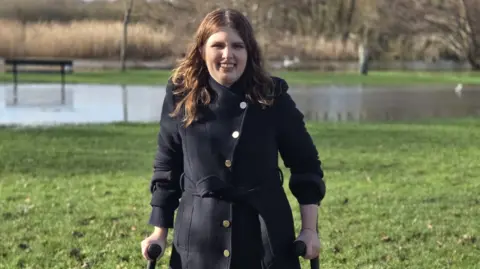
A woman with cerebral palsy says guaranteed annual health checks for people with her condition could end "fragmented" health care.
Adults with cerebral palsy risk developing early-onset health conditions like chronic pain, mobility difficulties and cardiovascular disease.
Molly Lane, who lives in Salisbury in Wiltshire, said: "You spend your life navigating a fragmented [health] system. For some people, it's a never-ending battle."
A spokesperson for the Department of Health and Social Care (DHSC) said the government was "strengthening care for people with complex long-term conditions, including cerebral palsy" through its 10 Year Health Plan.
This includes shifting more healthcare to the community by bolstering GP and pharmacist services.
 BBC/Phil McIntyre Television/Michael Prince
Cerebral palsy is a developmental disability which impacts movement and co-ordination.
It affects about 130,000 adults in the UK, yet routine health checks are not guaranteed.
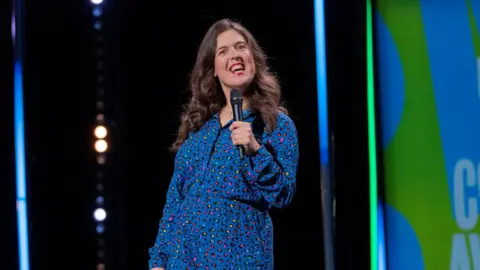
Lane, 29, decided to share her story after seeing an Instagram post by comedian Rosie Jones, who also has cerebral palsy, sharing the Doctor Won't See Us Now campaign.
It is calling for annual health checks so people with the condition can avoid long hospital or GP waiting lists when they are already struggling with their health.
After being diagnosed age two, Lane said as a child she received really "brilliant" care from the NHS, including offers of physio and occupational therapy.
But when she reached 19, she said this level of support dwindled and she faced long waits for basic support. It was not until a flare-up at 25 where she realised how little care she had had as an adult with cerebral palsy.
"Everything kicked in and I got referred back to all the specialists I needed," she said. "From that point, I realised what I missed."
Lane added: "Adults with cerebral palsy are 14 times more likely to die from respiratory conditions. If you are constantly ill, it can be hard to have the energy to bring issues forward.
"A lot of people with disabilities are taught not to raise their voice, not to be demanding. But never be afraid of complaining or going through the processes. All this campaign is asking for is GP health checks."
Emma Livingstone, Co-founder and CEO of UP – The Adult Movement for Cerebral Palsy, which is running the campaign, added: "Preventive healthcare is crucial to reducing unnecessary hospital admissions and ensuring a better quality of life for people with CP."
The DHSC said, as well as the 10 Year Health Plan, Integrated Care Boards across the country were working to provide tailored support for adults with cerebral palsy.
A spokesperson added: "We are committed to ensuring that people with cerebral palsy get the support they need to lead fulfilling, healthy and productive lives."
Follow BBC Wiltshire on Facebook, X and Instagram. Send your story ideas to us on email or via WhatsApp on 0800 313 4630.
