When pubs, shops and conservation rules clash

 Federica Bedendo/BBC
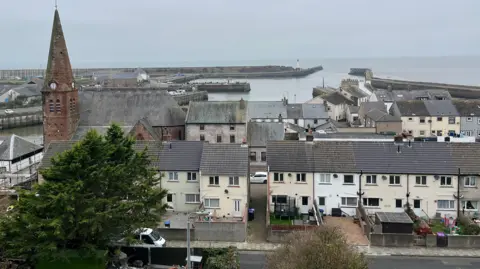
Protecting a town's heritage and character - and restoring its past glories - can attract shoppers, tourists and economic benefits. But sometimes efforts to preserve the original features that make a place unique - and worth visiting - clash with the wants of businesses.
Maryport, on the west coast of Cumbria, is not alone in facing the modern economic realities and changing habits that have left some seaside towns struggling. But the town also faces another hurdle.
Because of its history and architecture it is designated as a conservation area, where special rules apply, but has been considered "at risk" since 2013. It is hoped a £12m redevelopment now drawing to a close will save it - but the rules that come with that conservation-led investment have prompted a backlash from some business owners.
Many are largely supportive of work happening in the town, but some have been caught out by the closer scrutiny of Maryport's appearance and fined for planning breaches.
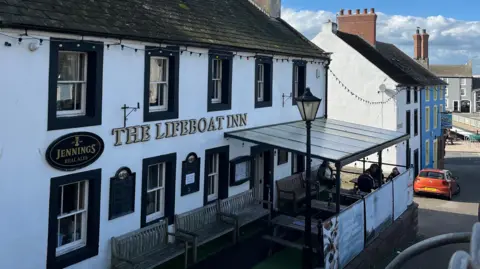
Owners of the Lifeboat Inn, George and Andrea Kemp, were ordered by a court to pay £27,000 in fines and costs for erecting a canopy outside their Grade II listed pub.
It was one of five businesses along Senhouse Street on the wrong side of tougher planning rules in place for buildings in conservation areas.
 Federica Bedendo/BBC
"I think it's absolutely scandalous," Mr Kemp said.
"I want to see things kept tidy but, when I look round the town at the moment and the big regeneration that's going on, there's a lot of places in worst condition than mine."
He bought the building 19 years ago, when it was due to be turned into a house, and said he had put his "heart and soul" into it and the prosecution had felt like "a kick in the teeth".
Mr Kemp said the canopy had been erected during the pandemic to ease social distancing and he believed he would be allowed to keep it when planning rules on temporary structures changed shortly after.
But Cumberland Council said he did not seek the appropriate permission and the materials used were not in keeping with the building's character.
 Federica Bedendo/BBC
Maryport has a rich maritime past. It was the birthplace of Thomas Henry Ismay who founded the White Star Line - the company that built the Titanic - and it caught the eye of renowned painter LS Lowry, who was a regular visitor.
But the town has struggled to attract businesses and investment and, in 2013, its conservation area was placed on Historic England's "at risk" register. There were fears its historic significance could be lost without action.
The heritage body described Maryport's vulnerability as "high" and its condition as "deteriorating".
While those do not sound like particularly flattering adjectives, the status they conferred helped the town attract millions of pounds of funding from the government, Cumberland Council and Historic England to address long-standing problems and spruce up shopfronts.
 Federica Bedendo/BBC
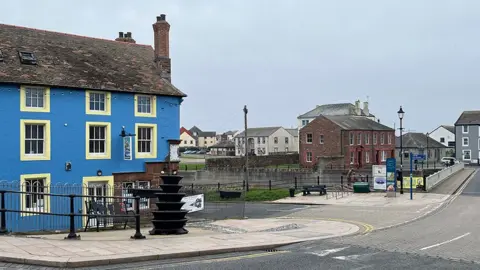
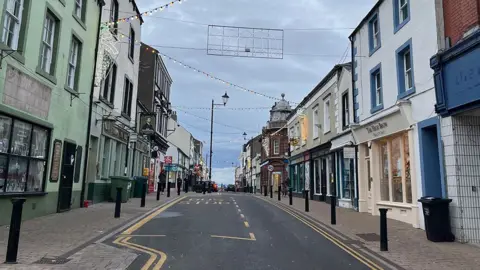
However, the work to preserve the town's heritage brought with it renewed focus on conservation area restrictions, such as the requirement for shops to have a specific type of window or signage, or for special permission to be needed before alterations can be made.
On the main shopping street - Senhouse Street - Cumberland Council issued enforcement notices for a range of issues with various buildings' appearance. The Lifeboat Inn was one of them.
The authority said planning applications had since been submitted for three of the businesses served with enforcement notices, while discussions were ongoing with another.
 Federica Bedendo/BBC
Mr Kemp's canopy was made from the wrong type of material and deemed not in keeping with the listed pub, the council said.
After the couple were fined, the authority said it had made "repeated attempts to resolve the issue" before prosecuting them.
Mr Kemp said the fine had been a "huge hit", on top of the escalating costs and "colossal" bills he was already facing.
"It's not just a hit for me, it's been a hit for several other businesses in town who've been heavily fined," he said. "A lot of those people have actually enhanced their properties."
Kevin Kerrigan, an officer with the Labour-led council who has been leading the regeneration, said taking enforcement action was "always a difficult decision" and used as a last resort.
"Where work has been done that's not in accordance with national policy relating to conservation areas, it really undermines the efforts that the council and the wider community are trying to make," he said.
 Federica Bedendo/BBC
But the efforts were working and the town was now "really vibrant", Mr Kerrigan said.
"We've got a lot of investment in terms of key projects, which is stimulating activity and bringing new people into the town."
Dilapidated buildings have been brought back into use, such as the Grade II listed Christ Church which will become the town's maritime museum. The old Carlton cinema is being turned into an arts venue.
The promenade has a new cafe and skate park and an outdoor events space has been built near the marina.
The town is hoping it will at last be able to shake off a reputation for being run down that led to the nickname Scaryport.
The chairman of its business group, Sean Parnaby, said footfall on the high street was up by 19% and empty units were filling up fast.
"I think it's quite interesting to watch in a very short space of time - two, three years - people's views turning around and changing about Maryport," he said.
Resident and business owner Gemma Hornsby-Lotfhouse does not believe the town will "ever lose its Scaryport label" and, despite growing up there, had doubts when it came to opening her wellness business on the high street.
But she says the place is now "booming".
"It's not Scaryport - it is absolutely thriving as Maryport," she said.
 Federica Bedendo/BBC
Alan Asbridge, 73, said there had been an influx of visitors over summer and in his view the work was proving to be a success.
"It could do with a bit more done with the shop fronts along here [Senhouse Street], but down the harbour it looks lovely," he said.
Paul Johnston has lived in the town all his life and agrees it is thriving.
"I love the way everything is happening now in Maryport," the 45-year-old said. "We've got a new cocktail bar, there's a pizza place, everything is getting done up on the prom - I love it."
 Federica Bedendo/BBC
Gemma Bellamy lives in Cockermouth but said she enjoyed visiting Maryport because of its atmosphere.
"I love Maryport," she said. "I've always really enjoyed coming here and I think it's great now there's a lot more coffee shops that have popped up.
"There's the gallery as well, which is fantastic and we come here quite a lot."
 Federica Bedendo/BBC
Every year the town is reassessed to see if it meets the criteria for being removed from the "at risk" register.
Historic England said work to address its problems could take time but had so far made a "visible difference".
Council officer Mr Kerrigan agreed great progress had been made.
"Undoubtedly there's still issues to address but it's a really positive approach that's been adopted in Maryport and I think we're seeing the signs of that."
