Boots and rope from 1925 Scafell climb in archive

 FRCC
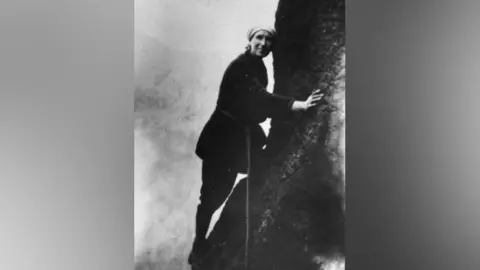
FRCCOne hundred years ago, Dr Mabel Barker became the first woman to ascend what was considered England's hardest rock climb at that time.
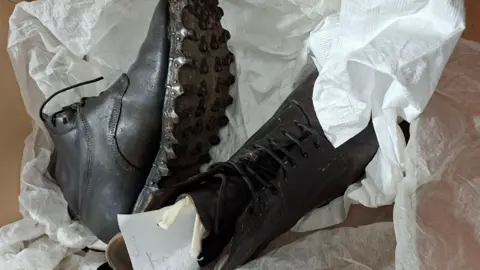
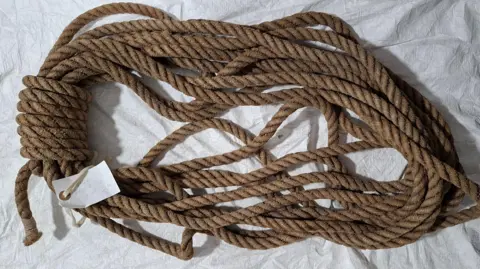
Her courage and skills are symbolised by the hobnail boots, a hemp rope and a handful of chockstones she used in her ascent of Scafell, in Cumbria, aged 39.
They are being preserved, along with other equipment and photographs, in a mountaineering archive in Threlkeld, near Keswick.
The Mountain Heritage Trust said it wanted to "safeguard the treasures from the past" and "share new expeditions in the making as the next generation take on new challenges".
Among those treasures are items from fellow Cumbrian climbing pioneer Alice 'Jammy' Cross's climb of the same route - Central Buttress - in 1939, when she became the first woman to lead it.
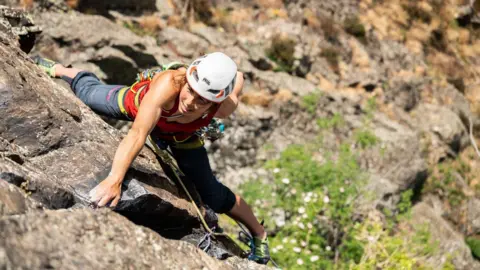
Guide and climbing coach Esther Foster said it was "hard to comprehend" just how pioneering the early women climbers were.
"They really did pave the way for us, push what's possible, and anything I've been able to achieve is only through standing on the shoulders of women that came before me," she said.
 Mountain Heritage Trust
Dr Barker was born in Silloth in 1885 and went on to found a school in Caldbeck based on outdoor and experiential learning.
Her hobnail boots, rope and the camera she took on the ascent up Scafell are among the belongings being preserved in the archive.
"Climbing Central Buttress on Scafell is a hard and committing climb even by today's standards," Ms Foster said.
"Climbing it in 1925, then the hardest climb in Britain, in hobnail boots with just rope slings looped over chockstones for protection, and being the first woman to climb it and fourth ascensionist, that's another thing entirely."
 Mountain Heritage Trust
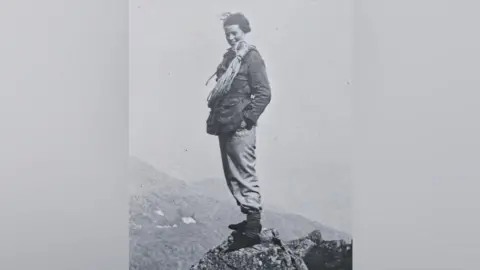
The legacy of Mrs Cross, who died in 2004, is also being celebrated in the archive.
"Like many early women climbers...many of us won't have heard of Alice Cross," Ms Foster said.
She made the first female-led ascent of Central Buttress - which now has a technical climbing grade of E1 5b.
 Mountain Heritage Trust
"She was a trailblazer in the climbing world, raising the standards for women climbers and challenging many stereotypes and barriers," Ms Foster said.
"The female ascents are most inspirational for me, particularly Mabel Barker and Alice Cross climbing Central Buttress on Scafell, with that kit and equipment...it's pretty mind-blowing."
In 1949, Mrs Cross and her husband Sid took over the Old Dungeon Ghyll Hotel in Great Langdale, which to this day is a notorious hub for climbers and mountaineers.
 George Foster
Bill Peascod was also an active climbing figure in the late 1930s and 1940s.
"Born in Maryport, Bill Peascod came from a mining background in West Cumbria," David Monteith, from Mountain Heritage Trust, said.
He made a first ascent of Eagle Front above Buttermere in 1940 and was known for cycling to his climbs around the Lake District.
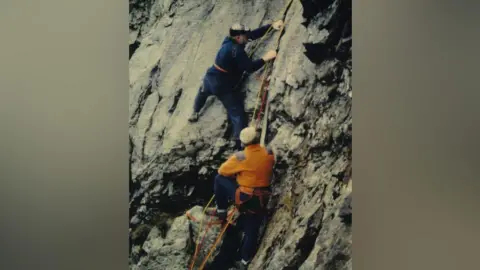
"In 1985, Bill was featured in a TV documentary with Chris Bonington recounting his ascent of Eagle Front, 45 years after his first ascent," Mr Monteith said.
Copies of the documentary series, called Lakeland Rock, are held in the archive.
It shows the style of his ascent in 1940 and the limited equipment available at the time. Mr Peascod died shortly after the film was made.
 Bill Birkett
The Mountain Heritage Trust has launched a fundraising campaign in hopes to digitise and maintain more stories and memorabilia.
The trust also said it needed money to cover rent and utilities where its collections are housed in a climate-controlled building.
"Digitalisation of the archive will make our mountain heritage readily available and accessible to everyone...and serves as a back-up if anything is damaged or lost," the trust said.
Ms Foster said: "Seeing the kit people used first-hand, learning about the characters, the climbs, the evolution and the rich cultural history is so rewarding...it inspires, educates and spreads the joy and wonder of climbing and mountaineering."
