'Under-16 social media ban? I'd be devastated'

 BBC
BBCThe House of Lords is set to vote on proposals for an under-16 social media ban this week, after Australia imposed one in December, but how would people react here if the same were to happen?
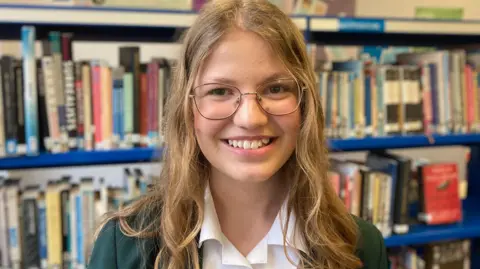
At Kesteven & Sleaford High School, 15-year-olds Xiaochu, Evelyn and Hannah all say they would understand the reasoning behind a ban if one came in, but they unanimously reject the idea.
"I'd be devastated," says Hannah. "I love going through my phone and having my online identity. I find it so much more 'freeing'. Online, you can be yourself, whereas at school you're having to fit in constantly."
Hannah says she manages her social media time and school-life balance responsibly, and says her social media access has helped her connect with friends and family, as well as boosting her understanding of the world, which, in turn, has helped her with her studies.
Hannah says starting to use social media at 16 will be a "major disadvantage to developing social skills".
"You get to know how it works," she says. "You can identify 'deep-fakes' and AI and if you get a dodgy text, you can say 'that's a scam'."
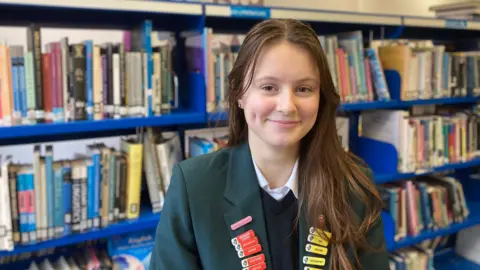
Evelyn thinks social media has a more positive impact than negative.
However, she admits that it has had an impact on her sleep schedule and that her attention span is "not as good as it used to be".
For that, she thinks more restrictions and time limits on apps would be useful, but says a full ban is unnecessary.
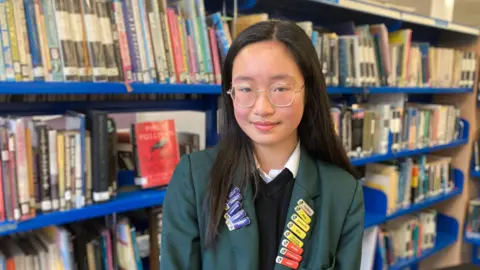
And while Xiaochu thinks the age limit of 16 is too high, she feels a ban on 14 and under is more appropriate.
She says: "The government was saying that they were going to lower the voting age to 16, but going straight into that, you don't know the rules and I feel the same can be said with social media - if you go straight into it, you don't really understand it."
Amy Kopsidas, who is the assistant head teacher for behaviour and culture at the Lincolnshire school, says she sees a lot of problems associated with social media "every single day".
"There are a lot of fallings-out that go on, lots of friendship conflict and at the heart of nearly every one of those [incidents] there's a mobile phone and social media," she says.
The school operates a ban on the use of phones during the school day, but Amy acknowledges "there is no control when the children leave the school gates".
Why did Australia ban under 16s?
In Australia, under-16s are banned from using major platforms such as TikTok, X, Facebook, Instagram, YouTube, Snapchat and Threads.
They cannot set up new accounts and existing profiles have been deactivated.
A study commissioned earlier in 2025 found that 96% of children aged 10-15 used social media, and that seven out of 10 of them had been exposed to harmful content. This included misogynistic and violent material as well as content promoting eating disorders and suicide.
One in seven also reported experiencing grooming-type behaviour from adults or older children, and more than half said they had been the victim of cyberbullying.
The ban is the first of its kind and is being watched closely by other countries.
In the UK, Prime Minister Sir Keir Starmer has not ruled out following Australia's lead, saying "all options are on the table".
Conservative leader Kemi Badenoch has said that her party will seek to introduce a similar policy, if elected to government.
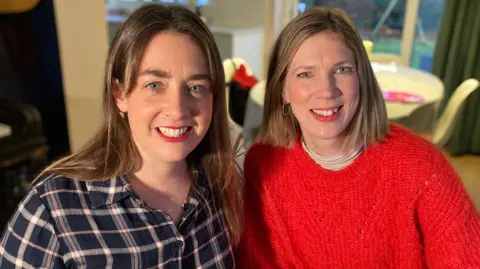
One group in Stamford that would support a ban in this country is The Conversation Stamford.
Run by Sarah Jane Sauntson and Gemma Holbird, the not-for-profit company provides personal, social and health education workshops in schools.
The pair believe a ban would set a precedent and help parents who wanted to keep their children off social media.
Sarah says: "I think it provides parents with a sort of cultural shift in the same way we wouldn't provide alcohol to children, because it's illegal. It adds weight and as a result makes it easier to arm parents to say no."
The National Society for the Prevention of Cruelty to Children, however, takes a different view, saying it should be up to the social media companies to do more.
Chief executive Chris Sherwood argues: "We believe blanket bans take a blunt approach - undermining teenagers' rights and driving them to unregulated spaces online, which exposes them to even greater risk.
"We must not punish young people for the failure of tech companies to create safe experiences online. Services must be accountable for knowing what content is being pushed out and ensuring that young people can enjoy social media safely."
Listen to highlights fromLincolnshire on BBC Sounds, watch thelatest episode of Look Northor tell us about a story you think we should be covering here.
Download the BBC News app from the App Store for iPhone and iPad or Google Play for Android devices
