Who is Tarique Rahman, the Bangladesh PM who spent 17 years in exile?

 Bangladesh Nationalist Party (BNP)/Reuters
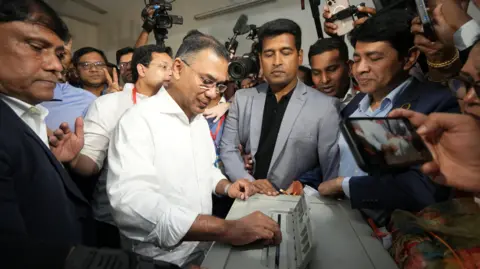
Tarique Rahman was sworn in as Bangladesh's prime minister on 17 February after his centre-right Bangladesh Nationalist Party (BNP) swept to a landslide in the general election.
Rahman, 60, is the figurehead of the influential Zia family, who leads one of two parties that have dominated politics in the country for decades. Both of his parents previously served as leaders of Bangladesh.
Yet it has been far from a smooth path to the top for Rahman, whose career has been dogged by allegations of nepotism and corruption by political rivals, as well as a long period of exile and his father's assassination when Rahman was a teenager.
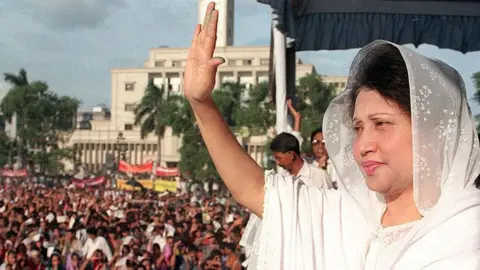
His eventual ascent to chairman of the BNP came just weeks before Bangladesh headed to the polls, following the death of his mother, the country's first female prime minister Khaleda Zia.
"Peace, law and order must be maintained at any cost ... We will not tolerate any kind of chaos," Reuters reported Rahman saying as he was sworn in on Tuesday.
Forty-nine others, including experienced leaders and fresh faces, also took their oaths as members of the new cabinet.
Foreign dignitaries from India, Nepal, Pakistan and Sri Lanka, among other countries in the region, were present at the swearing-in ceremony.
Shafiqur Rahman of Bangladesh's largest Islamist party Jamaat-e-Islami is now the Leader of the Opposition.
Tarique Rahman first became active within the BNP in 2001, when he was in his mid-30s.
It was the start of his mother's second period as prime minister. Her first had run from 1991 to 1996. His father, Ziaur Rahman, a military ruler turned president, had been killed in a military coup in 1981. He was a leading figure in Bangladesh's struggle for independence and founded the BNP in 1978.
In 2002, Rahman took his first significant steps in his parents' footprints, when it was announced that he had been promoted to a senior position within the party.
At the time, the opposition described his rise as brazen nepotism. He would go on to acquire a reputation for being a "hatchet man" who enforced party discipline.
Rahman has also been accused in the past of using his power to gain personal advantages but has always denied the corruption allegations against him. Some of his supporters believe he was used as a political scapegoat by his opponents.
He was arrested on corruption charges in 2007 during a military-backed caretaker government and said he was tortured while awaiting trial. He spent 18 months in prison before being released and then left the country for London.
Reports at the time suggested that he had promised to leave politics in order to be allowed to leave Bangladesh.
Rahman would not return to his home country for another 17 years.
 Getty Images
Yet despite living abroad, Rahman continued to shape BNP strategy and policies and had been the party's acting chairman since his mother was sentenced to prison in 2018.
He too was subject to various criminal investigations while Sheikh Hasina, toppled by mass protests in 2004, was in power and he was sentenced in absentia in numerous cases, including for his role in a deadly grenade attack on a political rally in 2004. He was later cleared of all charges.
He finally returned to Bangladesh on 25 December 2025. Five days later, his mother died.
On 9 January, he officially became the BNP's leader. Analysts say that his rise to leadership in the BNP was inevitable.
Accusations of nepotism once again reared their heads - something former BNP commerce minister Amir Khasru shrugged off.
"Whether you come from a dynasty or not is irrelevant," he told the BBC, arguing that the BNP's activities had been so stifled by the Hasina regime that the party had been unable to elect a new leader outside of the Zia family.
Others say the true test will be how Rahman leads his party and the country into the future.
"He [Rahman] has seen the dark corners of politics, as well as experienced the politics of conflict and revenge in this country. Whether he can use that political wisdom to move from being a party leader to becoming a leader of the country in the future remains to be seen," political analyst Mohiuddin Ahmed told the BBC.
With additional reporting by Rakib Hasnat and Azadeh Moshiri
